
President Zardari Embarks on Landmark German Tour to Deepen Economic Ties
President Asif Ali Zardari has initiated an official three-day visit to Germany to bolster bilateral diplomacy, expand economic cooperation, and celebrate 75 years of formal ties.
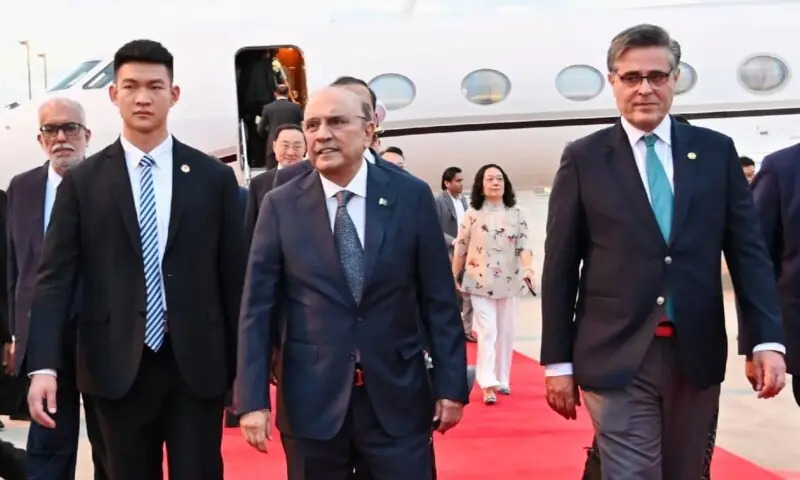
The Core Development
President Asif Ali Zardari departed from Lahore on Thursday to commence a three-day official visit to Germany, marking a strategic juncture in bilateral relations as both nations prepare to commemorate the 75th anniversary of diplomatic ties. According to an official communication released by the Ministry of Foreign Affairs (FO), the visit forms part of sustained high-level leadership exchanges designed to recalibrate strategic, trade, and multilateral cooperation between Islamabad and Berlin.
Accompanied by a diplomatic and economic delegation, President Zardari is scheduled to engage in structured talks with German state leadership, institutional heads, and enterprise executives between October 22 and October 24. Key issues on the table include the strengthening of formal trade pathways, climate financing, vocational training frameworks, and institutional cooperation across renewable energy and advanced manufacturing sectors. The visit provides a formal diplomatic platform to reaffirm Pakistan's commitment to strategic dialogue within the European Union, where Germany remains the country's most influential trading and developmental partner.
Commercial & Economic Implications
From a macroeconomic and supply chain vantage point, Germany holds immense importance for Pakistan's trade architecture. Germany serves as Pakistan's largest export destination within the European Union, consuming a substantial volume of textiles, leather goods, surgical instruments, and value-added agri-commodities. Bilateral trade currently hovers around three billion euros annually, heavily buttressed by the European Union’s Generalised Scheme of Preferences (GSP Plus) framework. Direct engagement at the head-of-state level provides vital momentum toward securing continuity under upcoming European tariff regimes.
For Pakistan's commercial hubs and distribution channels, enhanced German bilateral cooperation directly influences industrial capital expenditure. Local textile mills, packaging manufacturers, and automotive assemblers rely extensively on specialized German machinery, precision tooling, and industrial chemicals. Stability in bilateral diplomatic relations supports more predictable supplier credit lines, vendor financing arrangements, and technical advisory networks. Moreover, direct engagement with European logistics providers can assist in alleviating freight bottlenecks, improving export turnaround times from hubs like Karachi, Faisalabad, and Sialkot, and moderating landed costs for intermediate industrial goods that drive domestic manufacturing.
Related Intelligence: Opposition Coalition TTAP Sets Strict Conditions for Talks With Shehbaz Sharif
Stakeholder Perspectives & Market Reactions
Corporate leaders, industrial bodies, and export councils have received the visit with measured optimism. Representatives from the Federation of Pakistan Chambers of Commerce and Industry (FPCCI) noted that sustained diplomatic advocacy is imperative to counteract persistent European supply-chain scrutiny regarding environmental, social, and governance (ESG) compliance. Exporters emphasize that proactive dialogue with Berlin will facilitate greater compliance integration, ensuring domestic industries avoid non-tariff barriers as the EU tightens its corporate sustainability due diligence directives.
Conversely, financial analysts underline that diplomatic goodwill must rapidly materialize into actionable commercial treaties. While Pakistan has consistently benefited from German development assistance through institutions such as GIZ and KfW, institutional stakeholders point out that foreign direct investment (FDI) inflows from German multi-nationals have historically remained modest due to structural economic volatility, foreign exchange controls, and regulatory unpredictability. Market participants will be observing whether this high-level visit yields concrete commitments for joint ventures in green hydrogen, solar photovoltaic integration, or localized automotive component production.
Forward Outlook & Key Watchpoints
Over the course of the three-day itinerary, stakeholders will monitor formal joint communiqués, corporate memorandums of understanding (MoUs), and reciprocal framework announcements regarding business mobility and technical development programs. A critical milestone following the tour will be the structured follow-up mechanisms enacted through the Pakistan-Germany Joint Economic Commission, which monitors bilateral implementation.
Domestically, the government faces the task of translating diplomatic rapport into regulatory facilitation, ensuring German firms encounter a transparent operating environment within Special Economic Zones (SEZs). In the medium term, the commercial sector will benchmark the success of this diplomatic mission by the expansion of direct German trade lines, preferential procurement terms for Pakistani value-added goods, and enhanced technical support for Pakistan's transition toward industrial modernization.
Join Our Official WhatsApp Channel
Receive live commodity alerts, policy changes, and commercial intelligence directly on WhatsApp.