
Pakistan Prepares Formal Application for EU GSP Plus Extension from 2027
Pakistan is preparing to submit a comprehensive application for the EU GSP Plus framework starting January 2027, seeking continued duty-free access to European markets under stricter international compliance rules.
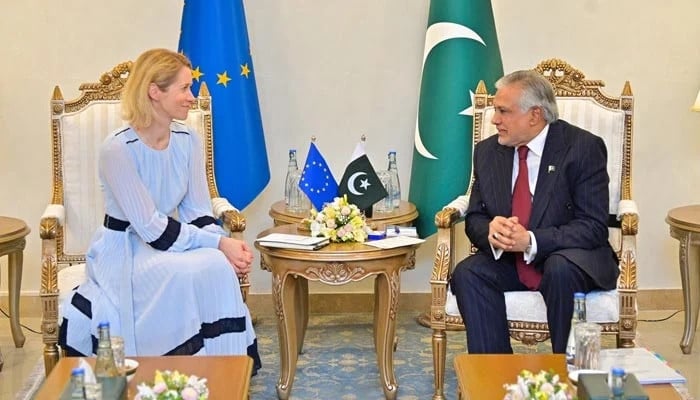
The Core Development
The Government of Pakistan has formally commenced administrative and diplomatic procedures to apply for a fresh European Union Generalised Scheme of Preferences Plus (GSP+) status, targeted to commence from January 1, 2027. Under the supervision of the Ministry of Commerce and the Ministry of Foreign Affairs, inter-ministerial working groups are coordinating across federal and provincial authorities to prepare a comprehensive compliance and application dossier. The existing GSP+ arrangement, which was granted in 2014 and provided duty-free access on more than 66 percent of tariff lines, was extended through December 31, 2027. However, the European Commission’s newly proposed GSP regulation requires beneficiary countries to seek formal reassessment under an expanded monitoring framework.
The upcoming regulatory cycle will heighten evaluation benchmarks, requiring beneficiary states to ratify and demonstrably enforce 32 international conventions—an increase from the 27 conventions mandated under the legacy regime. These instruments cover fundamental human rights, core International Labour Organization (ILO) standards, environmental protection mandates, climate change agreements under the Paris Accord, and anti-corruption frameworks. Institutional coordination is underway in Islamabad to harmonize provincial labor registries, modernize judicial reporting mechanisms on fundamental freedoms, and address specific European Parliament concerns regarding environmental sustainability and labor inspections.
Commercial & Economic Implications
Preserving GSP+ preferential access remains an existential priority for Pakistan's external balance of payments and industrial export base. The European Union serves as Pakistan’s largest single export destination, absorbing roughly 30 percent of total national outbound trade. Since the inception of the tariff concessions in 2014, bilateral trade expanded considerably, with Pakistani exports to the European single market exceeding 8 billion euros annually, dominated by home textiles, readymade garments, leather manufacturing, and value-added agricultural items.
A failure to secure inclusion in the updated scheme would trigger Standard GSP or Most Favoured Nation (MFN) tariffs, introducing customs levies between 6 and 12 percent on outbound apparel and textile lines. Such an escalation would immediately erode cost competitiveness against regional peers like Bangladesh, Vietnam, and India. Within the domestic supply chain, uninterrupted tariff relief provides wholesale manufacturers, spinning mills, and garment clusters in Karachi, Faisalabad, Lahore, and Sialkot with stable demand. This export stability prevents industrial plant closures, anchors corporate foreign exchange earnings, and protects hundreds of thousands of formal and informal manufacturing jobs.
Related Intelligence: West Bank Settler Violence Escalates Regional Geopolitical and Supply Chain Risks
Stakeholder Perspectives & Market Reactions
Trade bodies across the industrial spectrum have emphasized that compliance cannot remain merely administrative, urging federal authorities to accelerate technical implementation. The All Pakistan Textile Mills Association (APTMA) and the Pakistan Readymade Garments Manufacturers and Exporters Association (PRGMEA) have repeatedly cautioned that international buyers increasingly prioritize environmental, social, and governance (ESG) verification alongside price margins. Industry representatives are demanding fiscal incentives to decarbonize production and digitize labor compliance records to meet European transparency standards.
Legal analysts and labor rights advocates have highlighted remaining gaps between statutory ratification and on-ground enforcement, particularly at the provincial level following the devolution of labor portfolios. While federal officials express confidence that Pakistan's institutional track record over the past decade demonstrates sufficient commitment to reform, European diplomatic missions in Islamabad have underscored that compliance reviews will focus strictly on verifiable execution rather than legislative announcements.
Forward Outlook & Key Watchpoints
The immediate timeline involves technical consultations in Brussels and coordinated parliamentary reviews in Pakistan throughout the coming legislative cycles. European Union monitoring missions are scheduled to conduct ground assessments to inspect factory occupational health standards, freedom of association, anti-child-labor enforcement, and industrial pollution mitigations before the European Council and Parliament finalize beneficiary lists.
Market participants must monitor several critical indicators over the next 18 months, including the formal adoption of the revised EU GSP regulation in Brussels, bilateral diplomatic engagements during joint commission meetings, and provincial capacity to clear pending labor dispute backlogs. For Pakistani exporters, continuous operational adaptation to European corporate sustainability due diligence directives will determine whether access is fully leveraged through 2027 and beyond.
Join Our Official WhatsApp Channel
Receive live commodity alerts, policy changes, and commercial intelligence directly on WhatsApp.