
President Zardari to Visit Germany to Boost Trade and Investment Ties
President Asif Ali Zardari will visit Germany from October 22 to 24 to strengthen bilateral trade, industrial partnerships, and technological cooperation on the 75th anniversary of diplomatic ties.
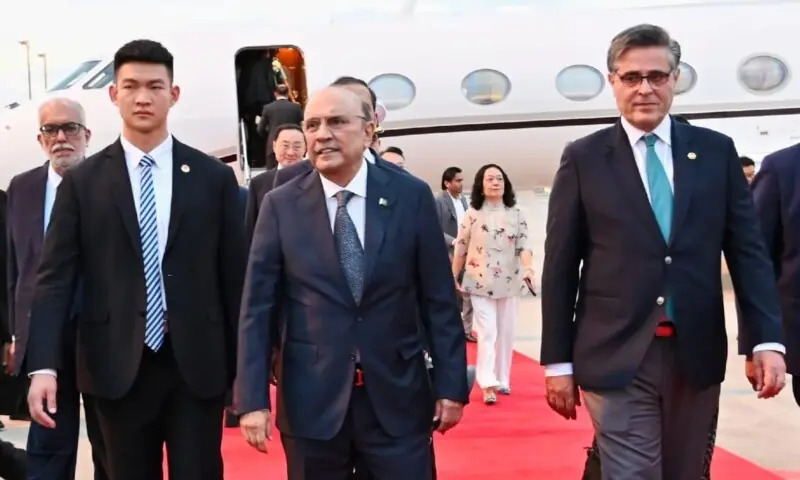
The Core Development President Asif Ali Zardari is scheduled to undertake an official state visit to Germany from October 22 to October 24, aimed at strengthening bilateral diplomacy and broadening economic engagement between Islamabad and Berlin. The high-level trip coincides with the 75th anniversary of the establishment of formal diplomatic relations between Pakistan and Germany, marking a historic milestone in mutual cooperation.
According to an official announcement from Pakistan's Ministry of Foreign Affairs (FO), the visit forms a critical component of institutionalized high-level exchanges between the two nations. During his stay in Berlin, President Zardari will hold extensive delegation-level talks with German President Frank-Walter Steinmeier and engage with senior members of the German cabinet, parliamentarians, and prominent corporate executives. A central pillar of the agenda will be expanding bilateral economic ties, promoting foreign direct investment into Pakistan, and facilitating joint industrial ventures. Sindh Chief Minister Murad Ali Shah is also expected to accompany the delegation to explore sub-national technical partnerships, particularly the acquisition of advanced German environmental and wastewater treatment technology.
Commercial & Economic Implications Germany represents Pakistan's largest trading partner within the European Union and serves as an indispensable destination for value-added textile exports, leather goods, and surgical instruments. Strengthening high-level political alignment is critical for safeguarding Pakistan's export interests, particularly in maintaining support for the European Union's Generalized Scheme of Preferences Plus (GSP+) status, which offers tariff-free access to major European markets.
For Pakistan's commercial ecosystem, including domestic retail trade, wholesale distribution, and manufacturing supply chains, deeper cooperation with Germany carries substantial operational benefits. German engineering, specialized machinery, and chemical products form the backbone of many Pakistani industrial units. A revival in bilateral trade arrangements can ease direct technology transfers, helping domestic manufacturers upgrade their processing capabilities, reduce line losses, and lower production costs. Furthermore, provincial interest in German green technologies—specifically for water purification, effluent treatment, and renewable energy grids—can yield long-term cost efficiencies for regional industries facing severe environmental and resource constraints.
Related Intelligence: High-Stakes Israeli Election Threatens Middle East Trade Corridors and Energy Stability
Stakeholder Perspectives & Market Reactions Pakistan's industrial bodies, including the Federation of Pakistan Chambers of Commerce and Industry (FPCCI) and major textile associations, have welcomed the high-level engagement. Exporters emphasize that sustained direct engagement with European counterparts is vital to counteract regional competition and improve Pakistan's trade balance. Industry leaders have repeatedly urged the government to negotiate business-to-business linkages that move beyond conventional textile exports into engineering, automotive components, and IT services.
Diplomatic and financial analysts view the visit as a pragmatic step toward diversifying Pakistan's foreign economic partnerships. While financial assistance from international lenders provides temporary stabilization, long-term balance-of-payments sustainability depends heavily on robust trade relationships with advanced industrial economies. Official representatives in Berlin have consistently advocated for structural reforms, improved regulatory predictability, and transparency in contract enforcement as prerequisites for increased German private-sector investment in Pakistani infrastructure and energy sectors.
Forward Outlook & Key Watchpoints The primary metric of success for President Zardari's visit will be the tangible conversion of diplomatic goodwill into formalized commercial agreements and investment commitments. Key watchpoints over the coming weeks include potential bilateral memorandums of understanding concerning vocational training, technical assistance in environmental rehabilitation, and bilateral trade facilitation protocols.
Market observers will closely monitor follow-up engagements between German corporate delegations and Pakistani industrial stakeholders, particularly in renewable energy, automotive supply networks, and environmental management. Maintaining sustained momentum following the October 22-24 meetings will be crucial to securing institutional support for Pakistan's trade privileges in Europe and modernizing critical domestic supply chains through German technological collaboration.
Join Our Official WhatsApp Channel
Receive live commodity alerts, policy changes, and commercial intelligence directly on WhatsApp.