
Pakistan and Qatar Expand Bilateral Internal Security and Strategic Cooperation
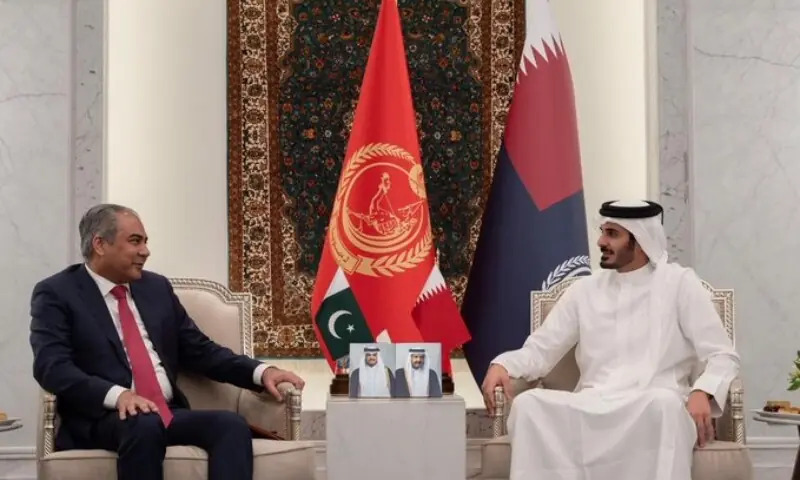
Pakistan and Qatar have agreed to expand bilateral cooperation in internal security following high-level discussions in Doha between Interior Minister Mohsin Naqvi and Qatari Interior Minister Sheikh Khalifa bin Hamad.
The Core Development
Pakistan and Qatar have formally committed to deepening institutional collaboration across internal security apparatuses following high-level bilateral talks held in Doha. Federal Interior Minister Mohsin Naqvi met with his Qatari counterpart, Sheikh Khalifa bin Hamad bin Khalifa Al Thani, to establish a unified operational framework addressing modern transnational challenges, institutional capacity building, and regional stability.
According to an official communique issued by the Ministry of Interior, the engagement centered on a comprehensive review of bilateral defense mechanisms, intelligence sharing protocols, and cross-border law enforcement coordination. The talks coincided with evolving geopolitical volatility across the Middle East and South Asia, prompting both nations to align internal defense doctrines. The leaders reaffirmed that mutual cooperation between the respective interior ministries will include technical knowledge transfers, counter-narcotics coordination, and modernized border surveillance practices to insulate both states against asymmetric threats.
Commercial & Economic Implications
While focused on security, the diplomatic consensus carries vital macroeconomic and commercial ramifications for Pakistan. Institutional security agreements with Gulf Cooperation Council (GCC) partners are fundamental precursors to sustaining cross-border capital inflows, protecting critical supply lines, and stabilizing sovereign investment channels.
Qatar represents one of Pakistan's principal energy suppliers through long-term liquefied natural gas (LNG) contracts and hosts a diaspora workforce whose remittances exceed billions of dollars annually. Formalizing internal security coordination provides a secure operational perimeter for Qatari state investment entities—including the Qatar Investment Authority (QIA)—which have expressed ongoing interest in Pakistani airport management concessions, seaports, and industrial zones. Furthermore, heightened security alignment reduces sovereign risk premiums, reassuring global logistics operators managing freight routes between the Persian Gulf and Karachi, which in turn buffers retail supply chains against maritime and regional trade bottlenecks.
Stakeholder Perspectives & Market Reactions
Corporate leaders, industrial bodies, and policy analysts in Islamabad and Karachi have observed the engagement as a stabilizing diplomatic development. The Federation of Pakistan Chambers of Commerce and Industry (FPCCI) and regional trade bodies have frequently highlighted that policy certainty and security guarantees are essential requirements to convert foreign interest into tangible foreign direct investment (FDI).
Legal and strategic defense analysts point out that the agreement also serves to safeguard the large Pakistani expatriate community employed within Qatar's administrative, security, and industrial sectors. Representatives from overseas employment federations noted that standardized regulatory and security vetting will streamline labor mobility, mitigate human trafficking operations, and protect transparent remittance pipelines vital for domestic foreign exchange reserves.
Forward Outlook & Key Watchpoints
Moving forward, the implementation of this bilateral roadmap will depend on joint working groups established across both interior ministries. Technical delegations are slated to convene over the coming quarters to draft formal standard operating procedures (SOPs) concerning data exchange, judicial mutual assistance, and counter-smuggling efforts.
Key watchpoints include the potential finalization of structured visa facilitation frameworks, expanded protective architecture surrounding Pakistani transport hubs, and concrete investment announcements by Qatari delegations under the Special Investment Facilitation Council (SIFC) framework. Stakeholders will also monitor whether this bilateral arrangement will lead to integrated maritime security protocols to shield primary energy shipment corridors navigating regional transit points.
Join Our Official WhatsApp Channel
Receive live commodity alerts, policy changes, and commercial intelligence directly on WhatsApp.