
Indian Electoral Roll Purge Strips 130 Million Voters Amid Outcry
India's massive electoral roll revision has struck off 130 million citizens, triggering widespread protests and administrative chaos for vulnerable daily wage earners who are mistakenly declared dead.
The Core Development
India is facing severe political and civil backlash following an extensive electoral roll purge that removed an estimated 130 million citizens from voting registries nationwide. Carried out under the Election Commission of India's Special Intensive Revision (SIR) initiative, the exercise aimed to streamline voter lists by eliminating duplicates, correcting logical discrepancies, and removing deceased individuals. However, the administrative exercise has spiraled into an operational crisis, erroneously classifying hundreds of thousands of living citizens as deceased.
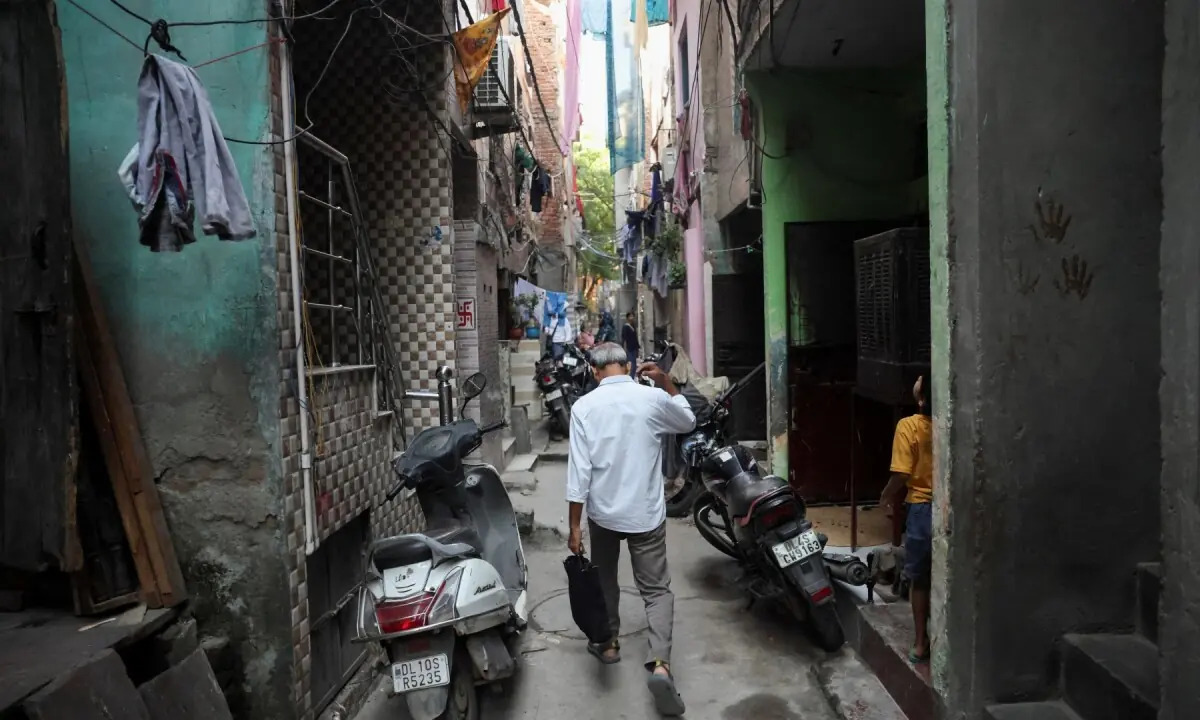
In New Delhi alone, the draft electoral rolls released on August 31 revealed that roughly 4.2 million voters had been struck off the rolls. Among those affected is Kamta Prasad, a 53-year-old tailor from Delhi, who discovered that official documentation had registered him as deceased. To contest the designation, Prasad has spent consecutive weeks shuttling between bureaucratic offices, sacrificing his daily wage of 250 Indian rupees, which provides sole sustenance for his family of four. The widespread scale of wrongful disenfranchisement has triggered mass protests across major urban centers, escalating into one of the most visible administrative challenges confronting Prime Minister Narendra Modi's administration.
Commercial & Economic Implications
While fundamentally a political and administrative crisis, the mass disenfranchisement carries tangible economic fallout for the lower-income informal workforce across South Asia. In India's massive informal economy, documentation integrity is intrinsically linked to socio-economic safety nets, ration allocations, subsidized food distribution, and direct cash transfer initiatives. When an individual is classified as dead in electoral registries, secondary welfare access points frequently freeze corresponding national identity links.
For regional trade observers and consumer markets, including cross-border monitors in Pakistan, the crisis highlights the systemic vulnerability of lower-tier retail and daily wage structures to digitized administrative failures. Daily wage earners forced to forfeit daily income to resolve documentation errors experience an immediate collapse in household purchasing power. This erosion of discretionary spending directly depresses localized retail trade, wet market transactions, and small-scale wholesale distribution networks. The diversion of productive labor hours toward navigating state bureaucracy serves as an unquantified drag on informal retail productivity, showing how state database errors can ripple into grassroots economic dislocation.
Related Intelligence: Peshawar High Court Issues Notices on Petitions Challenging KP Emergency Rule
Stakeholder Perspectives & Market Reactions
Civil rights organizations, labor syndicates, and opposition parties have sharply criticized the revision mechanism, characterizing it as a poorly audited digitization campaign that disproportionately harms marginalized and illiterate citizens. Legal advocates argue that the burden of proof has been unfairly transferred to vulnerable individuals, who lack the legal and financial resources required to navigate bureaucratic appeals.
Trader associations and micro-enterprise groups have expressed growing concern over the broader implications for informal credit and identity verification. Industry representatives note that sudden voter roll expulsions often trigger identity flags in semi-formal lending schemes and microfinance networks. In response to mounting public anger and demonstrations outside election offices, government representatives have maintained that the SIR is a necessary modernization drive to ensure electoral integrity, promising that expedited redressal counters will be established to reinstate wrongfully removed citizens before upcoming legislative contests.
Forward Outlook & Key Watchpoints
Moving forward, the primary focus rests on the upcoming revision deadlines and whether the Election Commission can establish accessible, expedited appeals processes. Civil rights coalitions are preparing petitions before high courts and the Supreme Court of India, seeking structural audits of the algorithms and ground-level survey methodologies deployed during the SIR process.
Market and policy analysts will monitor the rate of voter reinstatement over the fourth quarter, alongside any potential legislative inquiries into administrative accountability. The episode serves as a significant case study for regional governments, including Pakistan's ongoing digital identity reforms under NADRA, illustrating the critical necessity of robust safeguards, transparent verification protocols, and human oversight in public record automation to prevent massive civic and economic disruption.
Join Our Official WhatsApp Channel
Receive live commodity alerts, policy changes, and commercial intelligence directly on WhatsApp.