
Pakistan Reaffirms Total Defence Commitment to Saudi Arabia Amid Regional Tensions
Pakistan has pledged comprehensive defence assistance to Saudi Arabia against cross-border aerial incursions, consolidating strategic security pacts that safeguard bilateral economic partnerships and critical energy supply lines.
The Core Development
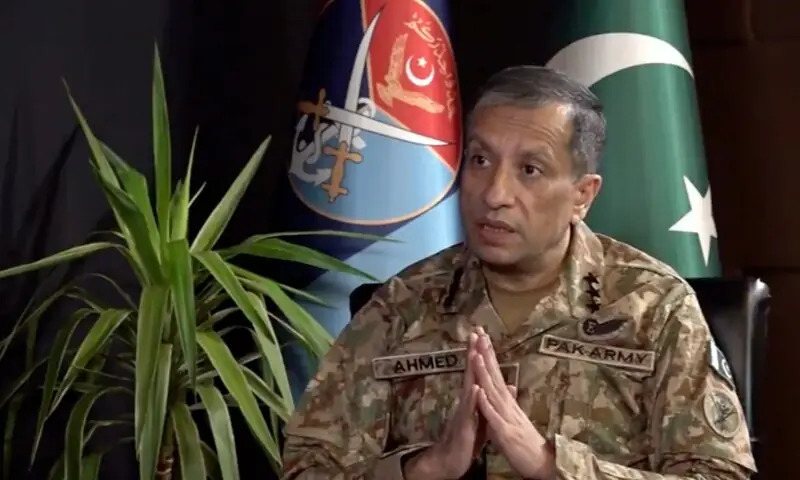
In an explicit reassertion of Islamabad's regional security posture, Director General of Inter-Services Public Relations (ISPR) Lieutenant General Ahmed Sharif Chaudhry confirmed that Pakistan is providing full-spectrum defence assistance to Saudi Arabia. Speaking in an interview with Independent Arabia, the military spokesperson affirmed that the Pakistani armed forces are delivering whatever support is deemed necessary to bolster the Kingdom's territorial integrity and protective airspace in response to renewed cross-border strikes orchestrated by Yemen's Houthi militia.
This strategic reaffirmation comes amidst an increasingly unstable security environment across the Arabian Peninsula and the southern Red Sea maritime corridor. The operational framework underpinning this assistance draws from formal institutional mechanisms, notably the bilateral Strategic Mutual Defence Agreement concluded between Islamabad and Riyadh, alongside the multilateral Makkah Joint Defence Alliance, which integrates the advanced military-industrial capacities of Turkiye. These interlocking frameworks are formulated to establish collective deterrence, streamline intelligence sharing, and provide rapid logistical and defensive counter-measures against irregular aerial, ballistic, and maritime incursions.
Commercial & Economic Implications
For Pakistan's domestic economic architecture, alignment with Saudi Arabia carries profound financial and commercial ramifications. Saudi Arabia remains one of Pakistan's principal economic anchors, providing vital balance-of-payments support via central bank deposits, deferred oil payment facilities, and strategic foreign direct investment (FDI) commitments under the Special Investment Facilitation Council (SIFC) framework. Uncompromising defence cooperation preserves this financial bedrock, mitigating sovereign default risk and insulating domestic foreign exchange reserves.
Furthermore, supply chain stability across the Arabian Sea and the Persian Gulf directly governs Pakistan's maritime trade, energy imports, and consumer inflation. A deterioration of Saudi infrastructure or shipping choke points instantly drives up global crude benchmarks and ocean freight premiums. By helping secure regional trade lanes and industrial installations, Pakistani security cooperation directly shields domestic wholesale distribution, industrial transport, and retail commodity pricing from acute petroleum supply shocks. Conversely, heightened regional volatility poses risks of elevated maritime insurance tariffs and supply disruption for petroleum, oil, and lubricant (POL) products heading toward Karachi ports.
Related Intelligence: US Denies Pause in Vital Intelligence Sharing with Ukraine Amid Escalation
Stakeholder Perspectives & Market Reactions
Corporate, industrial, and financial leadership across Pakistan have largely welcomed the consolidation of ties. Leading trade bodies, including the Federation of Pakistan Chambers of Commerce and Industry (FPCCI) and regional merchant associations, view robust diplomatic and military alignment as a foundational prerequisite for uninterrupted commercial engagement. Commercial stakeholders stress that protecting Saudi territory is inextricably linked to safeguarding the livelihoods of more than 2.5 million overseas Pakistani expatriates whose remittances generate critical liquidity across national retail and wholesale markets.
Legal analysts and foreign policy observers note that formalizing commitments under multilateral structures like the Makkah Joint Defence Alliance offers Pakistan a calibrated, legally sound mechanism for defensive deployment. However, financial analysts caution that institutional support must remain explicitly defensive to avoid entangling the state in broader regional sectarian fractures, which could complicate diplomatic relations with other littoral states bordering the Arabian Sea.
Forward Outlook & Key Watchpoints
Over the coming quarters, watchpoints will center on the practical operationalization of the Strategic Mutual Defence Agreement and the expansion of the trilateral alliance with Turkiye. Key indicators include joint air-defence exercises, indigenous arms exports from the Pakistan Ordnance Factories and heavy defense complexes to Gulf partners, and technical training deployments.
Domestically, the government will seek to translate these security assurances into tangible economic deliverables, particularly the materialization of Saudi capital deployments in the Reko Diq mining project, domestic refinery developments, and agricultural supply chains. Sustaining security parity in the Gulf while navigating fiscal consolidation at home remains Pakistan's central diplomatic priority.
Join Our Official WhatsApp Channel
Receive live commodity alerts, policy changes, and commercial intelligence directly on WhatsApp.