
Nawaz Sharif Vehicles Vandalised in London Amid Heightened Political Tensions
Vehicles belonging to Pakistan Muslim League-Nawaz supremo Nawaz Sharif were vandalised by masked individuals outside his London residence, escalating security concerns and political volatility.
The Core Development
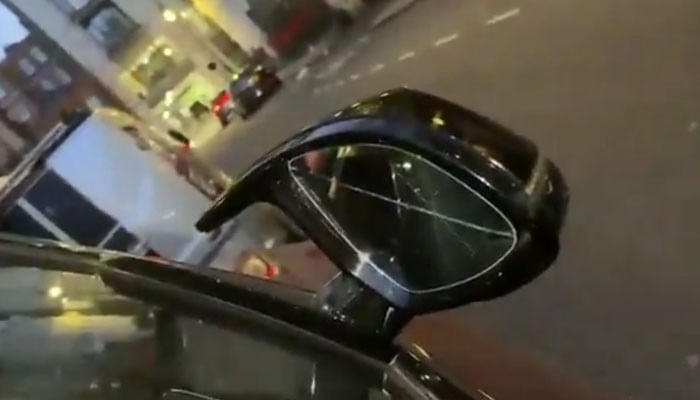
Two vehicles belonging to former Pakistani Prime Minister and Pakistan Muslim League-Nawaz (PML-N) leader Nawaz Sharif were systematically vandalised outside his London residence in Mayfair, according to emerging reports and corroborating closed-circuit television (CCTV) footage. The footage depicts masked assailants executing what appears to be a targeted attack, deliberately dismantling and removing the windows of the parked vehicles before fleeing the location.
The Metropolitan Police were notified immediately following the incident and have initiated an active investigation into the breach, reviewing surrounding surveillance feeds to trace the suspects. Nawaz Sharif, who has spent extended periods in the United Kingdom managing personal and political engagements, has frequently been the subject of demonstrations by opposing political factions outside his Avenfield apartments. However, this overt physical destruction of personal property marks a significant escalation in hostility, raising pressing concerns regarding the security architecture protecting senior political leadership abroad.
Commercial & Economic Implications
While the vandalism occurred in the United Kingdom, its direct downstream effects resonate across Pakistan's delicate political and economic environment. In Pakistan, economic stability remains closely correlated with political equilibrium. As the ruling coalition, led by the PML-N, attempts to navigate a fragile macroeconomic recovery—anchored by International Monetary Fund (IMF) stabilization programs and fiscal consolidation targets—any trigger that exacerbates domestic political polarisation threatens market confidence.
For commercial enterprises, retail supply chains, and wholesale distributors in industrial hubs like Lahore and Karachi, heightened political rhetoric often translates into operational friction. Demonstrations, road blockades, and general strikes disrupt logistics lines, causing short-term liquidity bottlenecks and localized inventory delays. Furthermore, sustained political friction weakens institutional focus on critical structural reforms, dampening foreign direct investment (FDI) inflows and creating foreign exchange fluctuations that ultimately feed into domestic headline inflation and consumer price volatility.
Related Intelligence: HRCP Flags Rights Violations as Gaps Threaten Investment and Economic Stability
Stakeholder Perspectives & Market Reactions
PML-N leadership and government representatives have strongly condemned the vandalism, characterizing it as a calculated attempt to incite unrest and intimidate the party's supreme leadership. Party spokespersons called upon British authorities to take decisive punitive action against the perpetrators, alleging that political extremism abroad is being actively bankrolled to destabilize national politics at home.
Conversely, legal analysts and market observers in Pakistan emphasize the need for measured de-escalation. Independent commercial bodies, including domestic trader associations, have historically voiced frustration over the spillover of partisan disputes into everyday commercial activity. Financial market analysts note that while the benchmark KSE-100 index often absorbs minor external political events, prolonged public confrontation or retaliatory demonstrations within Pakistan could induce tactical selling pressure and suppress equity valuations across sensitive cyclical sectors.
Forward Outlook & Key Watchpoints
The trajectory of this development will depend on the findings of the London Metropolitan Police and the potential identification of the perpetrators. If the investigation confirms direct ties to organized political groups, diplomatic and legal representations could follow, further polarizing dialogue between Pakistan's major political entities.
Key watchpoints for investors, commercial operators, and policy analysts over the near term include whether street protests emerge in major Pakistani metropolitan centers, how public security apparatuses manage potential retaliatory unrest, and whether macroeconomic reform agendas retain administrative focus. Maintaining operational resilience in transport, wholesale distribution, and retail trade will remain paramount as businesses hedge against renewed political volatility.
Join Our Official WhatsApp Channel
Receive live commodity alerts, policy changes, and commercial intelligence directly on WhatsApp.