
Martian Moon Sample Mission Launches New Space Race for Off-World Resources
An international mission has launched targeting Mars' moon Phobos to retrieve soil samples, accelerating strategic competition and commercial investments in deep-space mineral exploration.
Geopolitical & Core Developments
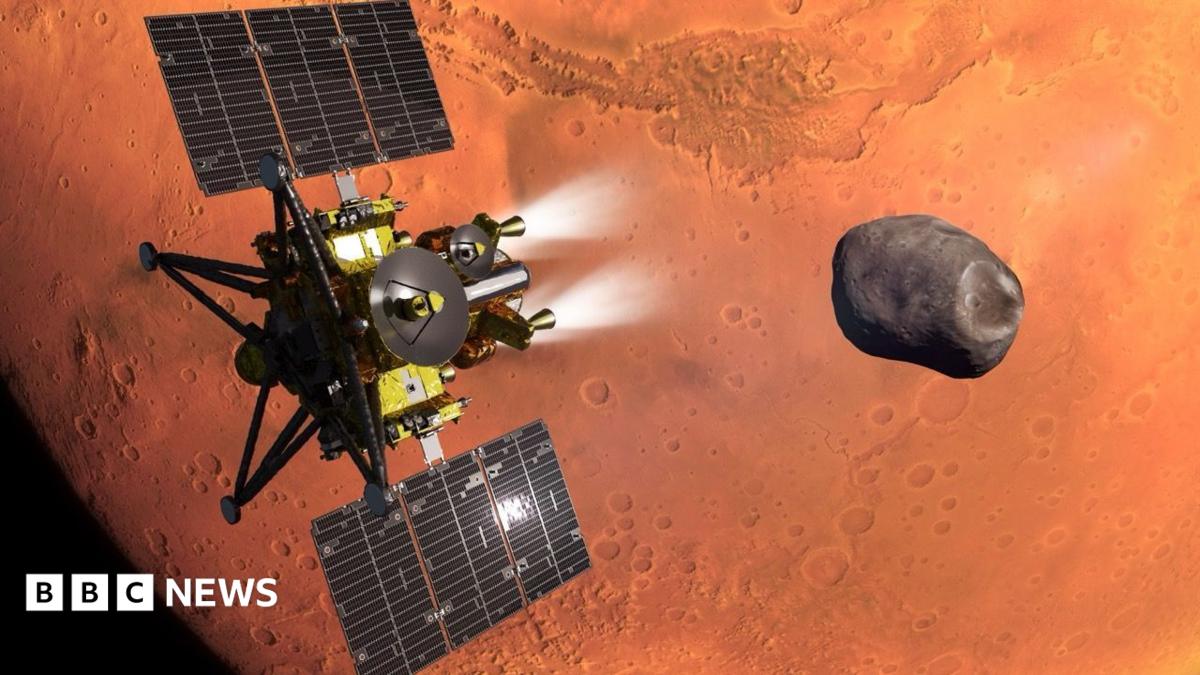
A pivotal milestone in deep-space exploration commenced as a robotic spacecraft successfully lifted off on an ambitious interplanetary flight to collect and return surface material from Phobos, the innermost moon of Mars. The mission seeks to capture approximately 10 grams of regolith and return it to Earth, providing planetary scientists and sovereign space agencies with pristine geochemical data regarding the formation of the inner solar system.
Beyond its pure scientific merit, the initiative marks an escalation in state-level competition over off-world logistics and technological sovereignty. As the United States, China, European member states, and Japan advance distinct lunar and interplanetary architectures, the capability to execute complex rendezvous, extraction, and atmospheric re-entry protocols serves as an explicit demonstration of national technological parity. The geopolitical stakes are anchored in establishing technological precedents: nations demonstrating orbital proximity operations and surface extraction capabilities position themselves to shape the governing norms of space exploration, including the contested operational frameworks governing space resource harvesting.
Global Trade & Economic Ripples
While direct commercial exploitation of Martian moons remains distant, the supply chain dynamics powering such deep-space endeavors yield immediate ramifications for global advanced-manufacturing markets. Industrial procurement for extreme-environment avionics, radiation-hardened semiconductors, and cryogenic propulsion systems has intensified demand for strategic metals. Aerospace-grade titanium, beryllium-copper alloys, and high-purity scandium continue to command significant premiums across international metals exchanges.
Furthermore, the mission signals a fundamental evolution in public-private procurement models. Sovereign agencies are increasingly contracting private aerospace conglomerates and defense industrial bases to fabricate specialized guidance sensors, optical navigation apparatuses, and autonomous robotic sampling arms. This capital expenditure is accelerating venture funding into commercial space transport networks, orbital servicing enterprises, and sovereign satellite deployment infrastructures. The mission serves as a proving ground for technologies that lower the aggregate cost of high-orbit deployment, indirectly expanding satellite communications and Earth-observation data markets that support maritime tracking, agricultural commodity forecasting, and energy infrastructure logistics.
Related Intelligence: Colombia Illegal Gold Mine Collapse Kills 14 Amid Supply Chain Scrutiny
International Reactions & Diplomatic Stances
Multilateral bodies and major space powers have closely monitored the deployment, framing it through differing strategic perspectives. Representatives from space-faring powers emphasized the scientific value of interplanetary geology, characterizing the retrieval of primitive solar system matter as essential for future planetary defense and crewed deep-space roadmaps.
Concurrently, diplomatic discourse has resurfaced within United Nations committees on the peaceful uses of outer space regarding the legal interpretation of off-world mineral recovery. While the 1967 Outer Space Treaty prohibits national appropriation of celestial bodies, differing national interpretations persist regarding private and state ownership of extracted abiotic materials. Western aligned nations advocate for framework continuity anchored in commercial enterprise rights, while other sovereign blocs seek codified multilateral treaties governing the collective distribution of deep-space scientific and economic benefits. Analysts note that successful retrieval missions reinforce de facto operational norms long before binding diplomatic consensus can be enacted.
Strategic Outlook & Future Scenarios
Over the multi-year trajectory required for the probe to intercept Phobos and navigate the return trajectory to Earth, geopolitical maneuvering around orbital infrastructure will intensify. State-sponsored space agencies are projected to expand bilateral research partnerships, leveraging access to Phobos regolith samples to secure geopolitical alignments and technological data-sharing agreements.
Critical future milestones will revolve around upcoming planetary science defense summits and ministerial conferences, where national investment allocations for subsequent deep-space missions will be ratified. Should the return capsule land safely and deliver the target sample, the technological demonstration will trigger accelerated funding cycles for sovereign asteroid-mining demonstration probes. Conversely, operational friction in deep-space rendezvous will prompt heightened domestic scrutiny over national science budgets amidst competing macroeconomic pressures. In the medium term, the mission solidifies space capability as an indispensable instrument of national soft power and technical deterrence.
Join Our Official WhatsApp Channel
Receive live commodity alerts, policy changes, and commercial intelligence directly on WhatsApp.