
Indian Opposition Stages New Delhi Protests Demanding Election Chief Resignation
India deployed extensive security deployments across New Delhi as opposition parties mobilized demonstrations demanding the resignation of the Chief Election Commissioner over alleged institutional bias.
Geopolitical & Core Developments
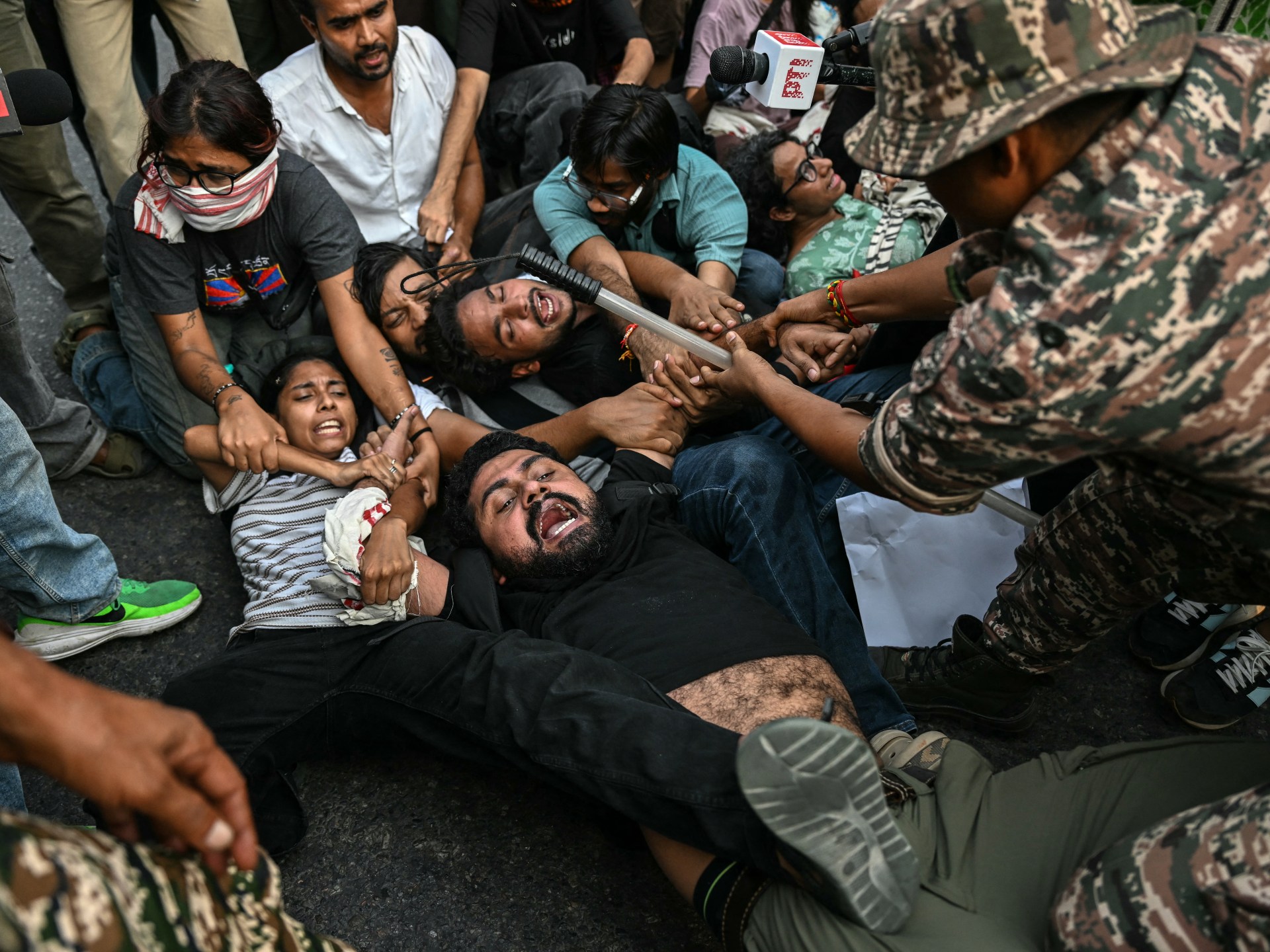
Tensions surged across the Indian capital of New Delhi as thousands of paramilitary and state police personnel established security cordons ahead of a major protest organized by a coalition of opposition parties. The mobilization aims directly at the leadership of the Election Commission of India (ECI), with leaders demanding the immediate resignation of the Chief Election Commissioner. Demonstrators and opposition figures allege systemic bias, irregular voter roll handling, and procedural lapses favoring the governing Bharatiya Janata Party (BJP) during recent state-level ballots.
The standoff represents a significant stress test for the operational integrity of Indian democratic institutions. Over the past several election cycles, opposition alliances, prominently featuring the Indian National Congress alongside regional powerhouses, have questioned the impartiality of constitutional watchdogs. The deployment of barricades, section prohibitory orders, and water cannons reflects a pre-emptive effort by central authorities to prevent unrest from paralyzing the government quarter. As the world's most populous nation continues its expansion as a pivotal geopolitical counterweight in the Indo-Pacific, domestic institutional stability remains vital to its regional standing.
Global Trade & Economic Ripples
While domestic political demonstrations rarely disrupt immediate physical trade flows across major Indian ports, prolonged political friction carries tangible economic consequences for cross-border investments and market sentiment. Foreign institutional investors (FIIs) closely monitor institutional stability and the rule of law when allocating capital to emerging market equities and sovereign debt instruments. Increased street-level friction and challenges to institutional credibility can introduce volatility into benchmark indices such as the Nifty 50 and the BSE Sensex, while placing downward pressure on the Indian rupee against the US dollar.
Furthermore, multinational manufacturing conglomerates establishing supply chain nodes under the 'China Plus One' strategy require predictability in regulatory and administrative environments. India's strategic push to attract high-value manufacturing in electronics, pharmaceuticals, and renewable infrastructure relies on robust institutional governance. Lingering political disputes that escalate into wider strikes or civil friction could introduce short-term logistics snarls around key transit corridors surrounding the National Capital Region, impacting manufacturing dispatch schedules.
Related Intelligence: Constitutional Friction and Market Stability Amid Khyber Pakhtunkhwa Governance Standoff
International Reactions & Diplomatic Stances
Multilateral bodies and international observer organizations have kept a close watch on India's electoral mechanics. While Western governments have largely refrained from official bilateral commentary, treating the demonstrations as internal administrative matters, international human rights monitors and governance advocacy groups have urged adherence to peaceful assembly norms and transparent institutional protocols.
Financial market analysts at major global banking institutions caution that while India's macroeconomic fundamentals remain structurally resilient, institutional polarization introduces long-term sovereign governance risks. The diplomatic community in New Delhi views the unrest through the prism of constitutional robustness, observing whether the judiciary or parliamentary oversight bodies will step in to arbitrate the dispute between the opposition bloc and the electoral authority.
Strategic Outlook & Future Scenarios
In the near term, the immediate trajectory hinges on whether the current protests expand into nationwide general strikes or remain confined to symbolic marches in the capital. Should legal challenges reach the Supreme Court of India, judicial intervention could provide a pathway toward institutional de-escalation, potentially mandating technical reviews of voting systems or audit standards.
Alternatively, if civil pushback intensifies ahead of upcoming regional ballots, administrative focus may increasingly divert from economic reforms toward domestic crisis management. Global investors and supply chain operators will likely maintain a watchful stance, pricing in elevated domestic political friction while tracking capital market liquidity and infrastructure continuity across India's primary industrial zones.
Join Our Official WhatsApp Channel
Receive live commodity alerts, policy changes, and commercial intelligence directly on WhatsApp.