
Indian Opposition Marches on Supreme Court Over Alleged Election Tampering
India's main opposition Congress party has launched a major protest march to the Supreme Court demanding the dismissal of the Chief Election Commissioner over alleged electoral manipulation, sparking institutional tensions.
Geopolitical & Core Developments
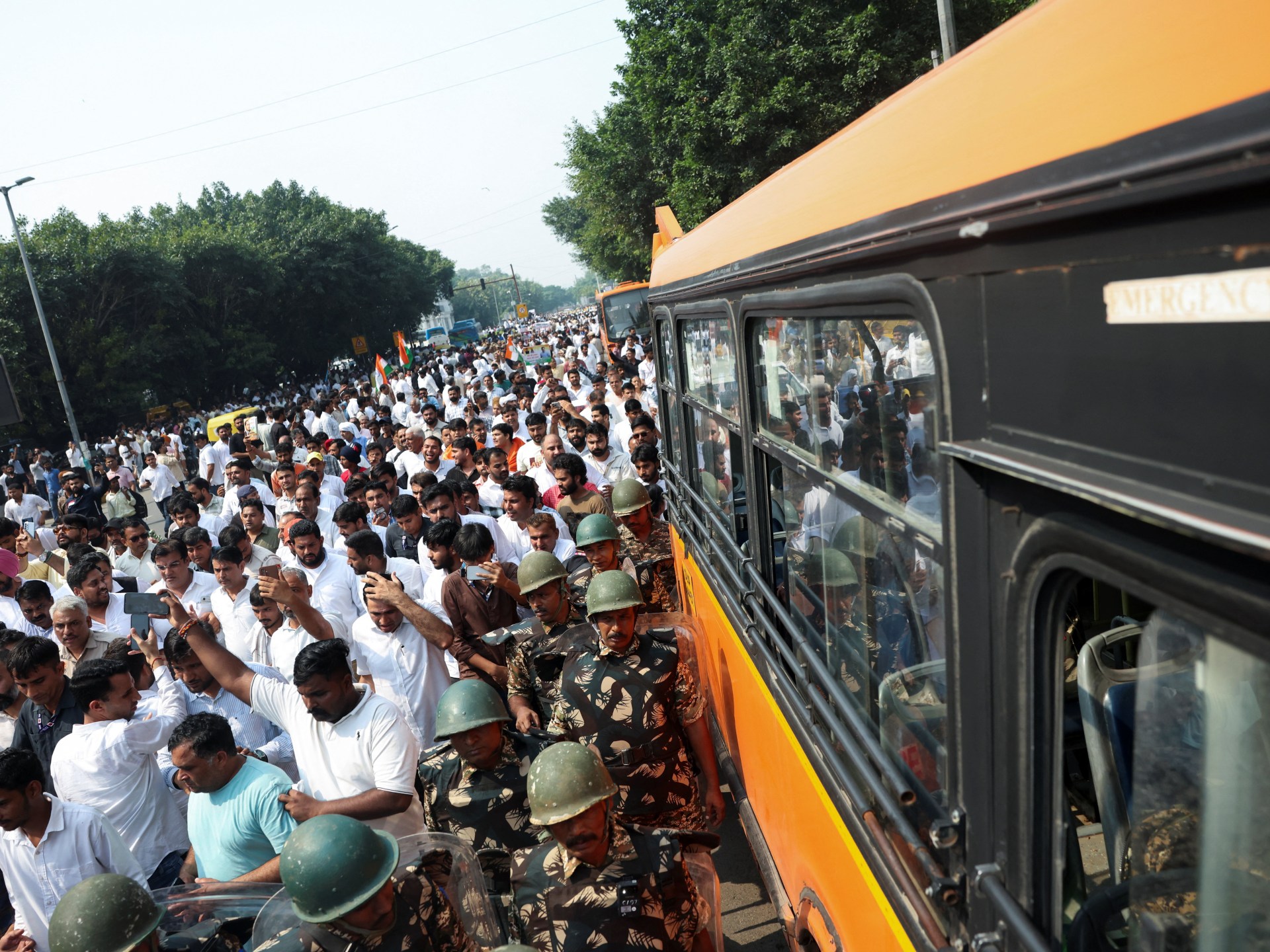
India's political landscape faced sharp institutional friction as the principal opposition Indian National Congress, supported by regional allies across the INDIA bloc, organized a coordinated march toward the Supreme Court in New Delhi. The demonstration centers on sweeping allegations of voter list manipulation and institutional malpractice, culminating in explicit demands for the immediate removal of the Chief Election Commissioner. Demonstrators and senior political leaders converged in the capital, challenging the credibility of recent state assembly and federal election outcomes.
The strategic stakes surrounding the confrontation reach directly into the stability of India's democratic infrastructure. For months, opposition leaders have alleged asymmetry in the enforcement of campaign finance rules, electronic voting system security, and the neutrality of the Election Commission of India. By moving the demonstration directly to the steps of the nation's highest judicial body, the opposition is intentionally internationalizing and institutionalizing its grievance, seeking constitutional intervention against what it terms systemic vote suppression. Federal law enforcement deployed reinforced security cordons across central New Delhi, restricting access to sensitive administrative sectors and detaining high-profile organizers to prevent potential civil unrest.
Global Trade & Economic Ripples
While the primary theater of dispute remains domestic, the economic ramifications reflect directly on India's standing as a premier emerging market destination. International institutional investors, who have deployed record capital allocations into Indian sovereign paper and benchmark equity indices such as the Nifty 50 and Sensex, monitor electoral integrity as an indicator of sovereign governance and regulatory predictability. Heightened domestic instability and questions over institutional legitimacy risk dampening short-term portfolio inflows, exerting downward pressure on the Indian rupee against the US dollar.
Furthermore, prolonged political unrest carries downstream consequences for critical industrial and infrastructural corridors. India serves as an integral node in Western-aligned supply chain diversification efforts, notably in electronics assembly, pharmaceutical manufacturing, and petrochemical refining. Heightened civil contestation in key administrative zones disrupts bureaucratic decision-making and slows industrial permitting, creating frictional costs for multinational corporations recalibrating manufacturing away from East Asian competitors.
Related Intelligence: Saving the International Criminal Court Amid US Sanctions
International Reactions & Diplomatic Stances
Global multilateral institutions and diplomatic missions in New Delhi have monitored the developments with measured caution. Democratic allies in the Quadrilateral Security Dialogue, notably the United States and Japan, have avoided overt public intervention, maintaining the diplomatic protocol that India's electoral apparatus remains an internal judicial affair. Nevertheless, international human rights and democracy monitoring bodies, including Freedom House and regional civil society coalitions, have issued briefings highlighting recurring challenges regarding executive overreach and independent regulatory autonomy.
Financial market analysts at major global banking institutions noted that while macroeconomic growth metrics remain resilient, prolonged public contestation undermines policy continuity. Sovereign risk assessments compiled across European capital markets emphasize that long-term foreign direct investment relies heavily on unimpeachable confidence in rule of law and transparent transfer-of-power mechanisms.
Strategic Outlook & Future Scenarios
The trajectory of this crisis hinges directly on the response of the Supreme Court of India. Should the apex judicial bench agree to hear formal petitions regarding the administrative conduct of the Election Commission, the legal scrutiny could compel structural audits of electronic voter registration protocols and electoral conduct guidelines. Conversely, should the judiciary dismiss the petition as politically motivated, opposition alliances are likely to escalate nationwide civil disobedience, staging rolling strikes across state capitals.
In the near term, the escalating polarization will cast a shadow over upcoming parliamentary sessions and international multilateral forums where New Delhi seeks to project its credentials as a beacon of global governance. Investors should anticipate intermittent volatility in domestic equity segments, alongside intensified scrutiny from international credit rating agencies assessing domestic political cohesion and institutional checks and balances.
Join Our Official WhatsApp Channel
Receive live commodity alerts, policy changes, and commercial intelligence directly on WhatsApp.