
Constitutional Friction and Market Stability Amid Khyber Pakhtunkhwa Governance Standoff
Escalating constitutional friction surrounding emergency provisions in Khyber Pakhtunkhwa threatens supply chain stability and regional commerce across northern trade corridors.
The Core Development
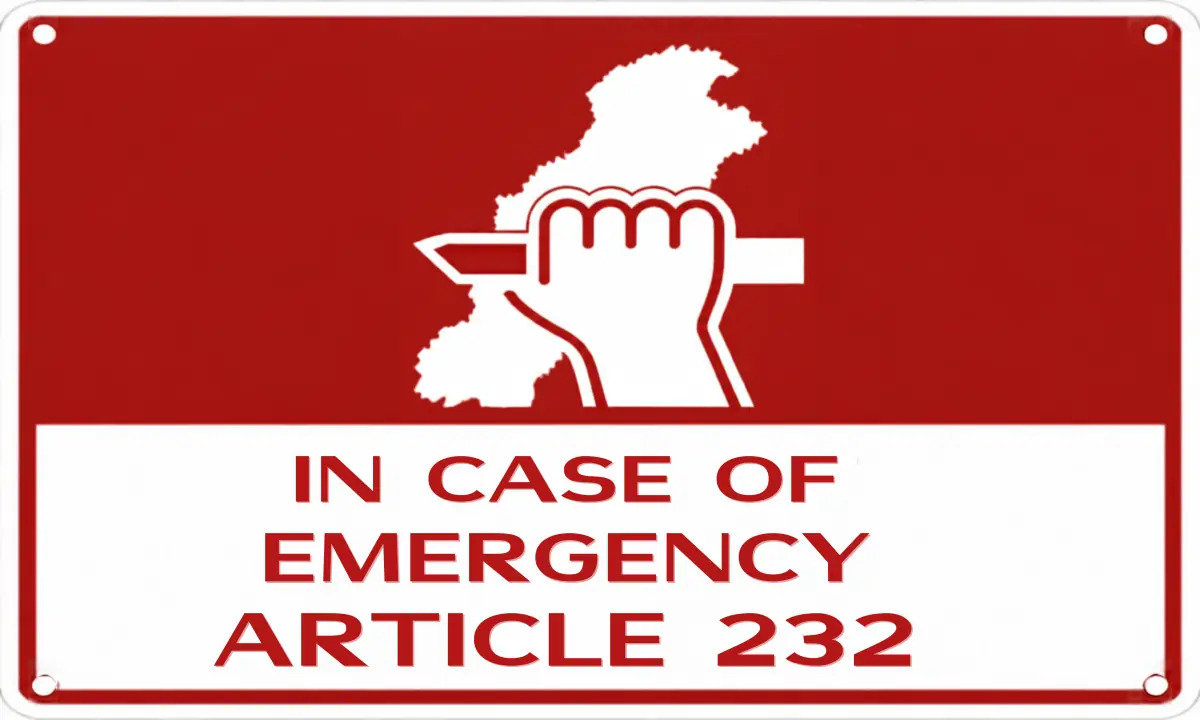
The invocation of emergency powers and federal interventions under Pakistan's constitutional architecture has re-emerged as a flashpoint in national governance. Drawing from historical precedents spanning five decades, the current discourse centers on the legal validity of executive actions taken against the provincial administration in Khyber Pakhtunkhwa (KP). The debate invokes deep-seated jurisprudence regarding the doctrine of necessity, parliamentary supremacy, and Article 232 through Article 234 of the Constitution of Pakistan, which govern the proclamation of emergency and the assumption of provincial functions by the federation.
Legal scholars and court precedents from landmark rulings over the past fifty years demonstrate that the bar for dismantling provincial autonomy remains exceptionally high. The current dispute, involving federal directives questioning the administrative posture of the KP government, raises pressing questions regarding whether executive friction meets the statutory threshold of an internal disturbance beyond provincial control. As historical jurisprudence confirms, invoking 'states of exception' risks triggering protracted litigation in the superior courts, thereby creating immediate friction between federal enforcement agencies and provincial secretariats.
Commercial & Economic Implications
For commercial enterprises, wholesale traders, and logistics operators managed by Kalyar Traders and allied merchant networks, constitutional instability translates directly into economic friction. Khyber Pakhtunkhwa serves as the pivotal logistical conduit linking Punjab and Sindh to the western border crossings of Torkham and Ghulam Khan, serving both domestic demand and crucial transit trade with Afghanistan and Central Asia.
Administrative paralysis or confrontation between federal and provincial law enforcement inevitably disrupts cargo clearances, inter-provincial checkposts, and tolling infrastructure. Commercial distributors report that heightened political friction routinely introduces operational delays, driving up freight demurrage costs and transit insurance premiums. For wholesale commodity markets dealing in wheat, sugar, pulses, and perishable produce, disruptions along national highways through KP introduce supply bottlenecks. These supply-side constraints exacerbate localized price volatility, pushing regional retail inflation upward and complicating inventory management for FMCG distributors across northern hubs.
Related Intelligence: Indian Opposition Marches on Supreme Court Over Alleged Election Tampering
Stakeholder Perspectives & Market Reactions
Trade bodies, chambers of commerce, and legal councils have voiced concern over the widening rift between Islamabad and Peshawar. The Sarhad Chamber of Commerce and Industry (SCCI), alongside national transport associations, has urged both tiers of government to prioritize institutional continuity over political contestation. Commercial stakeholders warn that arbitrary administrative shifts damage investor confidence at a time when Pakistan requires foreign exchange stabilization and robust cross-border trade revenue.
Legal experts emphasize that three major Supreme Court rulings over the past three decades have circumscribed the unilateral imposition of governor's rule or federal emergencies without rigorous objective verification. Constitutional jurists maintain that unless provincial machinery completely breaks down, overriding an elected provincial setup invites judicial nullification, further heightening institutional turbulence.
Forward Outlook & Key Watchpoints
The trajectory of the standoff hinges on forthcoming judicial interventions and legislative scrutiny. Should the superior judiciary be petitioned to review the legality of federal directives regarding KP's administration, precedent suggests the courts will scrutinize the factual grounds with high skepticism.
Key watchpoints for corporate treasuries, logistics directors, and trading houses over the next 30 to 60 days include: - Potential petitions filed before the Supreme Court or Peshawar High Court contesting federal interventionist measures. - Operational continuity of cargo transit corridors along the N-5, N-55 Indus Highway, and the Hazara Motorway. - Federal revenue collection and the uninterrupted functioning of regional customs stations along the western border. - Market liquidity and credit risk metrics among KP-based wholesale dealers facing inventory holdups.
Preserving administrative predictability remains the single most critical variable for market confidence as commercial operators navigate persistent macro headwinds.
Join Our Official WhatsApp Channel
Receive live commodity alerts, policy changes, and commercial intelligence directly on WhatsApp.