
Russian Interior Minister Arrives in Pakistan for Landmark Bilateral Security Talks
Russian Interior Minister Vladimir Kolokoltsev has commenced a landmark four-day official visit to Pakistan, engaging high-level leadership to reinforce institutional security ties and bilateral transit integrity.
The Core Development
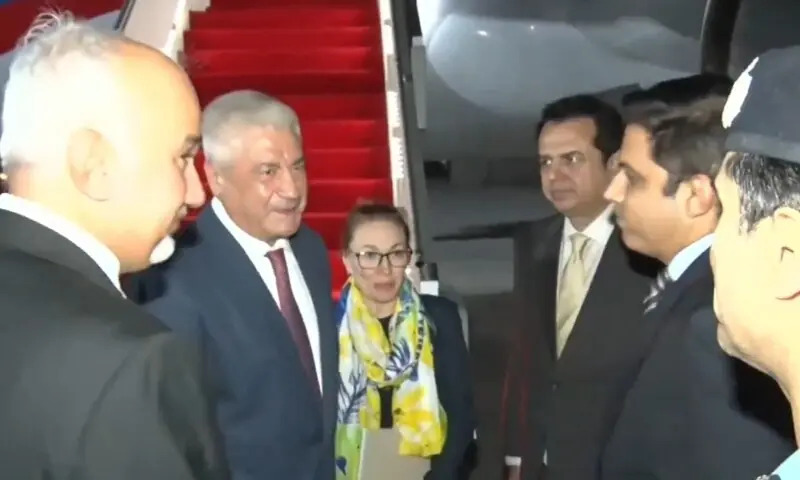
In a diplomatic milestone signaling a recalibration of regional security architecture, Russian Interior Minister General Vladimir Kolokoltsev landed in Islamabad on Monday for an unprecedented four-day official visit. The mission marks the first instance in bilateral history that a Russian interior minister has visited Pakistan, underscoring growing institutional ties between Moscow and Islamabad.
Minister of State for Interior Tallal Chaudhry received Kolokoltsev upon his arrival at Nur Khan Airbase. The trip takes place on the formal invitation of Pakistan’s Federal Interior Minister Mohsin Naqvi. High-level delegations from both interior ministries are scheduled to conduct comprehensive working sessions covering counter-terrorism, intelligence sharing, policing infrastructure, cybercrime mitigation, and joint interdiction efforts against transnational narcotics cartels operating across Central and South Asian borderlands.
Kolokoltsev is slated to hold substantive deliberations with Prime Minister Shehbaz Sharif, Interior Minister Naqvi, and premier national security officials during his four-day itinerary. The agenda also encompasses the operationalization of mutual legal assistance protocols and capacity-building programs for federal law enforcement agencies, cementing institutional engagement.
Commercial & Economic Implications
While ostensibly rooted in interior affairs and homeland policing, the institutional rapprochement between Moscow and Islamabad carries profound ramifications for Pakistan's macroeconomy, wholesale commodity distribution, and retail trade ecosystem. Secure commercial transport corridors are a prerequisite for regularized energy imports and agricultural inputs from the Russian Federation.
Pakistan continues to explore structured supply arrangements for Russian crude, petrochemical derivatives, and agricultural staples, notably wheat and fertilizer components. Cross-border commerce via overland routes such as the International North-South Transport Corridor (INSTC) and Central Asian transit networks requires rigorous law enforcement cooperation to safeguard freight integrity, prevent transit theft, and eliminate illicit tariff evasion.
For Pakistani domestic markets, strengthened supply chain stability from Eurasian producers helps curb volatility in domestic fertilizer pricing and imported grain wholesale quotes. As agricultural distribution channels stabilize against unpredictable international logistics disruptions, downward pressures on domestic food inflation can materialize, directly benefiting retail merchants and urban consumer staples.
Related Intelligence: UK Prime Minister Andy Burnham Pledges Post-Brexit EU Trade Reset
Stakeholder Perspectives & Market Reactions
Domestic commercial bodies, including the Federation of Pakistan Chambers of Commerce and Industry (FPCCI) and regional logistics networks, view the deepening institutional engagement as an indispensable step toward mitigating sovereign transit risks. Trade operators have historically cited regulatory opacity, non-tariff border clearance hurdles, and transnational smuggling risks as key bottlenecks stalling bilateral trade execution.
Official quarters in Islamabad emphasize that formalizing police-to-police and interior-level communication channels removes key non-commercial friction points. Diplomatic observers note that Moscow views institutional alignment with Pakistan as vital for stabilizing regional transit nodes connecting Central Asia to the Arabian Sea. Concurrently, maritime freight operators and customs clearing brokers note that robust administrative oversight will reduce cargo inspection delays and counter contraband flows that distort domestic retail supply chains.
Forward Outlook & Key Watchpoints
Over the next four days, working groups are expected to finalize bilateral memorandums of understanding covering law enforcement exchanges, cyber intelligence architecture, and anti-smuggling task forces. Market participants must monitor whether these high-level security dialogues yield concrete progress toward currency clearance channels and maritime cargo shipping compacts.
The long-term assessment hinges on whether institutional agreements translate into operational mechanisms that directly reduce freight risks for commercial traders. The culmination of Kolokoltsev’s visit will signal whether bilateral engagement can progress from symbolic diplomatic rapprochement into a functional, secure foundation for sustained cross-border trade, commodity procurement, and regional commercial integration.
Join Our Official WhatsApp Channel
Receive live commodity alerts, policy changes, and commercial intelligence directly on WhatsApp.