
Government Raises Petrol Price by Rs1.20, Trims High-Speed Diesel Rate
Pakistan's federal government has revised petroleum product prices, raising petrol by Rs1.20 per litre while delivering a nominal reduction of Re0.17 per litre for high-speed diesel.
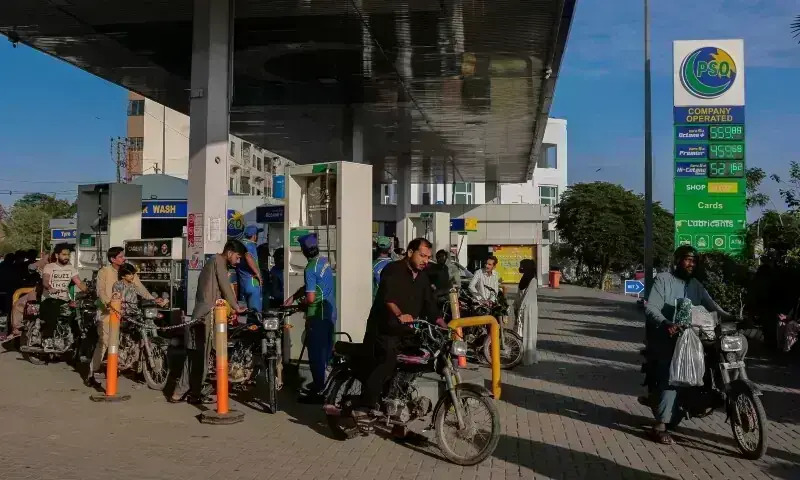
The Core Development
The federal government on Friday announced an adjustment in domestic petroleum product prices for the upcoming fortnight, raising the ex-depot price of motor gasoline (petrol) by Rs1.20 per litre while marginally slashing high-speed diesel (HSD) by Re0.17 per litre. The formal notification, issued by the Ministry of Finance following recommendations from the Oil and Gas Regulatory Authority (OGRA), aligns consumer tariffs with recent fluctuations in international refined product markets and import parity pricing.
Under the updated pricing schedule, petrol will now retail at a higher benchmark across national distribution networks, whereas the fractional relief on HSD offers negligible budgetary cushion for industrial users. Kerosene oil and light diesel oil (LDO) benchmarks were similarly adjusted in line with the import cost calculations evaluated by state-owned Pakistan State Oil (PSO) and private oil marketing companies (OMCs). The bi-weekly revision mechanism continues to operate under the shadow of stringent fiscal covenants agreed with multilateral lenders, preventing the government from absorbing global tariff increases through direct exchequer subsidies.
Commercial & Economic Implications
The divergent price movement between petrol and HSD introduces subtle commercial dynamics across retail trade, wholesale logistics, and domestic manufacturing. While the marginal Re0.17 cut in HSD leaves heavy freight haulage, agricultural tubewells, and commercial trucking tariffs essentially unchanged, the upward adjustment in motor gasoline immediately hits commuter spending and operational expenses for light-vehicle urban delivery fleets.
In Pakistan's wholesale distribution networks, last-mile commercial delivery rely heavily on two-wheelers and light commercial vehicles operating on petrol. Small and medium-sized distributors—including FMCG suppliers, pharmaceuticals, and perishable retail vendors—face direct operational margin compression. Even modest upward revisions in fuel benchmarks contribute to inflation expectations, reinforcing upward price stickiness across wholesale markets. Concurrently, broader consumer purchasing power remains constrained, tempering non-discretionary retail sales across secondary urban centres.
Related Intelligence: Government Raises Petrol Price by Rs1.20, Trims High-Speed Diesel
Stakeholder Perspectives & Market Reactions
Trade bodies and retail associations have expressed frustration over the continuous ratcheting of energy tariffs. Representatives from the Federation of Pakistan Chambers of Commerce and Industry (FPCCI) and regional merchant alliances noted that recurring fuel revisions disrupt inventory costing models and hamper forward planning. Urban transport operators observed that while diesel rates technically contracted, a reduction below a rupee fails to reflect any tangible pass-through to consumer-facing freight rates or passenger fares.
Conversely, energy market analysts and treasury desks point out that OGRA operates within a tightly constrained policy framework. The maintenance of maximum statutory Petroleum Development Levy (PDL) rates remains an essential pillar for the federal government's non-tax revenue targets. Industry observers note that despite local currency stability against the US dollar in recent sessions, international crack spreads and refined fuel import premiums constrained authorities from providing broader price relief across the basket.
Forward Outlook & Key Watchpoints
The trajectory of domestic petroleum prices over the coming fortnights will hinge critically on three macro factors: the benchmark pricing of Arabian Gulf refined products, the volatility of regional freight premiums, and the rupee's exchange rate stability. Should Middle Eastern geopolitical risk premiums expand, import parity costs will inevitably rise, testing the government's ability to maintain retail price ceilings.
Moreover, fiscal authorities face heightened scrutiny from the International Monetary Fund (IMF) to preserve domestic revenue mobilization. Any consideration to adjust the PDL cap upwards in subsequent statutory amendments will remain a core variable for market watchers. Commercial enterprises and supply chain planners must prepare for sustained fuel cost volatility, adopting tighter route-optimization strategies and hedging against potential bi-weekly upward swings in domestic transportation overheads.
Join Our Official WhatsApp Channel
Receive live commodity alerts, policy changes, and commercial intelligence directly on WhatsApp.