
Government Raises Petrol Price by Rs1.20, Trims High-Speed Diesel
Pakistan has increased motor petrol prices by Rs1.20 per litre while marginally reducing high-speed diesel rates by Re0.17 per litre for the upcoming fortnightly pricing cycle.
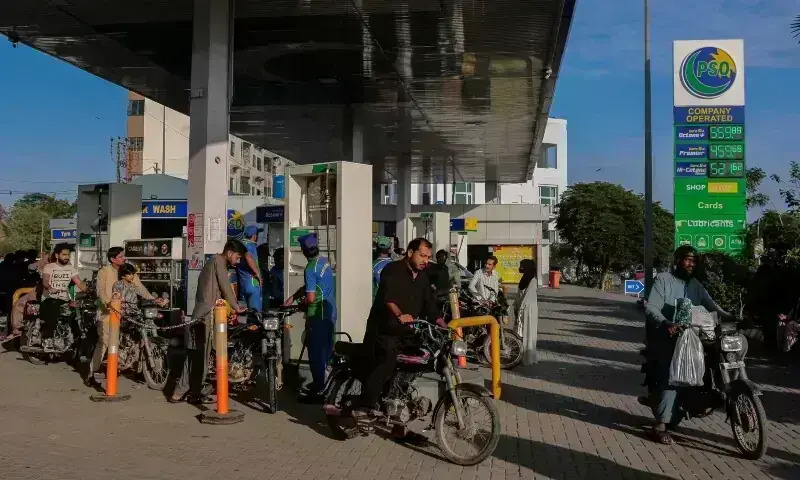
The Core Development
The federal government has revised the prices of petroleum products for the upcoming fortnight, announcing an increase of Rs1.20 per litre in the ex-depot price of motor petrol alongside a nominal reduction of Re0.17 per litre for high-speed diesel (HSD). The price adjustments were calculated and forwarded by the Oil and Gas Regulatory Authority (OGRA) and approved by the Ministry of Finance following consultations with the Prime Minister. The decision reflects recent shifts in international refined petroleum benchmarks and the prevailing foreign exchange parity against the US dollar.
Under the revised pricing schedule, standard motor petrol will retail at a slightly higher cost across primary urban depots and nationwide filling stations. Conversely, the minor reduction in high-speed diesel offers negligible fiscal relief to commercial logistics networks. Other petroleum derivatives, including light diesel oil and kerosene, also underwent routine recalibrations aligned with global trends. The federal authorities maintained existing petroleum development levy (PDL) structures without altering underlying customs duty frameworks, preserving budgetary revenue flows while absorbing marginal crude and refined product price variances.
Commercial & Economic Implications
The mixed revision carries asymmetrical implications for Pakistan's domestic economic ecosystem. Petrol serves as the primary mobility fuel for the urban middle class, white-collar workforce, and the extensive two-wheeler delivery fleets underpinning urban e-commerce and retail supply chains. The incremental increase of Rs1.20 per litre directly inflates the day-to-day operational expenses of independent couriers, ride-hailing contractors, and commuter traffic, exerting subtle upward pressure on household service costs.
On the wholesale distribution front, high-speed diesel is the predominant energy source for heavy commercial transport, inter-city cargo, and mechanized agricultural operations. While a downward revision is conceptually favorable for freight operations, the trivial margin of Re0.17 per litre fails to move the needle for long-haul logistics carriers. Transport operators calculate haulage rates based on aggregate operational overheads, including tire wear, lubricant costs, and vehicle amortization. Consequently, the negligible diesel cut will not prompt downward revisions in freight charges, leaving baseline consumer price index (CPI) food and goods inflation unchanged.
Related Intelligence: Pakistan and Oman Deepen Strategic Ties Amid Rising Middle East Tensions
Stakeholder Perspectives & Market Reactions
Retail merchant bodies and logistics associations expressed frustration over the asymmetric pricing adjustments. The All Pakistan Transporters Council noted that minor diesel reductions of this magnitude fail to offset ongoing increases in toll charges, spare parts, and general maintenance expenses. Transporters emphasized that without substantive decreases exceeding Rs10 to Rs15 per litre, freight tariffs across major transit arteries like the National Highway (N-5) and Motorway networks will remain stationary.
Urban business associations and small-to-medium enterprise (SME) leaders pointed out that frequent upward adjustments in petrol prices compound operational friction for local retail delivery networks. Conversely, economic analysts noted that the government's constrained fiscal space under ongoing multilateral stabilization programs leaves little room for fuel subsidies. The state relies heavily on petroleum taxation to bridge domestic revenue shortfalls, compelling regulators to pass price escalations directly to the end consumer.
Forward Outlook & Key Watchpoints
The trajectory of domestic retail fuel prices over the subsequent pricing cycles will hinge directly on Middle Eastern geopolitical tensions, shipping route dynamics, and the stability of the Pakistani rupee against major foreign currencies. Financial observers will monitor whether international crude oil benchmarks maintain their volatile band or breach higher resistance levels. Any persistent uptrend will force regulators to either elevate consumer prices further or renegotiate statutory levy caps.
Additionally, market watchers are tracking the federal government's commitments regarding non-tax revenue mobilization. With petroleum development levies functioning as an indispensable fiscal anchor, the authorities are unlikely to absorb import cost spikes through tax concessions. Businesses and corporate fleet operators are advised to maintain flexible logistics budgeting and hedge operational cash flows against sustained volatility across retail petroleum channels.
Join Our Official WhatsApp Channel
Receive live commodity alerts, policy changes, and commercial intelligence directly on WhatsApp.