
Pakistan and Oman Deepen Bilateral Trade and Regional Peace Efforts
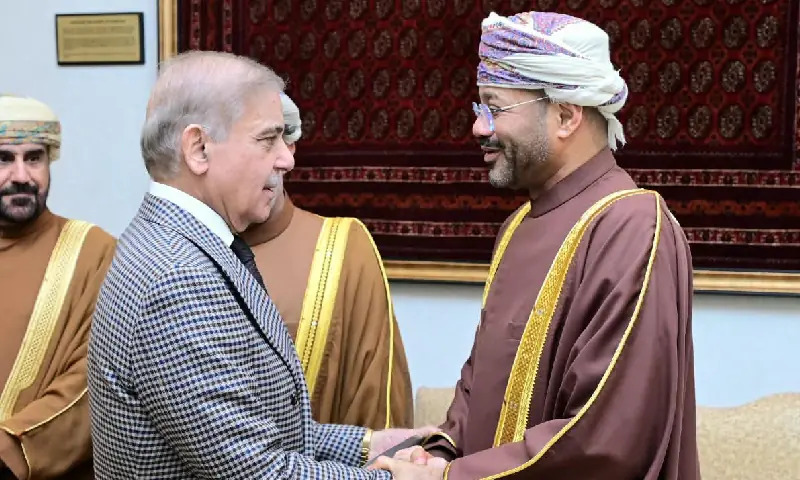
Omani Foreign Minister Sayyid Badr Albusaidi met Prime Minister Shehbaz Sharif in Islamabad to reinforce diplomatic mediation and expand bilateral economic partnerships amid mounting Middle East geopolitical tensions.
The Core Development
In a crucial diplomatic engagement aimed at both bilateral economic expansion and regional de-escalation, Omani Foreign Minister Sayyid Badr Albusaidi called on Prime Minister Shehbaz Sharif in Islamabad on Wednesday. The high-level meeting formed the centerpiece of the Omani foreign minister's two-day official trip to Pakistan, which coincided with the convening of the eighth session of the Pakistan-Oman Joint Ministerial Commission (JMC) alongside comprehensive talks with Deputy Prime Minister and Foreign Minister Ishaq Dar.
According to an official communique released by the Prime Minister's Office, Foreign Minister Albusaidi commended Pakistan's sustained diplomatic initiatives geared toward conflict de-escalation and negotiated settlements across the Middle East. Both Muscat and Islamabad occupy pivotal geographic perches along the Arabian Sea and the Strait of Hormuz, making mutual stability an existential priority. Prime Minister Sharif emphasized that the bilateral relationship rests upon bedrock foundations of shared faith, geographical proximity, historical ties, and extensive people-to-people exchanges, while underscoring an urgent imperative to translate these longstanding affinities into concrete trade and investment partnerships.
Commercial & Economic Implications
For Pakistan's commercial landscape, the consolidation of ties with Muscat carries immediate ramifications across maritime logistics, energy security, and supply chain integrity. Oman sits directly opposite Pakistan's Gwadar port, presenting an underutilized maritime corridor that could significantly compress transit times and freight expenses for wholesale distributors and consumer goods importers.
As Middle Eastern tensions generate systemic volatility in hydrocarbon markets, bilateral alignment with Gulf producers offers a hedge against sudden energy supply disruptions. In domestic markets, heightened geopolitical risk directly translates into elevated war-risk insurance premiums for cargo vessels traversing the Gulf of Oman, which filters down into consumer retail prices and imported raw material inflation. Strengthening institutional corridors through the JMC provides Pakistani industrial sectors—spanning textiles, agri-commodities, and light manufacturing—with preferred market access, mitigating external shocks and expanding foreign exchange receipts.
Related Intelligence: Pakistan and Oman Deepen Strategic Ties Amid Rising Middle East Tensions
Stakeholder Perspectives & Market Reactions
Pakistani business chambers and export associations have welcomed the revitalized ministerial engagement. Trading houses note that Oman represents a strategic gateway not only into the broader Gulf Cooperation Council (GCC) but also toward East African markets. Commercial stakeholders have persistently advocated for tariff rationalization, unified customs clearance protocols, and regularized ferry services between Gwadar, Karachi, and Omani ports such as Sohar and Salalah.
Diplomatic and legal analysts highlight that Oman's traditional stance of neutrality positions it as an indispensable partner for Pakistan's foreign economic policy. Official circles in Islamabad view the JMC agreements as a structural conduit to channel Gulf sovereign and private investment into Pakistan's Special Economic Zones, providing much-needed capital injection for infrastructure and import-substitution manufacturing ventures.
Forward Outlook & Key Watchpoints
Moving forward, market observers must monitor the operationalization of decisions finalized during the 8th JMC session. Key milestones include bilateral working groups establishing measurable export targets and the finalization of maritime agreements designed to streamline vessel traffic and reduce turnaround times.
Critical watchpoints over the coming quarters will center on regional security developments across the Gulf of Oman and the Red Sea. Should diplomatic interventions successfully defuse regional hostilities, shipping lines may scale back ancillary freight surcharges, directly relieving wholesale price pressures across Pakistani retail markets. Concurrently, progress on formalized energy procurement frameworks and joint logistics ventures between Pakistani state enterprises and Omani authorities will dictate the medium-term commercial dividend of these high-level engagements.
Join Our Official WhatsApp Channel
Receive live commodity alerts, policy changes, and commercial intelligence directly on WhatsApp.