
Pakistan and Oman Deepen Strategic Ties Amid Rising Middle East Tensions
Oman's Foreign Minister Sayyid Badr Albusaidi met Prime Minister Shehbaz Sharif in Islamabad to reinforce regional de-escalation diplomacy and enhance maritime trade corridors amidst heightened geopolitical volatility across the Middle East.
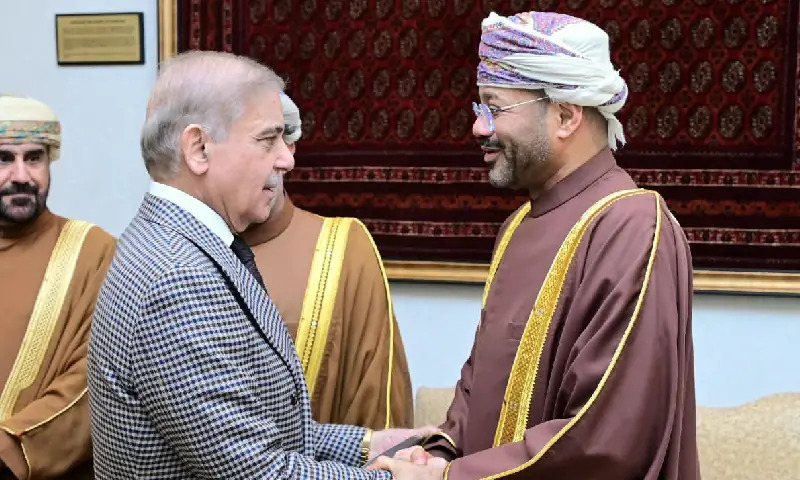
The Core Development
In a high-stakes diplomatic engagement in Islamabad, Foreign Minister of the Sultanate of Oman, Sayyid Badr Albusaidi, held formal discussions with Prime Minister Shehbaz Sharif. The bilateral dialogue centered on mitigating escalating hostilities across the Middle East following recent military strikes and sustained regional friction. During the meeting, the Omani leadership formally commended Pakistan's sustained diplomatic efforts to pursue de-escalation, multilateral dialogue, and structural peace mechanisms.
The meeting occurred on the second day of Albusaidi's official mission to Pakistan, an itinerary anchored by the eighth session of the Pakistan-Oman Joint Ministerial Commission (JMC). Preceding his dialogue with Prime Minister Sharif, the Omani dignitary conducted extensive negotiations with Deputy Prime Minister and Foreign Minister Ishaq Dar. Deliberations covered historical bilateral linkages rooted in geographical proximity, maritime heritage, and shared security concerns in the Arabian Sea. Both delegations evaluated joint mechanisms to prevent broader regional conflict, focusing particularly on securing maritime sea lanes that are vital for transcontinental energy distribution and sovereign supply chains.
Commercial & Economic Implications
For Pakistan’s macroeconomic framework and domestic commercial markets, diplomacy with Muscat carries direct structural consequences. Oman occupies an indispensable position flanking the Strait of Hormuz—the maritime chokepoint through which the vast majority of Pakistan’s liquefied natural gas (LNG) and crude oil imports transit. Heightened conflict risks in the Gulf trigger immediate surges in maritime war-risk premiums, bunker fuel surcharges, and global freight rates, compounding domestic balance-of-payments pressures.
Within Pakistan's domestic wholesale and retail distribution systems, any maritime supply chain disruption swiftly filters into elevated landed costs for petrochemicals, raw plastic polymers, industrial fertilizers, and transport fuels. A stabilization of Gulf shipping routes helps shield domestic distributors and retailers from abrupt import inflation, preserving working capital for mid-tier import businesses and stabilizing consumer prices across retail energy and manufacturing goods. Deepening institutional engagement through the Joint Ministerial Commission also unlocks potential for bilateral trade diversification, particularly in agro-commodities, rice, textiles, and construction materials shipped from Karachi and Gwadar to Omani ports such as Sohar and Salalah.
Related Intelligence: Pakistan and Russia Explore Expanded Bilateral Trade and Economic Ties
Stakeholder Perspectives & Market Reactions
Domestic industrial associations and trade bodies have monitored the diplomatic outreach closely. The Federation of Pakistan Chambers of Commerce and Industry (FPCCI) and regional shipping bodies have expressed persistent concern regarding the volatility of maritime transit routes in the Gulf of Oman and northern Arabian Sea. Commercial importers noted that continuous intergovernmental coordination between Islamabad and Muscat is vital to maintain uninterrupted coastal shipping lines and negotiate preferential bilateral trade tariffs under framework agreements.
Financial analysts and logistics operators underscored that Oman remains a natural gateway for Pakistani enterprises targeting the broader Gulf Cooperation Council (GCC) market. Furthermore, corporate stakeholders emphasized the significance of the institutionalized Joint Ministerial Commission as a vehicle to fast-track investment treaties, resolve cross-border payment bottlenecks, and establish integrated supply chain corridors that link the Special Economic Zones of Gwadar directly with Omani free zones.
Forward Outlook & Key Watchpoints
Moving forward, commercial stakeholders and policymakers will focus on actionable outcomes following the eighth Pakistan-Oman JMC session. Key watchpoints include formal announcements regarding reciprocal tariff reductions, joint venture frameworks in energy distribution, and potential bilateral currency settlement mechanisms designed to lower transactional dollar dependency.
Regionally, Islamabad and Muscat are expected to maintain an active diplomatic cadence to prevent retaliatory military spirals that could close vital commercial sea lanes. The degree to which these bilateral talks successfully catalyze tangible maritime trade routes between Gwadar, Karachi, and Sohar will serve as the primary commercial barometer over the coming quarters.
Join Our Official WhatsApp Channel
Receive live commodity alerts, policy changes, and commercial intelligence directly on WhatsApp.