
Federal Government Pledges Economic Revival in Khyber Pakhtunkhwa Under Governor Rule
Prime Minister Shehbaz Sharif visited Peshawar to convene the provincial apex committee, pledging comprehensive economic and administrative revival across Khyber Pakhtunkhwa under active federal governance.
The Core Development
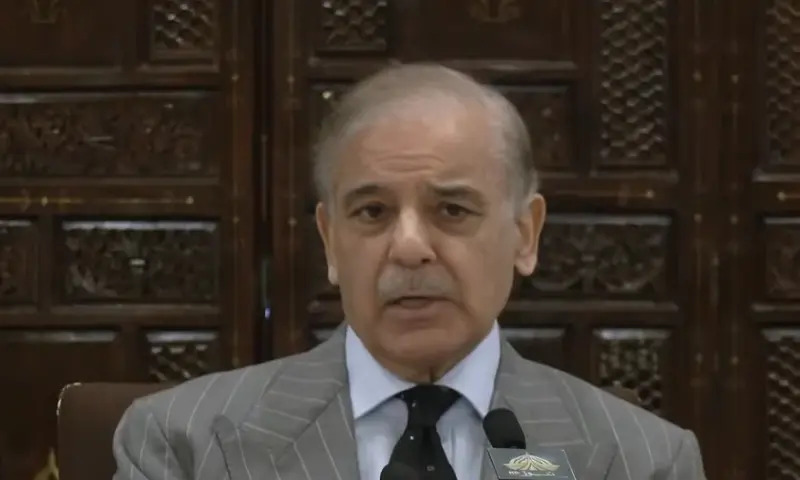
Prime Minister Shehbaz Sharif convened a high-level session of the Khyber Pakhtunkhwa Provincial Apex Committee in Peshawar on Thursday, marking his inaugural official visit to the province since the imposition of Governor's Rule and the declaration of emergency under Article 234 of the Constitution. The transition in governance, enacted by presidential notification, transferred administrative prerogatives to Governor Faisal Karim Kundi and federally appointed technocratic advisers.
The apex committee proceedings, attended by Chief of the Army Staff General Asim Munir, key federal cabinet ministers, senior intelligence officials, and provincial administration leadership, concentrated on re-evaluating the regional security architecture and restoring fiscal discipline. Addressing the forum, Prime Minister Sharif reaffirmed the federal administration's commitment to expediting civil rehabilitation, improving basic governance, and reversing what he characterized as a decade-long governance deficit under the previous Pakistan Tehreek-e-Insaf (PTI) administration. The civil-military leadership underscored synchronized efforts to eradicate militant networks and restore law and order, establishing institutional stability as a non-negotiable prerequisite for economic sustainability.
Commercial & Economic Implications
The implementation of direct federal administration carries critical implications for Khyber Pakhtunkhwa's economic framework, retail markets, and interstate supply lines. Over recent fiscal cycles, security concerns and political friction have elevated logistics overheads, dampened private capital expenditure, and hindered the formal wholesale trade network operating out of hubs like Peshawar, Mardan, and Swat.
For enterprise distributors and fast-moving consumer goods (FMCG) suppliers, enhanced federal coordination at transit checkpoints is projected to regularize supply chains. The stabilization of arterial trade corridors, particularly the N-5 Highway and regional links facilitating commercial transit toward the Torkham border crossing with Afghanistan, is essential for commodity flows. Sustained disruption in these zones has historically imposed risk premiums on freight transport, which filtered down into elevated retail pricing and exacerbated regional inflationary pressures on essential goods. Direct federal control is expected to facilitate faster release of Public Sector Development Programme (PSDP) allocations, directly benefiting regional civil construction, municipal infrastructure, and wholesale merchant trade.
Related Intelligence: Opposition Coalition TTAP Sets Strict Conditions for Talks With Shehbaz Sharif
Stakeholder Perspectives & Market Reactions
Regional trade bodies, including the Sarhad Chamber of Commerce and Industry (SCCI) and associations of wholesale distributors, have reacted with cautious pragmatism. Market representatives have long petitioned for consistent law enforcement, uninterrupted transport security, and lower administrative barriers on cargo movements. Merchant groups have emphasized that while regulatory oversight is vital, administrative measures must not manifest as bureaucratic bottlenecks that impede legitimate commerce.
Conversely, legal analysts and opposition voices have questioned the durability and constitutionality of invoking emergency provisions to resolve provincial political disputes. Opposition leaders maintain that federal intervention undermines provincial autonomy and risks alienating local enterprise sentiment if the political confrontation deepens. Despite these constitutional debates, financial and business observers point out that currency liquidity, banking operations, and public works tenders require clear executive command to prevent institutional paralysis.
Forward Outlook & Key Watchpoints
The trajectory of Khyber Pakhtunkhwa's economic recovery hinges on the operational efficacy of the Governor's administration and the duration of federal rule. In the immediate horizon, key metrics include the swift deployment of federal development funds, the execution of targeted security protocols across commercial transport arteries, and the transparent continuity of civil services.
Stakeholders will closely observe how the federal executive balances intense security crackdowns with the facilitation of routine trade. Crucial watchpoints encompass policy continuity for border clearance mechanisms at Torkham, the timeline for constitutional challenges pending in judicial forums, and the governance committee's ability to maintain public infrastructure spending amid tight federal fiscal parameters dictated by the International Monetary Fund framework.
Join Our Official WhatsApp Channel
Receive live commodity alerts, policy changes, and commercial intelligence directly on WhatsApp.