
Prime Minister Addresses Apex Committee Following Khyber Pakhtunkhwa Governance Overhaul
Prime Minister Shehbaz Sharif convened the provincial apex committee in Peshawar to restore administrative stability and address escalating security concerns following the recent declaration of an emergency in Khyber Pakhtunkhwa.
The Core Development
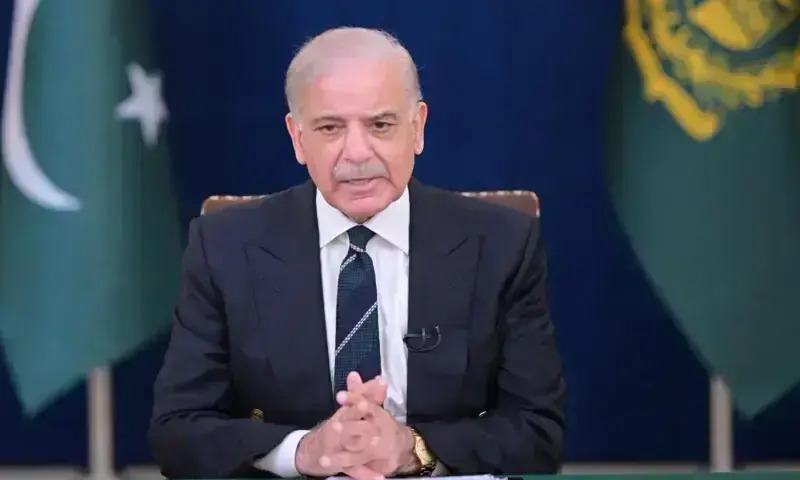
Prime Minister Shehbaz Sharif convened a high-level provincial apex committee session in Peshawar to review the deteriorating security and governance matrix across Khyber Pakhtunkhwa. The high-stakes engagement marks the premier’s inaugural official visit to the provincial capital following the formal imposition of governor’s rule and the proclamation of an administrative emergency on October 11. Accompanied by federal cabinet members and newly installed provincial advisers, the prime minister met alongside Chief of Army Staff General Asim Munir and Khyber Pakhtunkhwa Governor Faisal Karim Kundi.
Addressing the assembled civil and military command, the prime minister emphasized that the invocation of emergency governance protocols was enacted under extreme compulsion to preserve constitutional order and counter asymmetric operational threats. The apex committee deliberations centered on structural administrative coordination, intelligence-led kinetic operations, and the immediate stabilization of vulnerable regional zones. Federal authorities highlighted that regularizing internal administrative functions serves as a mandatory precursor to revitalizing institutional capacity, securing critical infrastructure, and safeguarding civil life across the province.
Commercial & Economic Implications
For enterprise operators, wholesale distributors, and mercantile networks across Pakistan, the political and security trajectory of Khyber Pakhtunkhwa directly dictates the efficiency of transit logistics. The province serves as the principal economic gateway connecting national industrial clusters in Punjab and Sindh with Central Asian and Afghan transit trade via the Torkham and Ghulam Khan border terminals. Sustained volatility and political confrontation had progressively disrupted arterial freight movements, leading to steep escalation in freight forwarding tariffs, inventory holding premiums, and commercial insurance rates.
Wholesale distribution of essential commodities, including grain, consumer goods, and construction inputs, routinely encounters logistical friction when administrative cohesion fractures. The federal administration’s pledge to prioritize rapid economic stabilization aims to compress demurrage charges, suppress price volatility, and normalize consumer retail pricing in urban centers such as Peshawar, Mardan, and Swat. Furthermore, securing local transport arteries remains pivotal to halting cross-border illicit trade, thereby protecting formal market revenues and reducing fiscal leaks across border customs collectorates.
Related Intelligence: PM Shehbaz Convenes KP Apex Committee to Address Escalating Security Crises
Stakeholder Perspectives & Market Reactions
Institutional commercial bodies, including the Sarhad Chamber of Commerce and Industry (SCCI) and regional wholesale associations, have cautiously assessed the apex committee's consolidation drive. Trade leadership has continually urged the state to decouple vital freight corridors from partisan political discord. Commercial leaders emphasize that persistent unrest and irregular supply interruptions degrade business liquidity, particularly for mid-tier wholesalers operating within constrained cash-flow cycles.
On the legal and institutional front, legal analysts continue to scrutinize the constitutional validity and long-term viability of direct central oversight, cautioning that unilateral administrative interventions must be accompanied by lawful governance frameworks to avoid systemic deadlock. Conversely, federal policymakers maintained throughout the Peshawar assembly that executive intervention was indispensable to close security gaps and halt operational gridlock between provincial departments and federal security apparatuses.
Forward Outlook & Key Watchpoints
Over the subsequent quarter, market observers and political analysts will track specific benchmark metrics to determine whether the apex committee's directives translate into genuine on-the-ground operational stability. Immediate monitoring points include the rate of institutional cohesion between the governor’s administrative machinery and newly designated provincial advisers, alongside the measurable reduction of security incidents along main commercial corridors.
Secondary watchpoints involve the deployment of target development expenditures aimed at municipal infrastructure and transit facilities. Should the unified civil-military administrative framework establish demonstrable predictability, bilateral freight transit volumes toward regional frontiers are expected to rebound, mitigating national supply disruptions. However, should civil-military governance face protracted political pushback or judicial intervention, regional commerce may experience protracted hesitation from long-term institutional investors and freight logistics operators.
Join Our Official WhatsApp Channel
Receive live commodity alerts, policy changes, and commercial intelligence directly on WhatsApp.