
Fatal US Theme Park Accident Triggers Regulatory Scrutiny and Liability Shockwaves
A fatal accident at a major US theme park has triggered emergency safety reviews, threatening broader disruption across commercial leisure equities and global entertainment insurance underwriting.
Geopolitical & Core Developments
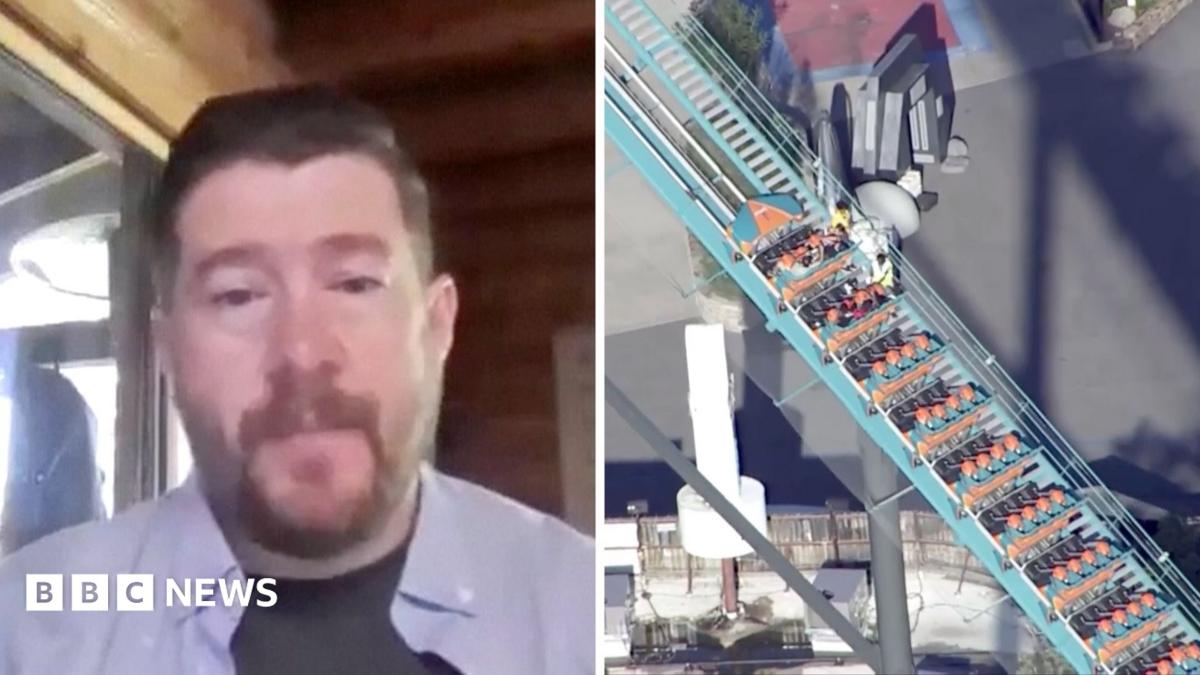
A critical safety failure at a flagship amusement park in the US state of Georgia has resulted in one fatality and multiple injuries, prompting immediate intervention by municipal emergency responders, state occupational safety regulators, and federal oversight bodies. The incident occurred on an active roller coaster ride, where eyewitness accounts described catastrophic restraint failure and sudden structural displacement mid-circuit. First responders cordoned off the facility as jurisdictional task forces initiated forensic evaluations of mechanical linkages, braking mechanisms, and ride-control software protocols.
While industrial incidents of this nature occur at the domestic operational level, their strategic repercussions extend into cross-border manufacturing, liability law, and transnational corporate governance. Large-scale theme park operators maintain asset portfolios spanning North America, Europe, East Asia, and the Middle East. Structural investigations launched by US authorities frequently serve as international benchmarks, compelling equivalent safety boards in the United Kingdom, the European Union, and Japan to initiate retroactive technical audits on identical or related ride engineering blueprints.
Global Trade & Economic Ripples
The economic fallout extends directly into specialized heavy manufacturing, mechanical component supply chains, and global reinsurance markets. The amusement attraction industry relies heavily on precision engineering consortia situated primarily in Switzerland, Germany, the Netherlands, and North America. Regulatory directives resulting in mandatory groundings or structural retrofits interrupt procurement cycles for hydraulic components, specialized alloy track systems, and algorithmic safety Programmable Logic Controllers (PLCs).
Concurrently, international reinsurance syndicates operating through Lloyd's of London and continental European casualty underwriters are reassessing risk pricing models for public entertainment venues. Global leisure operators—already contending with elevated capital expenditure costs driven by sustained interest rates and raw material inflation—now confront sharp increases in comprehensive general liability premiums. Publicly traded hospitality and entertainment conglomerates experienced immediate downward pressure across equity indices, reflecting investor sensitivity to potential statutory fines, prolonged facility closures, and severe brand equity erosion.
Related Intelligence: Southeast Asian Haze Reignites Regional Friction and Agricultural Supply Chain Risks
International Reactions & Diplomatic Stances
Industry bodies, including the International Association of Amusement Parks and Attractions (IAAPA), released statements emphasizing adherence to global technical safety standards while pledging full cooperation with statutory investigators. Independent engineering analysts underscored that modern roller coasters operate on redundant fail-safe architectures, framing the Georgia incident as an anomaly that nevertheless exposes vulnerabilities in routine mechanical maintenance regimens and high-throughput operational stresses.
Market analysts across Wall Street and European financial capitals noted that international tourism confidence exhibits high sensitivity to mechanical safety failures. Travel advisory monitors and consumer protection advocates have renewed calls for standardized, cross-border safety registries to govern high-capacity thrill rides. International investment desks tracking commercial real estate and experiential entertainment highlighted the vulnerability of capital allocations committed to mega-resort projects across developing tourism hubs in the Gulf Cooperation Council (GCC) and Southeast Asia.
Strategic Outlook & Future Scenarios
The forward trajectory will be defined by the findings of forensic metallurgy and software-logic diagnostics. Should investigators identify systemic engineering defects rather than isolated operational error, equipment manufacturers could face sweeping international product recall notices and cross-jurisdictional tort litigation. Such an outcome would trigger protracted delivery delays for multi-billion-dollar amusement developments globally.
Over the medium term, regulatory agencies in North America and Western Europe are anticipated to propose enhanced real-time sensor monitoring mandates and unified inspection certification standards. Leisure operators will likely accelerate capital investments into automated diagnostic equipment and artificial intelligence-driven predictive maintenance systems to mitigate operational exposure. The incident underscores the fragility of high-density consumer leisure assets, where mechanical failures instantly reverberate through corporate balance sheets, liability markets, and cross-border engineering supply networks.
Join Our Official WhatsApp Channel
Receive live commodity alerts, policy changes, and commercial intelligence directly on WhatsApp.