
Russian Missile Barrage Hits Ukrainian Energy Grid as Zelenskyy Criticizes Western Intelligence
A massive Russian missile barrage struck Ukrainian energy infrastructure, killing at least six people. President Volodymyr Zelenskyy criticized Western allies for failing to provide timely intelligence on incoming ballistic strikes.
Geopolitical & Core Developments
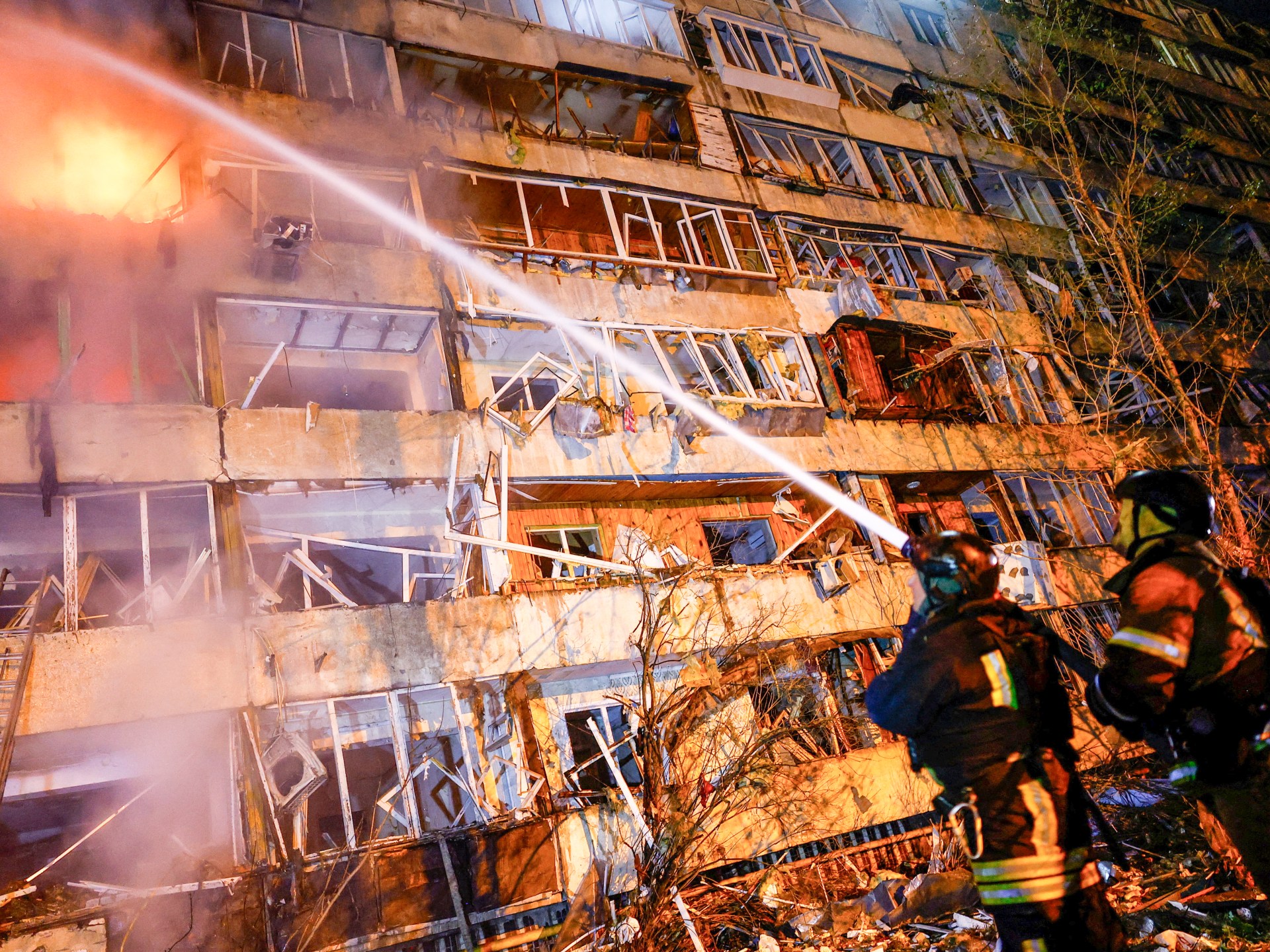
A coordinated Russian military assault utilizing cruise missiles, ballistic projectiles, and loitering munitions struck multiple Ukrainian regions in the early hours of Thursday, resulting in at least six civilian fatalities and inflicting severe structural damage on critical energy infrastructure. The strikes targeted power generation, transmission substations, and municipal utility networks across central, eastern, and western provinces, causing widespread blackouts and prompting utility operators to initiate emergency rolling outages.
The strategic dimension of the assault was compounded by an open diplomatic rift between Kyiv and its Western allies. Ukrainian President Volodymyr Zelenskyy stated that Ukraine's international partners failed to provide advance tactical intelligence regarding the ballistic missile vectors aimed at the capital. Kyiv's air defense batteries intercepted several incoming warheads, yet hypersonic and ballistic munitions bypassed radar coverage in areas where Patriot and SAMP/T interceptor stockpiles have depleted. Zelenskyy emphasized that real-time warning mechanisms previously relied upon by Ukraine's armed forces failed to trigger in time, heightening civilian vulnerability and leaving grid engineers unable to enact precautionary load-shedding measures.
Global Trade & Economic Ripples
The targeted degradation of Ukraine's power grid carries immediate secondary consequences for cross-border trade, regional supply chains, and commodity outflows. With thermal and hydroelectric generation capacities compromised, Ukraine is forced to revert from an occasional electricity exporter to a substantial net importer from neighboring European Union members, notably Poland, Slovakia, Hungary, and Romania. This additional commercial demand threatens to tighten regional European power balances, exerting upward pressure on wholesale base-load electricity contracts across Central and Southeastern Europe.
Beyond direct power flows, the strikes disrupt Ukrainian logistics networks critical to agricultural and industrial exports. Electric freight rail lines operated by Ukrzaliznytsia suffered localized traction power losses, halting cargo trains carrying grain, sunflower oil, and iron ore toward western land borders and the Danube ports. While seaborne exports via the Black Sea corridor continue under sovereign maritime arrangements, auxiliary processing plants and grain storage silos inland are vulnerable to operational delays caused by persistent power deficits, keeping global soft commodity markets sensitive to shipment bottlenecks.
Related Intelligence: Israeli Strikes Hit Gaza and West Bank Amid Expanding Territorial Control
International Reactions & Diplomatic Stances
The escalation prompted sharp diplomatic responses across global capitals. European Union foreign policy officials condemned the deliberate targeting of civilian energy infrastructure, labeling the campaign a sustained violation of international humanitarian law designed to weaponize winter conditions. In Brussels, diplomats reiterated calls to expedite the disbursement of bilateral macro-financial assistance and fast-track the delivery of supplemental air defense batteries.
In Washington, defense officials acknowledged the operational challenges faced by Ukrainian air defense formations but maintained that intelligence sharing remains robust, comprehensive, and active round the clock. Analysts suggest the public nature of Zelenskyy's critique highlights an intensifying friction between Kyiv and Washington over the cadence of defensive hardware procurement and limits imposed on cross-border preemptive strike capabilities. United Nations representatives urged an immediate halt to attacks targeting essential utility grids, warning of compounding humanitarian strain.
Strategic Outlook & Future Scenarios
The trajectory of the conflict points toward a protracted attrition cycle targeting dual-use utility installations ahead of diplomatic milestones later this year. Moscow continues to leverage its domestic missile manufacturing ramp-up to overwhelm Ukrainian layered defenses, seeking to hollow out Ukraine's industrial baseline and demoralize urban populations.
Key inflection points in the coming weeks include upcoming G7 foreign ministerial gatherings and bilateral discussions on secondary sanctions enforcement against entities supplying dual-use missile components to Russia. Should Ukraine's energy infrastructure suffer cumulative, irrecoverable damage to high-voltage auto-transformers, the country will require billions of dollars in emergency power equipment donations to avoid full-scale industrial paralysis, raising the economic commitments demanded of Western donor nations.
Join Our Official WhatsApp Channel
Receive live commodity alerts, policy changes, and commercial intelligence directly on WhatsApp.