
China Export Growth Surges 36.3 Percent Driven by Global AI Demand
China posted a 36.3 percent jump in September exports, propelled by surging global demand for artificial intelligence hardware and advanced electronics, defying ongoing geopolitical headwinds and western trade restrictions.
Geopolitical & Core Developments
China registered an extraordinary 36.3 percent expansion in outbound shipments in September, delivering its fastest pace of export growth since the initial economic reopening following the COVID-19 pandemic. Customs data released in Beijing confirmed that the trade acceleration was overwhelmingly underpinned by an international buying frenzy for artificial intelligence hardware, advanced electronics, telecommunications gear, and intermediate industrial inputs.
This robust performance comes at a delicate geopolitical juncture. Over the past twelve months, the United States and the European Union have systematically tightened export curbs, scrutinizing advanced microelectronics, dual-use technologies, and clean-energy supply chains tied to mainland manufacturers. Nevertheless, global tech conglomerates and third-party data center operators across Southeast Asia, the Middle East, and Latin America have significantly ramped up procurement of legacy semiconductors, optical transceivers, cooling infrastructure, and power management equipment manufactured in Chinese industrial hubs. Beijing has effectively leveraged its sprawling manufacturing base to capture downstream supply chain demand generated by the rapid global proliferation of generative AI infrastructure.
Global Trade & Economic Ripples
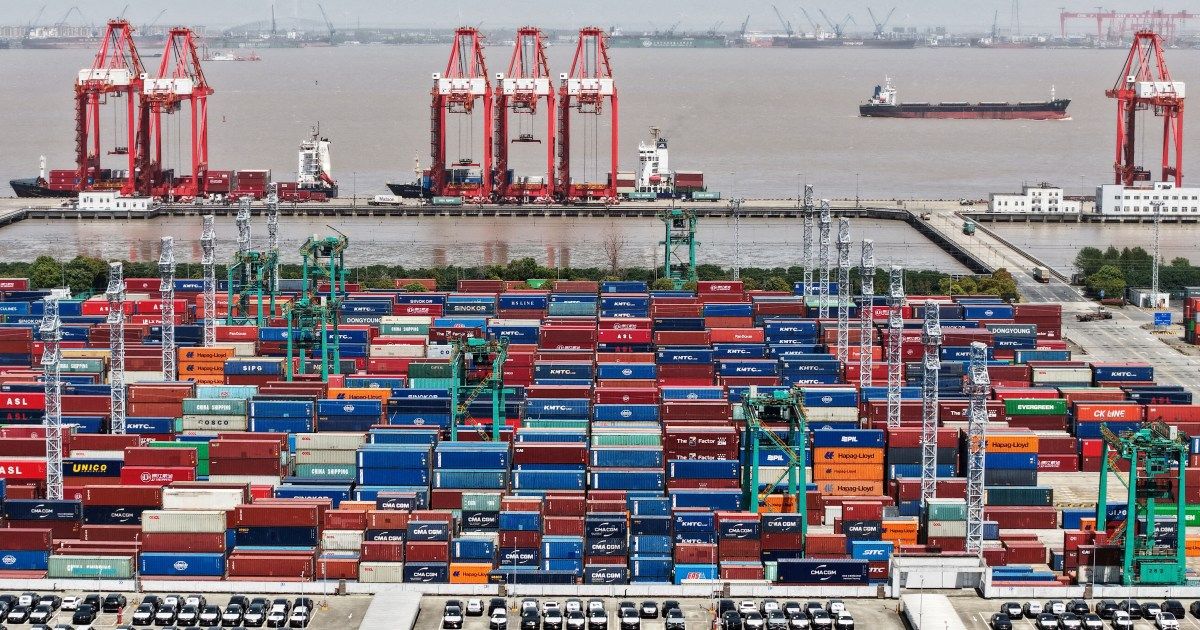
The unexpected magnitude of China's trade rebound has triggered wide-ranging adjustments across international commodity and logistics markets. Surging factory production across Guangdong, Jiangsu, and Zhejiang has revitalized maritime container volumes along major transpacific and Asia-Europe shipping corridors. Freight rate indices, which had shown signs of softening earlier in the quarter, experienced renewed upward pressure as carriers recalibrated capacity to accommodate the spike in high-value electronic cargo.
Concurrently, industrial input markets have absorbed strong demand signals. Industrial metals, particularly copper and aluminum—vital inputs for electrical wiring, printed circuit boards, and data center cooling systems—gained renewed price support on the London Metal Exchange. Energy markets similarly reflected heightened manufacturing activity, as regional consumption of thermal coal and piped natural gas climbed to satisfy heavy industrial power grids. For global supply chains, the figures underscore persistent structural reliance on Chinese intermediate components, complicating multinational efforts to decouple or "de-risk" strategic procurement networks.
Related Intelligence: Bihar Ganges Boat Disaster Sparks River Transport Scrutiny Across South Asia
International Reactions & Diplomatic Stances
The trade figures have drawn divergent reactions from global capitals and market analysts. Officials in Beijing characterized the data as validation of the country's manufacturing competitiveness and industrial resilience, asserting that China remains an indispensable node in the digital transformation of the global economy.
In contrast, Western economic policymakers have viewed the surge with apprehension. European trade regulators warned that an escalating imbalance between Chinese manufacturing output and domestic consumer absorption could lead to acute market distortions, reiterating warnings against the widespread dumping of subsidized high-tech goods into international markets. Washington-based analysts observed that despite severe export controls on cutting-edge lithography equipment and high-performance graphic processing units, Chinese manufacturers have consolidated market dominance over standard computing hardware and peripheral electronic infrastructure, presenting renewed enforcement dilemmas for Western authorities.
Strategic Outlook & Future Scenarios
The medium-term trajectory of China's outward trade flows will likely be dictated by escalating trade defense measures and bilateral policy friction. The substantial export surplus recorded in September is expected to provide fresh impetus for the European Union and the United States to implement broader anti-subsidy duties and expand tariff schedules targeting electronics, green-tech components, and legacy computing systems.
Furthermore, diplomatic scrutiny is slated to intensify ahead of upcoming international economic summits, including the G20 and APEC leaders' gatherings, where persistent trade imbalances and critical supply chain vulnerabilities will dominate closed-door negotiations. If advanced economies impose coordinated tariffs or broaden export prohibitions, Chinese technology exporters may increasingly redirect output through third-party intermediaries across the ASEAN bloc and Central Asia. In the interim, relentless international investments in digital and AI infrastructure will likely sustain robust foundational demand for Chinese electronics through the forthcoming quarter.
Join Our Official WhatsApp Channel
Receive live commodity alerts, policy changes, and commercial intelligence directly on WhatsApp.