
Bahrain Foreign Minister Arrives in Islamabad to Deepen Bilateral Trade and Strategic Ties
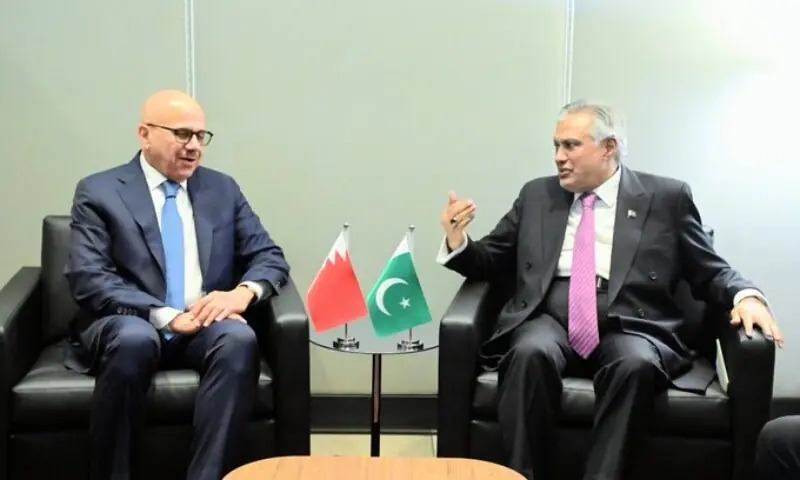
Bahrain Foreign Minister Abdullatif bin Rashid Al Zayani arrived in Islamabad for a two-day official visit to co-chair the third Pakistan-Bahrain Joint Ministerial Commission, focusing on expanding bilateral trade, investment, and strategic cooperation.
The Core Development
Bahrain’s Foreign Minister, Dr. Abdullatif bin Rashid Al Zayani, arrived in Islamabad on Wednesday for a high-stakes, two-day official visit aimed at reinvigorating bilateral relations between the Kingdom of Bahrain and the Islamic Republic of Pakistan. The visit, taking place from October 7 to October 8, follows a formal invitation extended by Pakistan's Deputy Prime Minister and Foreign Minister, Senator Mohammad Ishaq Dar. The primary anchor of the high-level diplomatic engagement is the co-chairing of the third session of the Pakistan-Bahrain Joint Ministerial Commission (JMC), a vital institutional mechanism designed to review and expand cooperation across multiple sectors.
According to an official statement issued by the Ministry of Foreign Affairs (MoFA) in Islamabad, the two delegations are conducting comprehensive reviews of the entire spectrum of bilateral ties. Discussions are structured around translating long-standing diplomatic goodwill into tangible economic partnerships. The diplomatic exchange encompasses a detailed assessment of ongoing collaborative frameworks in trade, foreign direct investment, institutional economic cooperation, defence, internal security, manpower exportation, and cultural exchanges. Both sides have underscored the necessity of implementing previously signed memorandums of understanding (MoUs) while exploring new avenues for regional connectivity and collaborative enterprise.
Commercial & Economic Implications
For Pakistan's domestic economy, particularly wholesale markets, retail trade sectors, and macroeconomic stability, deepening trade ties with Gulf Cooperation Council (GCC) economies remains a critical pillar of growth. The deliberations between Islamabad and Manama carry substantial weight for Pakistan's external account management, as the nation seeks to diversify its export markets and attract foreign direct investment (FDI) from capital-surplus Gulf states. Enhanced commercial collaboration with Bahrain could open lucrative channels for Pakistani agricultural commodities, textile products, and light engineering goods entering the Gulf market.
Furthermore, the discussions on labour and manpower are of profound significance to Pakistan's domestic employment landscape and remittance inflows. Remittances from the large expatriate workforce in Bahrain serve as a vital lifeline for thousands of households in Pakistan, directly supporting domestic retail consumption and stabilizing foreign exchange reserves. A streamlined, mutually beneficial framework for workforce mobility could lead to increased employment opportunities for skilled and semi-skilled Pakistani professionals, thereby alleviating domestic unemployment pressures and bolstering consumer purchasing power amidst persistent inflationary challenges.
Related Intelligence: Yemen Education Collapse Threatens Regional Stability and Economic Recovery
Stakeholder Perspectives & Market Reactions
Business councils, trade associations, and chambers of commerce in Pakistan have expressed strong optimism regarding the high-level diplomatic engagement. Representatives from major trade bodies noted that enhanced bilateral frameworks could significantly reduce trade barriers and logistical friction for private sector enterprises operating in both countries. Business leaders emphasized that closer institutional ties between Islamabad and Manama are essential for encouraging joint ventures in logistics, information technology, and manufacturing sectors.
Official statements from the Foreign Office reaffirmed Pakistan's commitment to fostering a business-friendly environment for Bahraini investors. Pakistani policymakers are actively pitching lucrative investment opportunities in key sectors such as energy, infrastructure development, and special economic zones under the Special Investment Facilitation Council (SIFC) framework. Analysts observe that Bahraini capital, combined with Pakistan's strategic geographic location and abundant human capital, could yield substantial dividends for both economies if regulatory bottlenecks are systematically addressed.
Forward Outlook & Key Watchpoints
As the two-day Joint Ministerial Commission concludes, market observers and economic analysts will closely monitor the specific agreements, joint communiques, and implementation timelines emerging from the high-level meetings. Key watchpoints include the formal signing of new bilateral trade accords, commitments regarding institutional capital flows, and the finalization of revised protocols concerning worker welfare and employment quotas.
Policy enforcement and the swift translation of diplomatic discourse into actionable commercial projects will determine the long-term success of this ministerial session. For Kalyar Traders and the wider business community, the outcomes of this diplomatic visit signal potential shifts in Gulf-Pakistan economic corridors, warranting careful observation of upcoming trade policy adjustments and bilateral investment treaties in the upcoming fiscal quarters.
Join Our Official WhatsApp Channel
Receive live commodity alerts, policy changes, and commercial intelligence directly on WhatsApp.