
Prime Minister Shehbaz Vows Total Elimination of Khyber Pakhtunkhwa Terrorism
Prime Minister Shehbaz Sharif has asserted that rising terrorism in Khyber Pakhtunkhwa must be eradicated unconditionally, emphasizing national security during a strategic briefing with federal ministers in Islamabad.
The Core Development
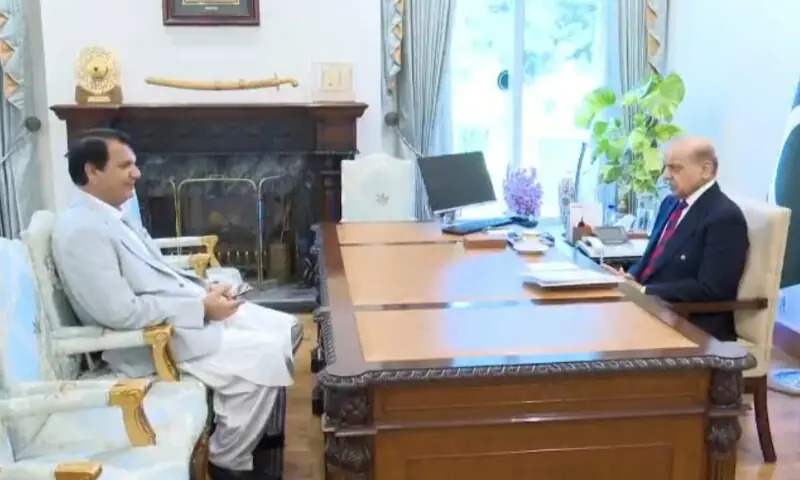
Prime Minister Shehbaz Sharif articulated an uncompromising stance on national security during a high-level official meeting in Islamabad on Wednesday, declaring that the resurgence of terrorism in Khyber Pakhtunkhwa (KP) must be halted immediately and at any cost. The premier's remarks were delivered during a detailed policy consultation with Federal Minister for Kashmir Affairs and Gilgit-Baltistan, Amir Muqam, according to an official statement released by the Prime Minister's Office (PMO).
The deliberations transcended localized security concerns, providing a comprehensive review of the geopolitical and administrative landscape across Pakistan's northern and northwestern frontiers. Alongside the security crisis plaguing Khyber Pakhtunkhwa, the leaders exchanged strategic viewpoints regarding governance, infrastructure development, and socio-economic administration in Azad Jammu and Kashmir (AJK) and Gilgit-Baltistan (GB). The high-level engagement highlights the federal administration's growing urgency to synchronize counter-terrorism measures with regional administrative stability.
Commercial & Economic Implications
Persistent security volatility in Khyber Pakhtunkhwa carries profound ramifications for Pakistan's broader macroeconomic stability, commercial corridors, and regional trade dynamics. KP serves as a critical geographic bridge for bilateral commerce with Central Asia through key transit routes such as the Torkham border. Protracted security disruptions directly impair wholesale distribution networks, elevate transportation and logistics risk premiums, and retard investment inflows into industrial zones across the province.
For retail trade and domestic markets, localized supply chain bottlenecks stemming from security operations frequently translate into inflationary pressures on essential commodities. Business confidence across Peshawar, Abbottabad, and surrounding commercial hubs remains inextricably linked to the restoration of absolute public order. Financial analysts note that sustained counter-terrorism stability is a mandatory prerequisite for lowering sovereign risk, stabilizing foreign exchange reserves, and attracting foreign direct investment into critical infrastructural projects tied to the China-Pakistan Economic Corridor.
Related Intelligence: Nepal Floods Leave Families in Administrative and Financial Limbo
Stakeholder Perspectives & Market Reactions
Business councils, trader associations, and industrial federations have consistently voiced apprehension regarding the economic toll exacted by deteriorating security conditions in the northwestern region. Chambers of commerce in Khyber Pakhtunkhwa have repeatedly urged federal and provincial stakeholders to forge a unified, bipartisan security consensus to safeguard commercial establishments, manufacturing plants, and supply line workers.
Legal experts and civil society organizations emphasize that lasting economic recovery must be underpinned by robust institutional coordination between federal law enforcement agencies and provincial administration. Official statements from Islamabad underscore the executive's intent to deploy necessary administrative and financial resources to bolster security apparatuses, aiming to reassure jittery domestic investors and foreign trading partners alike.
Forward Outlook & Key Watchpoints
As the federal government intensifies its policy focus on neutralizing militant threats in Khyber Pakhtunkhwa, market observers will closely monitor the operational execution of proposed counter-terrorism strategies. Key indicators for success will include the seamless reopening and protection of critical trade routes, enhanced intelligence-sharing mechanisms between federal and provincial stakeholders, and measurable reductions in security-related disruptions.
Furthermore, policymakers will need to balance fiscal allocations between emergency security operations and long-term socio-economic development initiatives in KP, AJK, and GB. Sustained policy implementation over the upcoming quarters will dictate whether business sentiment stabilizes sufficiently to stimulate localized commercial expansion and investment recovery.
Join Our Official WhatsApp Channel
Receive live commodity alerts, policy changes, and commercial intelligence directly on WhatsApp.