
French Nationwide Protests Disrupt Markets and Test State Authority
Mass protests and violent clashes across France threaten economic stability and test government resolve, sending ripples through European markets.
Geopolitical & Core Developments
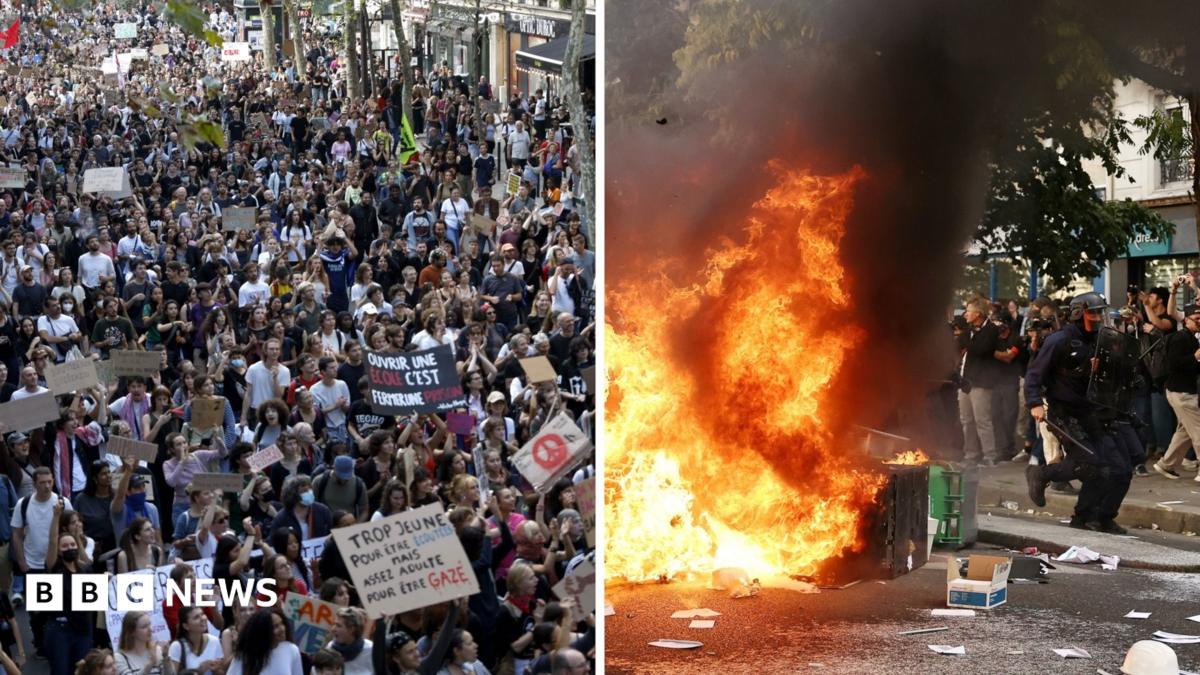
A wave of unprecedented civil unrest has gripped France, as hundreds of thousands of citizens, spearheaded by high-school pupils and labor unions, take to the streets in major urban centers. The demonstrations, triggered by deep-seated grievances over domestic policy, educational reforms, and cost-of-living pressures, have escalated into intense confrontations with law enforcement. In cities nationwide, riot police have deployed tear gas, water cannons, and batons to disperse crowds attempting to blockade transport hubs and educational institutions.
The unfolding crisis presents a severe domestic test for the French administration, threatening to paralyze legislative agendas and strain emergency services. State actors across the European Union are monitoring the situation closely, acutely aware that prolonged social instability in the eurozone's second-largest economy carries profound political ramifications for the broader continental bloc. The government's dual imperative—maintaining public order while addressing the legitimate socioeconomic grievances of the youth—remains a precarious balancing act with no immediate resolution in sight.
Global Trade & Economic Ripples
The domestic turmoil has rapidly translated into tangible economic consequences, exerting immediate pressure on regional supply chains and commercial logistics. Transport blockades and strikes coordinated alongside the student mobilization have severely disrupted freight movement, freight rail, and port access across key French corridors. Consequently, international trade entering and leaving Western European hubs faces significant delays, driving up demurrage costs and forcing logistics firms to reroute shipments.
Energy markets and agricultural commodity pricing have also reacted sensitively to the disruptions. With fuel distribution networks hampered by refinery blockades and localized picketing, spot prices for refined petroleum products in northwest Europe experienced upward volatility. Furthermore, agricultural exports from French producers—a cornerstone of the EU food supply chain—are experiencing logistical bottlenecks, prompting grain and dairy traders to factor higher risk premiums into near-term delivery contracts. Currency traders have similarly noted marginal softening in the euro as international investors price in potential fiscal slippage and prolonged economic drag.
Related Intelligence: Pakistan Adjusts Fuel Prices as Petrol Rises and Diesel Dips
International Reactions & Diplomatic Stances
International bodies and foreign ministries have begun issuing cautionary advisories regarding the unrest. The United Nations human rights framework has urged restraint from all sides, emphasizing the fundamental right to peaceful assembly while calling on authorities to ensure proportionality in law enforcement operations. Neighboring European governments have expressed diplomatic solidarity with Paris while quietly expressing anxiety over potential spillover effects into broader pan-European labor movements.
Market analysts and rating agencies have issued preliminary notes warning that prolonged domestic paralysis could impact France's sovereign credit outlook if structural reforms are stalled indefinitely. Foreign chambers of commerce operating within the region report rising operational uncertainty, prompting multinational corporations to reassess contingency plans for European distribution networks. Economic observers stress that international confidence in the French market hinges on the administration's ability to swiftly restore civic order and re-engage social partners in constructive dialogue.
Strategic Outlook & Future Scenarios
As the crisis enters a critical phase, policymakers and market participants are warily assessing potential future scenarios. Should the government fail to negotiate a viable compromise with student leaders and labor unions, the movement risks morphing into an indefinite general strike reminiscent of historical industrial flashpoints. Such an escalation would severely contract third-quarter economic growth metrics for the eurozone.
Upcoming legislative sessions and scheduled national union plenaries will serve as critical barometers for gauging whether the standoff will de-escalate or intensify. Investors are advised to maintain robust hedging strategies against European logistics disruptions and currency volatility. Ultimately, the trajectory of these protests will not only define the current administration's political legacy but will also test the resilience of European economic integration amidst mounting domestic social pressures.
Join Our Official WhatsApp Channel
Receive live commodity alerts, policy changes, and commercial intelligence directly on WhatsApp.