
Pakistan Rejects Political Coercion Amid Rising PTI March Pressures
Government leadership has firmly rejected opposition pressure, declaring that political demands will not be met through state destabilization.
The Core Development
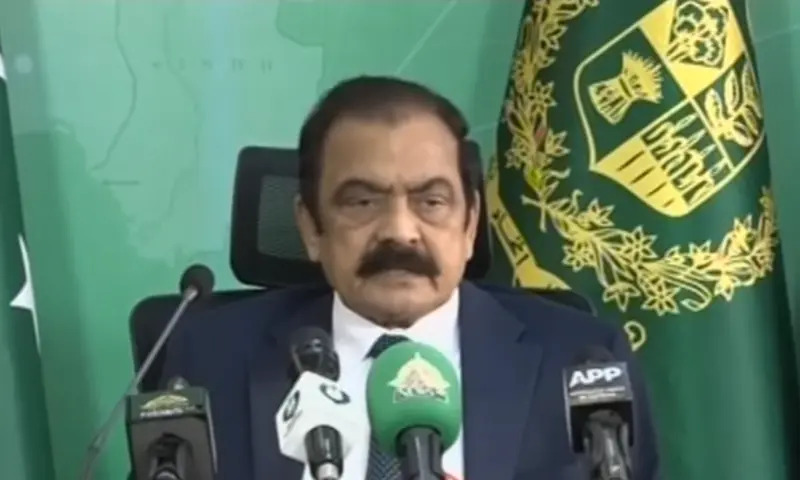
In a hardline policy pronouncement from Islamabad on Wednesday, Adviser to the Prime Minister on Political Affairs Rana Sanaullah drew a definitive red line against political coercion, asserting that the federal government will not bow to opposition pressure intended to hold the state hostage. Speaking to media personnel in the federal capital, Sanaullah addressed the escalating tensions surrounding the Pakistan Tehreek-e-Insaf (PTI) march, making it explicitly clear that constitutional governance and state writ remain non-negotiable.
Sanaullah emphasized that while democratic engagement is a cornerstone of parliamentary governance, the administration would under no circumstances permit dialogue to be weaponized as a political tool for unconstitutional concessions. The official stance underscores an increasingly rigid posture by the ruling coalition as it navigates persistent agitation from opposition ranks, prioritizing administrative continuity over appeasement.
Commercial & Economic Implications
For Pakistan's fragile economic ecosystem, sustained political instability carries immediate and severe repercussions. Wholesale distributors, retail trade networks, and urban supply chains in key commercial hubs such as Lahore, Faisalabad, and Islamabad routinely face operational disruptions, containerized road closures, and transport delays during major political marches. These logistical bottlenecks restrict inventory movement and instantly inflate freight costs, which ultimately translate into higher prices for retail consumers already grappling with stubborn inflation.
Furthermore, investor confidence remains highly sensitive to political friction. Foreign and domestic institutional investors closely monitor stability indices when evaluating capital deployment in manufacturing and energy sectors. Prolonged standoffs between the state apparatus and opposition agitators undermine economic predictability, deter foreign direct investment, and complicate ongoing fiscal consolidation measures mandated under international financial frameworks.
Related Intelligence: West Bank Dispossession Accelerates Amid Global Trade and Security Risks
Stakeholder Perspectives & Market Reactions
Business councils, corporate associations, and major trade bodies across Punjab and Sindh have expressed growing alarm over the persistent cycle of political confrontation. Representatives from chambers of commerce have repeatedly appealed to both government and opposition factions to insulate commercial corridors and manufacturing zones from political disruption. Traders argue that repeated shutdowns and security lockdowns severely impair daily revenue generation, disproportionately harming small and medium enterprises.
Legal experts and constitutional analysts note that while the right to assembly is protected under domestic jurisprudence, balancing fundamental freedoms with public order remains a perpetual challenge for law enforcement agencies. Official statements from government representatives continue to signal a zero-tolerance policy toward actions that paralyze civic life or threaten critical state infrastructure.
Forward Outlook & Key Watchpoints
As the political standoff unfolds, key watchpoints for financial markets and policy analysts include the government's security posture, potential emergency legislative measures, and the trajectory of opposition mobilization efforts. Market participants will closely evaluate upcoming trade data, currency stability, and regional security indicators to gauge whether political tensions escalate into broader economic disruptions. The administration's ability to maintain public order without triggering systemic financial shocks will remain critical for sustaining macroeconomic stability in the near term.
Join Our Official WhatsApp Channel
Receive live commodity alerts, policy changes, and commercial intelligence directly on WhatsApp.