
ASEAN Shifts Toward Engagement With Myanmar Junta Chief Amid Ongoing Conflict
Regional powers are softening diplomatic barriers against Myanmar military chief Min Aung Hlaing despite persistent civil conflict, prompting scrutiny from human rights advocates and creating bifurcated investment risks across Southeast Asian trade corridors.
Geopolitical & Core Developments
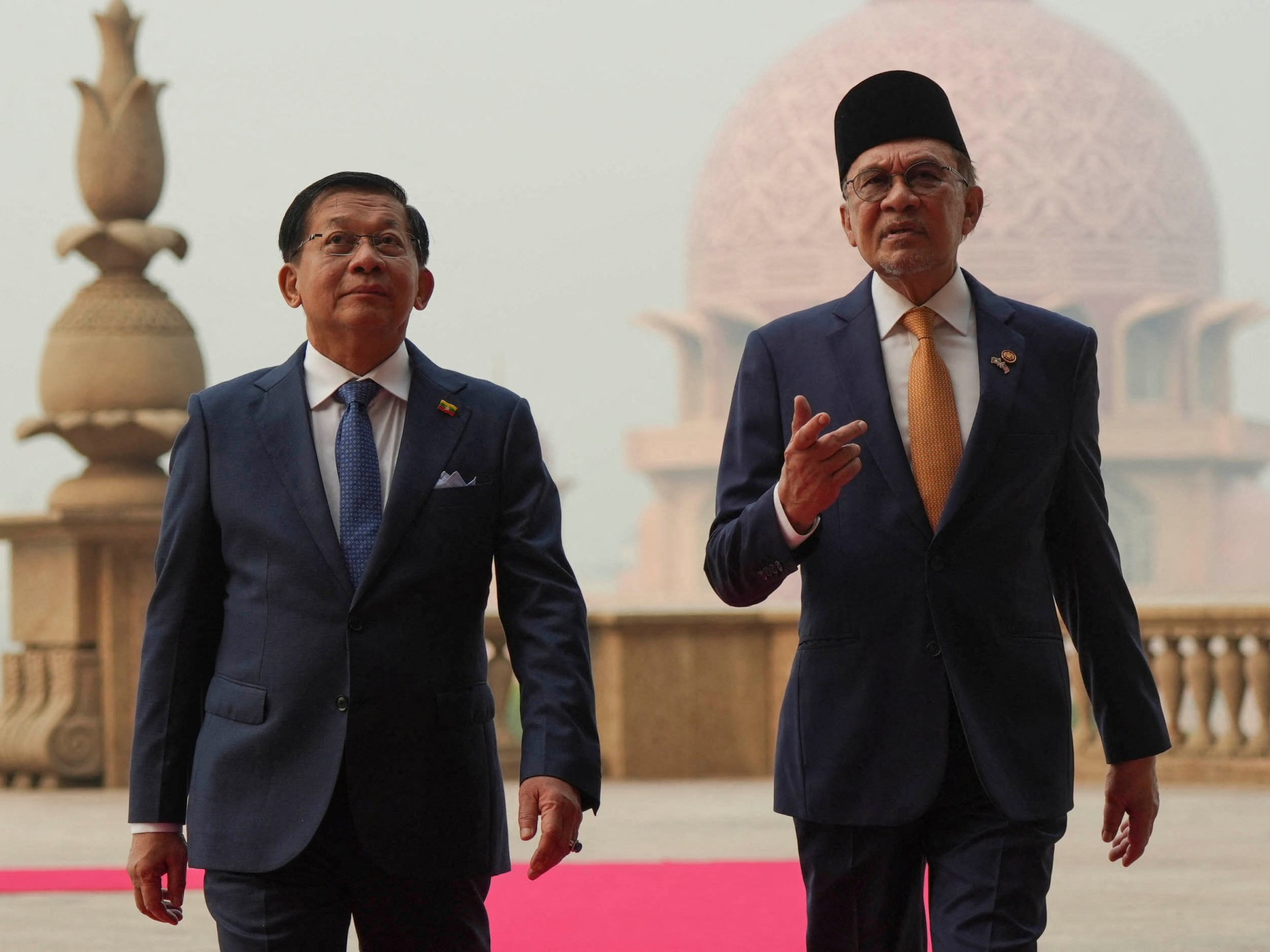
Regional diplomatic dynamics across Southeast Asia are undergoing a significant recalibration as neighboring states increasingly re-engage Myanmar's military leadership. Nearly four years after Senior General Min Aung Hlaing seized power in a February 2021 coup—plunging the nation into a protracted nationwide conflict—neighboring capitals appear to be transitioning from formal isolation toward pragmatic accommodation. Despite the military administration losing control of expansive border territories to ethnic armed organizations and anti-junta resistance groups, the junta leadership has secured notable high-level multilateral and bilateral engagements across the region.
Key regional players, including Thailand, Cambodia, and Laos, alongside non-ASEAN powers China and India, have incrementally re-opened communication channels. A prominent milestone occurred with Min Aung Hlaing's official trip to Kunming, China, followed by regional forums where junta representatives have regained varying degrees of diplomatic standing. This trend reflects an acute focus among regional governments on border containment, transnational criminal syndicates, and critical connectivity corridors, even as international monitoring bodies document sustained aerial bombardments and internal displacement inside Myanmar.
[Global Trade](/news/us-midterm-voter-discontent-signals-global-trade-shifts) & Economic Ripples
The evolving political accommodation carries direct consequences for regional trade architecture and commodity markets. Myanmar occupies a strategically vital overland transit corridor between mainland China, India, and Southeast Asia. Continued instability has crippled formal border trade through vital nodes like Muse on the Chinese frontier and Myawaddy along the Thai border, shifting trade volumes into illicit channels and raising risk premiums for maritime transport in the Bay of Bengal.
Energy and resource security remain pivotal determinants of regional policy. Myanmar supplies significant volumes of piped natural gas to Thailand and China via operational offshore extraction assets. Beijing's strategic interests also depend on the continuous operation of the Sino-Myanmar crude oil and natural gas pipelines terminating at Kyaukphyu on the Rakhine coast. Concurrently, Myanmar remains one of the world's primary sources of heavy rare earth elements essential for global clean energy components and electronics manufacturing. Supply interruptions triggered by fighting near Kachin State extraction sites have repeatedly catalyzed volatility in global rare earth prices, forcing global manufacturers to pursue alternative, more expensive supply chains.
Related Intelligence: US Midterm Voter Discontent Signals Major Shifts for Global Trade Policy
International Reactions & Diplomatic Stances
The move toward regional accommodation has drawn stark contrasts across the international community. The United Nations and Western capitals, led by Washington, London, and the European Union, maintain that premature normalization legitimizes an unconstitutional regime actively engaged in human rights violations. Western governments have reiterated their commitment to targeted sanctions against state-owned enterprises, jet fuel suppliers, and foreign currency banks facilitating junta procurement.
Conversely, several member states of the Association of Southeast Asian Nations (ASEAN) argue that institutional isolation has failed to arrest the domestic conflict or advance the bloc's dormant Five-Point Consensus peace roadmap. Proponents of constructive engagement emphasize that resolving complex regional crises—ranging from cyber-scam operations operating within lawless border zones to narcotics proliferation—requires direct dialogue with the de facto power in Naypyidaw, regardless of internal legitimacy challenges.
Strategic Outlook & Future Scenarios
The regional trajectory indicates an increasingly divided international approach toward Myanmar. While Western institutions are anticipated to expand secondary sanctions on financial intermediaries, regional neighbors will likely continue bilateral engagement focused on immediate security, energy flows, and migrant stabilization. Upcoming regional summits will test ASEAN institutional cohesion, as maritime members like Indonesia, Malaysia, and Singapore advocate for strict adherence to democratic benchmarks, contrasting with mainland states favoring pragmatic statecraft.
In the medium term, commercial actors must navigate a bifurcated operational landscape. Foreign investment from Western economies will remain constrained by compliance hurdles, reputational liabilities, and legal sanctions. Meanwhile, state-backed entities from regional partners are projected to concentrate investments solely within fortified enclaves, deep-water infrastructure, and natural resource extraction zones insulated from domestic conflict lines.
Join Our Official WhatsApp Channel
Receive live commodity alerts, policy changes, and commercial intelligence directly on WhatsApp.