
Severe Weather Paralyzes Gilgit-Baltistan Transit Corridors, Claiming Two Lives
Severe rain and snowfall across Gilgit-Baltistan triggered deadly landslides along the Karakoram Highway and shut down the Babusar Pass, disrupting critical supply routes and stranding travelers.
The Core Development
A destructive wave of unseasonal rain and high-altitude snowfall has disrupted life across Gilgit-Baltistan, causing critical transport blockages and claiming two lives along key logistics arteries. The fatal incident occurred early Thursday along the Karakoram Highway (KKH) near the Pissan section in Nagar district. Local law enforcement officials confirmed that two young men, identified as Arif Hussain and Kashif Ali from Gulmat, suffered fatal injuries when a massive rockfall struck their vehicle in a historically vulnerable landslide zone. Both victims succumbed to their injuries before emergency interventions could stabilize them at a nearby state-run hospital.
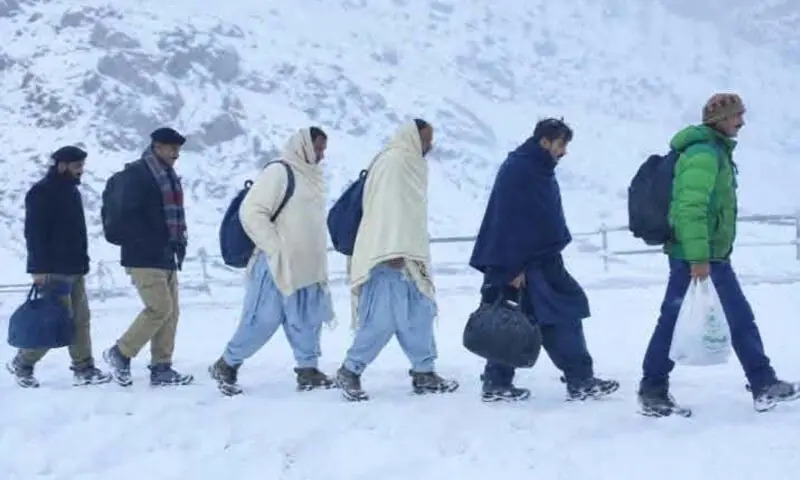
Concurrently, persistent precipitation prompted administrative closures across the region's elevated road network. The Babusar Pass route, which serves as a vital summer alternative connecting Khyber Pakhtunkhwa's Kaghan Valley with Diamer district, was shut down entirely due to heavy snow accumulation. Local police teams in Diamer carried out emergency rescue operations to evacuate stranded tourists and motorists caught in sudden squalls. While the Frontier Works Organisation and regional disaster management teams managed to keep portions of the primary KKH open through continuous clearance operations, secondary arteries leading to remote valleys remained inaccessible.
Commercial & Economic Implications
The vulnerability of northern transit corridors carries immediate ramifications for Pakistan's domestic freight networks and northern regional commerce. Gilgit-Baltistan depends heavily on consistent logistics inflows via the KKH for wholesale dry rations, petroleum products, and manufactured consumer goods originating from Punjab and downstream distribution hubs. Even intermittent highway closures quickly lead to localized supply shortfalls in urban centers such as Gilgit, Skardu, and Chilas, applying upward pressure on retail perishable prices.
Moreover, the northern region's fresh fruit and dry-produce outbound supply chains face heightened logistical overhead. Smallholder farmers and commercial distributors risk cargo deterioration when freight carriers face multi-hour stoppages. The transport delays increase demurrage fees, escalate insurance premiums for fleet operators, and force logistics providers to build in contingency pricing. Tourism, which represents a crucial liquidity source for northern micro-enterprises and hospitality operators during early winter transitions, faces an abrupt downturn as road access turns volatile and safety advisories deter inter-provincial travelers.
Related Intelligence: Syrian Energy Infrastructure Hit by Coordinated Sabotage and Fuel Theft
Stakeholder Perspectives & Market Reactions
Regional merchant bodies and transport unions have renewed calls for structurally fortified transport infrastructure. Freight and logistics associations operating on the northern route highlighted that unmonitored landslide zones between Kohistan, Diamer, and Nagar continue to present unacceptable capital and human costs. Transporters urged federal authorities, particularly the National Highway Authority (NHA), to deploy preemptive slope stabilization measures, rockfall barriers, and round-the-clock heavy clearing machinery at recognized bottlenecks.
Local administrative officials defended their precautionary closures, emphasizing that vehicular access on high-altitude passes like Babusar cannot be permitted without exposing civilian travelers to extreme hypothermia and entrapment risks. Emergency management authorities stated that while clearance operations are operational around the clock, motorists must adhere strictly to travel advisories issued during active meteorological alerts to avoid preventable casualties.
Forward Outlook & Key Watchpoints
The immediate priority remains clearing localized debris along arterial link roads and stabilizing fractured slopes along the KKH before secondary rain cycles trigger further structural shifts. Market watchers will track inventory stability across regional wholesale markets over the coming week, monitoring whether supply constraints lead to retail price escalation for staple foods, LPG cylinders, and fuel supplies in high-altitude settlements.
Moving deeper into the winter cycle, the complete seasonal closure of Babusar Pass will redirect all civilian and commercial traffic solely onto the Indus Highway and southern stretches of the KKH through Kohistan. The increased traffic volume on this single artery will test regional disaster management capabilities, making continuous maintenance, real-time traffic monitoring, and slope mitigation critical imperatives for public safety and uninterrupted trade flow.
Join Our Official WhatsApp Channel
Receive live commodity alerts, policy changes, and commercial intelligence directly on WhatsApp.