
Albanian Civil Unrest Escalates Amid Violent Clashes and Political Gridlock
Violent anti-government demonstrations in Albania have left nearly 300 injured over seven days, raising acute concerns across the Western Balkans over governance stability and regional economic integration.
Geopolitical & Core Developments
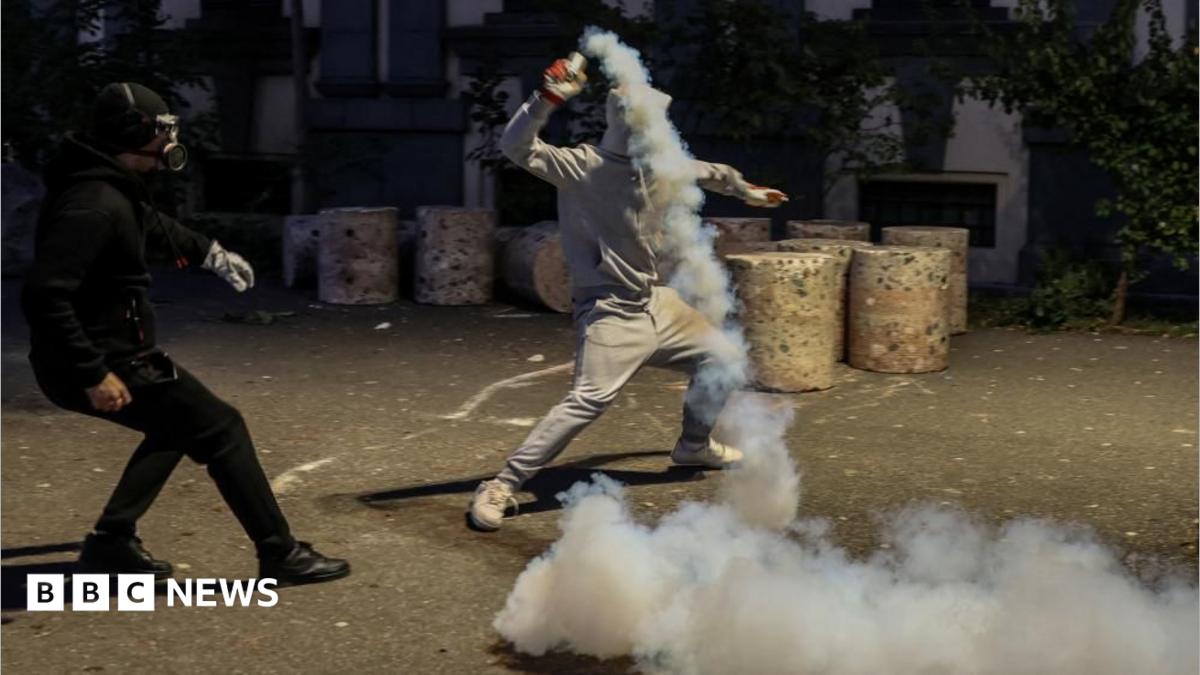
Civil unrest in Albania entered its seventh consecutive day as security forces engaged in sustained confrontations with thousands of anti-government demonstrators across the capital city of Tirana. The Ministry of Interior reported that nearly 300 individuals have sustained injuries since the outbreak of hostilities, with law enforcement personnel comprising more than half of the casualties. Clashes centered around key executive buildings, including the Prime Ministry and parliament, where protesters deployed petrol bombs and projectiles against heavily fortified police lines deployed with tear gas and water cannons.
The mobilization represents the most severe domestic crisis faced by Prime Minister Edi Rama's administration in recent years. Opposition coalitions and civil society movements accuse the executive branch of institutionalized corruption, authoritarian consolidation, and electoral manipulation. The escalating volatility reflects a broader crisis of governance in Southeastern Europe, where public dissatisfaction with socioeconomic stagnation has eroded confidence in state institutions. Government officials have characterized the demonstrations as coordinated attempts to destabilize the constitutional order, while opposition leadership insists the protests will persist indefinitely until an interim technocratic government is established.
Global Trade & Economic Ripples
While Albania represents a modest component of aggregate European Union output, protracted instability threatens cross-border commercial corridors across the Western Balkans. Key freight routes connecting the Port of Durrës—a primary Adriatic logistics hub handling regional transshipments—to landlocked neighbors such as North Macedonia and Kosovo have experienced intermittent logistical friction and elevated security checks. Foreign logistics operators have begun pricing in risk premiums for regional transit corridors.
Moreover, the unrest jeopardizes international investor sentiment across sovereign debt markets and critical infrastructure projects. International ratings agencies have signaled that prolonged political impasse could pressure Albania's sovereign credit metrics, raising domestic borrowing costs. Energy sector investments, particularly transnational pipeline infrastructure such as the Trans Adriatic Pipeline (TAP) which traverses Albanian territory to supply Caspian natural gas to Western Europe, remain under enhanced commercial and physical monitoring, though operations have thus far continued unimpeded.
Related Intelligence: Security Forces Recover 20 Abducted Police Recruits in Balochistan
International Reactions & Diplomatic Stances
The international diplomatic corps in Tirana has issued coordinated appeals for immediate de-escalation. The Delegation of the European Union, alongside the United States Embassy, released a joint declaration condemning acts of violence against security forces and public infrastructure, while reiterating the fundamental democratic right to peaceful assembly. Diplomatic envoys emphasized that political dialogue through institutional channels represents the sole viable mechanism to resolve structural grievances.
In Brussels, the unrest is viewed with heightened urgency given Albania's ongoing accession negotiations with the European Union. Officials warned that democratic backsliding, excessive police force, or parliamentary paralysis could imperil upcoming negotiation clusters concerning judicial reform and fundamental rights. Neighboring Balkan states have similarly monitored border security, mindful of the potential for broader regional contagion in an already fragile geopolitical landscape.
Strategic Outlook & Future Scenarios
The trajectory of the crisis will depend on whether institutional intermediaries can facilitate cross-party dialogue before civil infrastructure suffers permanent damage. Should the governing majority maintain an uncompromising posture, opposition forces are poised to broaden civil disobedience actions to regional transport nodes and ports, escalating the domestic crisis into an international trade bottleneck.
In the medium term, external mediation led by EU and US envoys will likely intensify to prevent broader regional instability. If unrest continues to depress tourism revenues and foreign direct investment ahead of seasonal budget reviews, fiscal strain may compel executive concessions, including cabinet reshuffles or commitments to international oversight on upcoming electoral cycles.
Join Our Official WhatsApp Channel
Receive live commodity alerts, policy changes, and commercial intelligence directly on WhatsApp.