
Zelensky Rallies European Allies as US Stance Strains Transatlantic Unity
Ukrainian President Volodymyr Zelensky engaged European Union leaders in Brussels to secure vital support amid escalating public criticism from Washington that threatens transatlantic consensus on the conflict.
Geopolitical & Core Developments
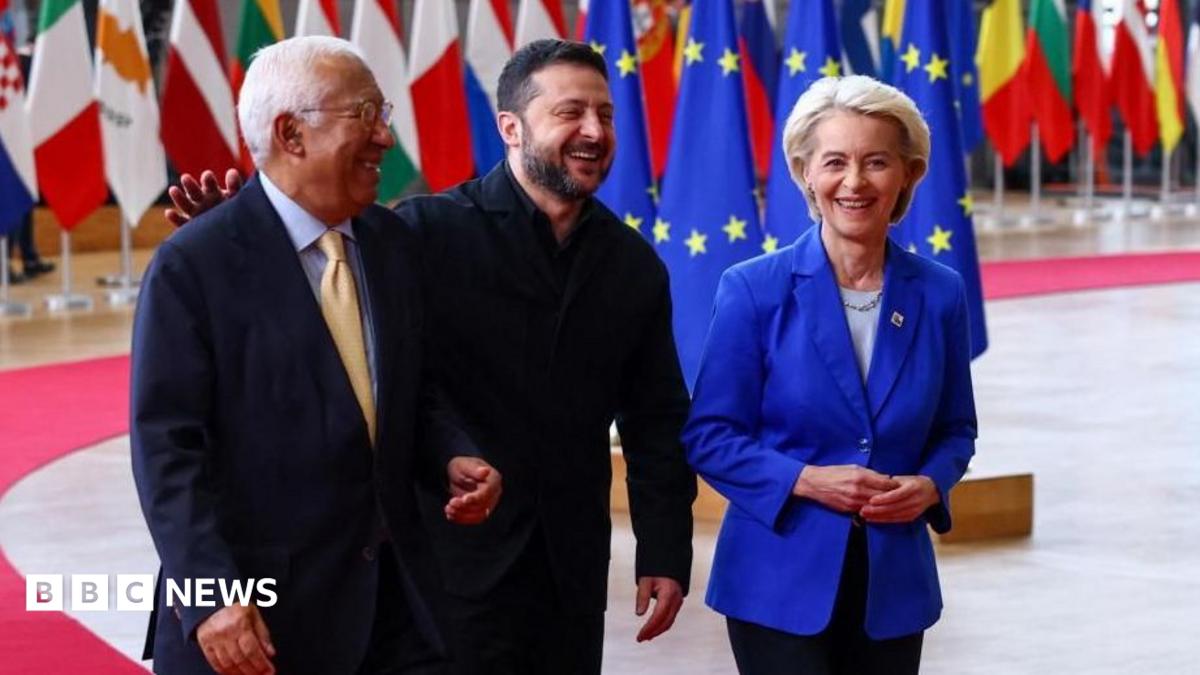
Ukrainian President Volodymyr Zelensky arrived in Brussels to address an extraordinary gathering of European Union heads of state, seeking to fortify continental backing at a critical juncture in the conflict. The diplomatic push coincided with an aggressive critique from Washington, where former US President Donald Trump stated that Ukraine's leadership was proving more intransigent to negotiate with than Russian President Vladimir Putin. This stark rhetoric underscored the widening divergence between Western European commitments and shifting political dynamics in the United States.
Inside the European Council, discussions centered on the durability of the European Peace Facility, bilateral defense commitments, and the implementation of long-term budgetary guarantees for Kyiv. Zelensky emphasized the urgent operational requirements along the eastern front, citing shortages in air defense munitions, heavy artillery, and critical electrical grid restoration hardware ahead of winter. The strategic stakes extend far beyond frontline stabilization; European policymakers are increasingly forced to contemplate a structural disengagement by Washington, which would require the European continent to shoulder the lion's share of financial and materiel aid.
Global Trade & Economic Ripples
The deepening political friction across the Atlantic has introduced fresh volatility into international commodity benchmarks and capital markets. European natural gas futures experienced cautious pricing adjustments as market participants reassessed regional energy infrastructure security and transit stability. The uncertainty surrounding sustained Western military funding has heightened risk premiums across European power markets, particularly as Russian attacks on Ukrainian energy assets continue to pressure cross-border electricity interconnectors.
Agricultural commodity exchanges, notably Euronext milling wheat and Black Sea grain derivatives, responded with heightened price sensitivity. With maritime transit corridors via the Danube and Odesa facing persistent operational risks, any perceived dilution of Western security guarantees threatens commercial vessel underwriting. Reinsurance premiums for Black Sea bulk cargo carriers remain structurally elevated, complicating logistical planning for grain buyers across North Africa and the Middle East. Furthermore, sovereign debt markets across Eastern Europe experienced widened bond spreads, reflecting sovereign risk recalibrations should regional defense spending mandates surge significantly above current NATO benchmarks.
Related Intelligence: Fatal Shooting at Oregon Elementary School Prompts Fresh Security and Supply Concerns
International Reactions & Diplomatic Stances
The verbal escalation from Washington prompted measured yet firm pushback from key European capitals. High-ranking officials in Berlin and Paris reiterated their unconditional alignment with Kyiv, stressing that European security architecture cannot be subordinated to electoral cycles or unilateral diplomatic posturing. European Commission leadership underscored that ongoing support packages, including the mobilization of frozen Russian sovereign asset proceeds, remain fully on track.
Conversely, diplomatic observers in Washington noted that the rhetoric signals a coordinated effort by conservative factions to condition future foreign assistance on immediate territorial or diplomatic concessions. Multilateral bodies, including the United Nations and the G7 working group on Ukrainian economic recovery, maintained that enduring peace must be anchored in internationally recognized sovereign borders. Market analysts at major institutional desks observed that a fragmented Western consensus creates long-term structural unpredictability, complicating foreign direct investment in post-conflict reconstruction.
Strategic Outlook & Future Scenarios
The immediate trajectory hinges on whether European member states can establish sovereign, self-sustaining financial mechanisms that remain insulated from potential shifts in American foreign policy. Forthcoming ministerial summits are expected to accelerate proposals for joint European defense procurement frameworks and expanded bond issuance dedicated to military manufacturing.
Should US legislative deadlock permanently curtail bilateral security transfers, the European Union will face severe fiscal trade-offs, balancing domestic deficit targets against the strategic imperative of underwriting Ukraine's defensive perimeter. Additionally, any rupture in Western solidarity risks emboldening Moscow's protracted attrition strategy, potentially triggering an escalation cycle that draws eastern NATO borders into heightened operational readiness. In the interim, Kyiv must navigate an increasingly bifurcated alliance structure to preserve sovereign integrity.
Join Our Official WhatsApp Channel
Receive live commodity alerts, policy changes, and commercial intelligence directly on WhatsApp.