
West Bank Escalation Threatens Levant Stability and Regional Trade Corridors
Surging violence across the occupied West Bank has crippled local agrarian economies and drawn international condemnation, raising regional volatility and jeopardizing broader Middle Eastern infrastructure and trade initiatives.
Geopolitical & Core Developments
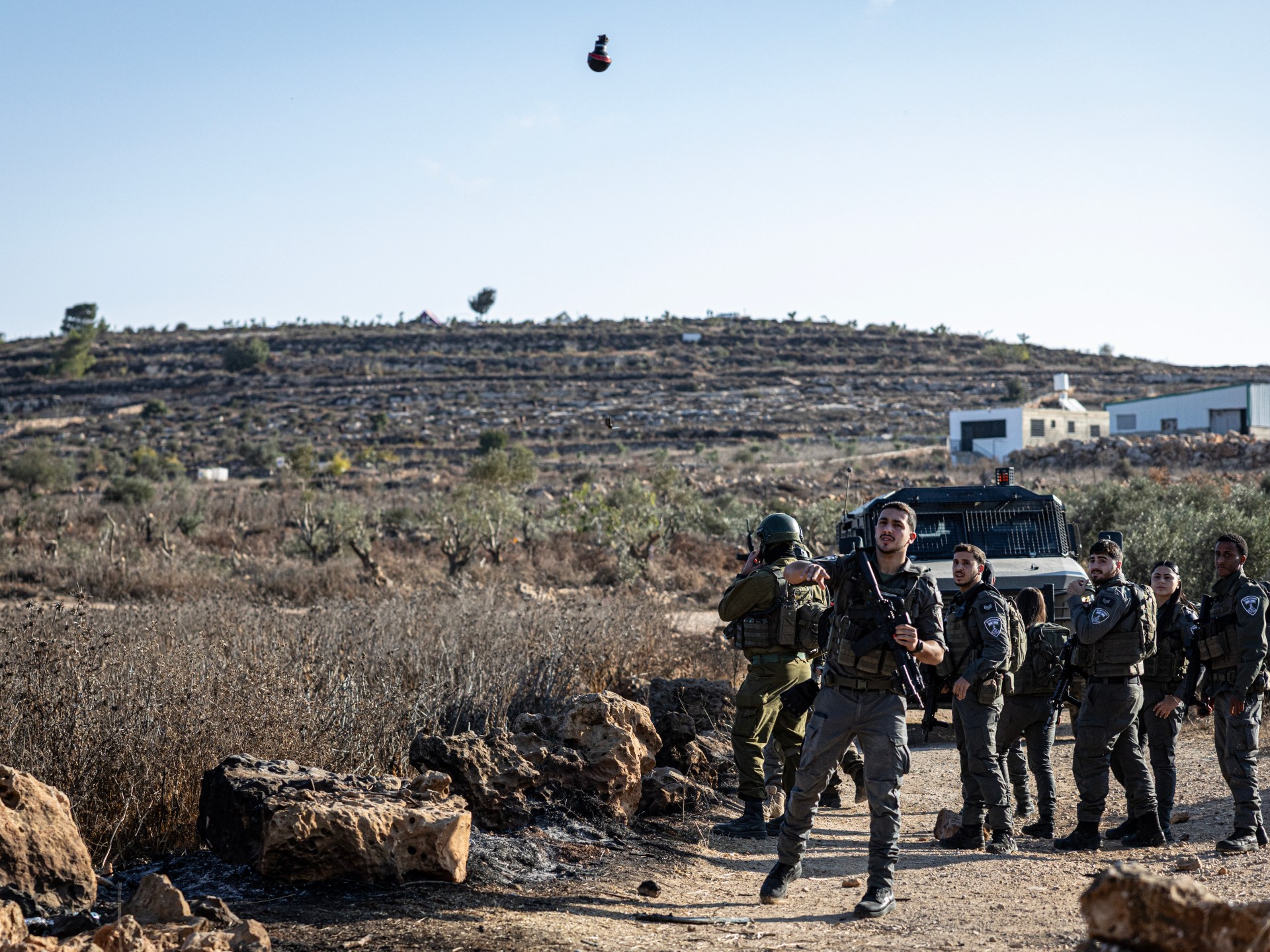
The occupied West Bank is witnessing an unprecedented escalation in targeted settler violence, converging with the vital autumn olive harvest season. Recent assessments document an intensifying operational tempo of localized raids against Palestinian agrarian communities, expanding from structural property damage to coordinated assaults on farming families, international observers, and visiting diplomatic delegations. The strategic stakes extend far beyond village perimeters, reflecting a systemic territorial realignment that undermines the administrative feasibility of a sovereign Palestinian state.
Over the past six weeks, the timeline of confrontations has accelerated across critical corridors in Nablus, Jenin, Hebron, and the Jordan Valley. Israeli security forces have faced intensified international scrutiny over accusations of passive containment rather than proactive deterrence during these episodes. The direct targeting of European and United Nations diplomatic convoys assessing field conditions marks a qualitative shift in political risk. These diplomatic friction points underscore the erosion of standard jurisdictional safeguards in Area C, compounding friction between Israel and its Western allies amid ongoing military operations across Gaza and the Lebanese border.
Global Trade & Economic Ripples
While the direct territorial footprint of the West Bank remains localized, the broader economic consequences ripple across regional markets and multilateral commerce. Domestically, the disruption of the annual olive harvest represents a catastrophic blow to Palestinian economic resilience, where olive oil and derivatives constitute over 14 percent of total agricultural value added and sustain tens of thousands of rural livelihoods. The destruction of groves and denial of access to registered farmland severely contract internal cash circulation, fostering heightened dependence on cross-border fiscal transfers and international humanitarian assistance.
At a macro level, sustained instability in the Palestinian territories adds an embedded geopolitical risk premium to broader Middle Eastern logistics corridors. The strategic vision of the India-Middle East-Europe Economic Corridor (IMEC), designed to channel transit rail and pipeline infrastructure through Jordan and Israel to Mediterranean ports, encounters compounding political vulnerabilities. Institutional investors and sovereign financiers increasingly price in chronic territorial friction, leading to inflated sovereign risk spreads, elevated regional maritime shipping insurance premiums, and deferred commitments to trans-Levant logistical integration.
Related Intelligence: Diplomatic Friction Between Turkiye and Azerbaijan Tests Strategic Alliances and Trade
International Reactions & Diplomatic Stances
The deterioration of stability on the ground has spurred sharp condemnations from international organizations and global capitals. The United Nations Office for the Coordination of Humanitarian Affairs (OCHA) has reported record monthly displacement figures and property damage, demanding immediate accountability under international humanitarian law. United Nations High Commissioner for Human Rights Volker Turk warned that forcible transfers and systemic violence could meet the threshold of war crimes under the Fourth Geneva Convention.
In Western capitals, diplomatic postures are hardening. The European Union and individual member states, including the United Kingdom and France, have expanded targeted travel bans and asset freezes against extremist settler organizations and specific community leaders. The United States State Department has similarly utilized executive orders to penalize designated individuals destabilizing the West Bank. However, non-aligned states and regional actors, led by Saudi Arabia, Jordan, and Turkey, argue that bilateral sanctions remain insufficient without structural legal enforcement and decisive halts to state-supported settlement expansion programs.
Strategic Outlook & Future Scenarios
The trajectory of the West Bank points toward further operational fragmentation and governance breakdown. If localized displacement patterns continue unchecked through the agrarian cycle, humanitarian corridors and refugee services managed by UNRWA and municipal councils face structural collapse. Such institutional vacuums will inevitably be filled by more militant localized factions, accelerating armed resistance and expanding security costs for the Israeli domestic apparatus.
In the coming quarters, international focus will center on multilateral platforms, including the G7 and the United Nations General Assembly, where non-compliance with international judicial rulings could catalyze multilateral economic measures. Continued unrest poses a direct impediment to any future normalization frameworks between Israel and Gulf economies, reinforcing geopolitical fractures and cementing the West Bank as a structural fault line in global geopolitical and commodity security.
Join Our Official WhatsApp Channel
Receive live commodity alerts, policy changes, and commercial intelligence directly on WhatsApp.