
Bilawal Proposes JUI-F Partnership to Address KP Security and Governance
PPP Chairman Bilawal Bhutto-Zardari has highlighted JUI-F chief Maulana Fazlur Rehman's potential role in stabilizing Khyber Pakhtunkhwa, signaling potential political realignments and constitutional interventions.
The Core Development
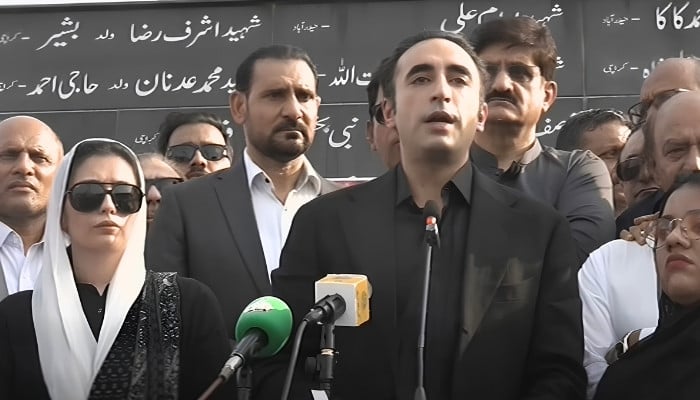
Pakistan Peoples Party (PPP) Chairman Bilawal Bhutto-Zardari has underscored the strategic political leverage held by Jamiat Ulema-e-Islam-Fazl (JUI-F) chief Maulana Fazlur Rehman, asserting that the veteran politician could play an instrumental role in containing the resurgence of militancy and addressing institutional breakdown in Khyber Pakhtunkhwa (KP). Speaking against the backdrop of escalating security challenges in the northwestern province, Bilawal hinted that coordinated political consensus could pave the way for stabilizing the region, including the potential constitutional option of imposing Governor's Rule if regional governance continues to falter.
The remarks reflect mounting friction between the federal ruling coalition and the Pakistan Tehreek-e-Insaf (PTI)-led provincial administration in Khyber Pakhtunkhwa. Over recent quarters, cross-border militancy and local insurgent activity have increased dramatically, testing the capacity of law enforcement agencies and raising concerns over civil-military coordination. Bilawal's overture toward JUI-F represents a calibrated attempt to build a broader coalition capable of engaging conservative religious constituencies, mediating regional tensions, and presenting a unified front against non-state actors operating within the tribal belt and settled districts.
Commercial & Economic Implications
For Pakistan's commercial ecosystem, heightened political fragility and operational instability in Khyber Pakhtunkhwa carry far-reaching consequences for domestic supply chains and transit trade. The province acts as the vital gateway for land-based commerce linking industrial hubs in Punjab and Sindh with Afghanistan and Central Asian republics. Recurrent security incidents, alongside procedural friction at border terminals such as Torkham and Ghulam Khan, have directly increased freight forwarding risks, demurrage costs, and transit insurance premiums.
Wholesale distribution networks and consumer goods manufacturers are already facing inventory delays and volatile transport tariffs across KP's secondary markets. Should political confrontation precipitate constitutional measures such as Governor's Rule, market participants anticipate immediate administrative realignments. While federal oversight could streamline security coordination and protect transport corridors, sudden governance shifts historically create short-term policy paralysis, delaying provincial infrastructure disbursements, municipal contracts, and regional revenue settlements that support retail liquidity.
Related Intelligence: Mass Funeral in Gaza Deepens Regional Tensions and Supply Chain Risks
Stakeholder Perspectives & Market Reactions
Reactions from trade bodies and political observers remain divided across the institutional spectrum. Regional trade groups, including the Sarhad Chamber of Commerce and Industry (SCCI), have repeatedly petitioned federal authorities to insulate commercial transport and trade corridors from political deadlock. Market leaders emphasize that chronic instability has depressed private capital formation in KP, with industrial estates in Hattar and Peshawar operating well below peak capacity due to utility uncertainties and elevated security overheads.
Constitutional scholars and opposition spokespersons have voiced caution regarding any premature resort to Governor's Rule under Article 234 of the Constitution, warning that disenfranchising an elected provincial mandate could exacerbate civil polarization. Conversely, defense analysts suggest that engaging JUI-F's extensive network of religious seminaries and localized leadership could offer a non-kinetic channel to neutralize extremist narratives, providing the institutional stability necessary to restore commercial confidence in the frontier districts.
Forward Outlook & Key Watchpoints
The trajectory of KP's governance now hinges on formal negotiations between the federal coalition and the JUI-F leadership, alongside the provincial government's ability to maintain public order. Observers will closely monitor upcoming parliamentary sessions and inter-provincial coordination meetings to gauge whether Bilawal's remarks will translate into a formal legislative resolution or administrative directive.
In the coming weeks, market actors will watch for policy indications regarding border security enforcement, provincial policing budgets, and potential federal interventions in administrative governance. For wholesale merchants, commercial haulers, and retail distributors operating along the western transit route, sustaining uninterrupted supply lines will depend entirely on restoring governance coherence and neutralizing the threat of militant disruption.
Join Our Official WhatsApp Channel
Receive live commodity alerts, policy changes, and commercial intelligence directly on WhatsApp.