
US Progressive Campaign Funding Surge Signals Shifts in Domestic and Trade Agendas
A significant $1 million campaign transfer by Representative Alexandria Ocasio-Cortez underscores an escalating progressive push in Michigan, with long-term ramifications for US industrial strategy, labor policy, and international trade orientation.
Geopolitical & Core Developments
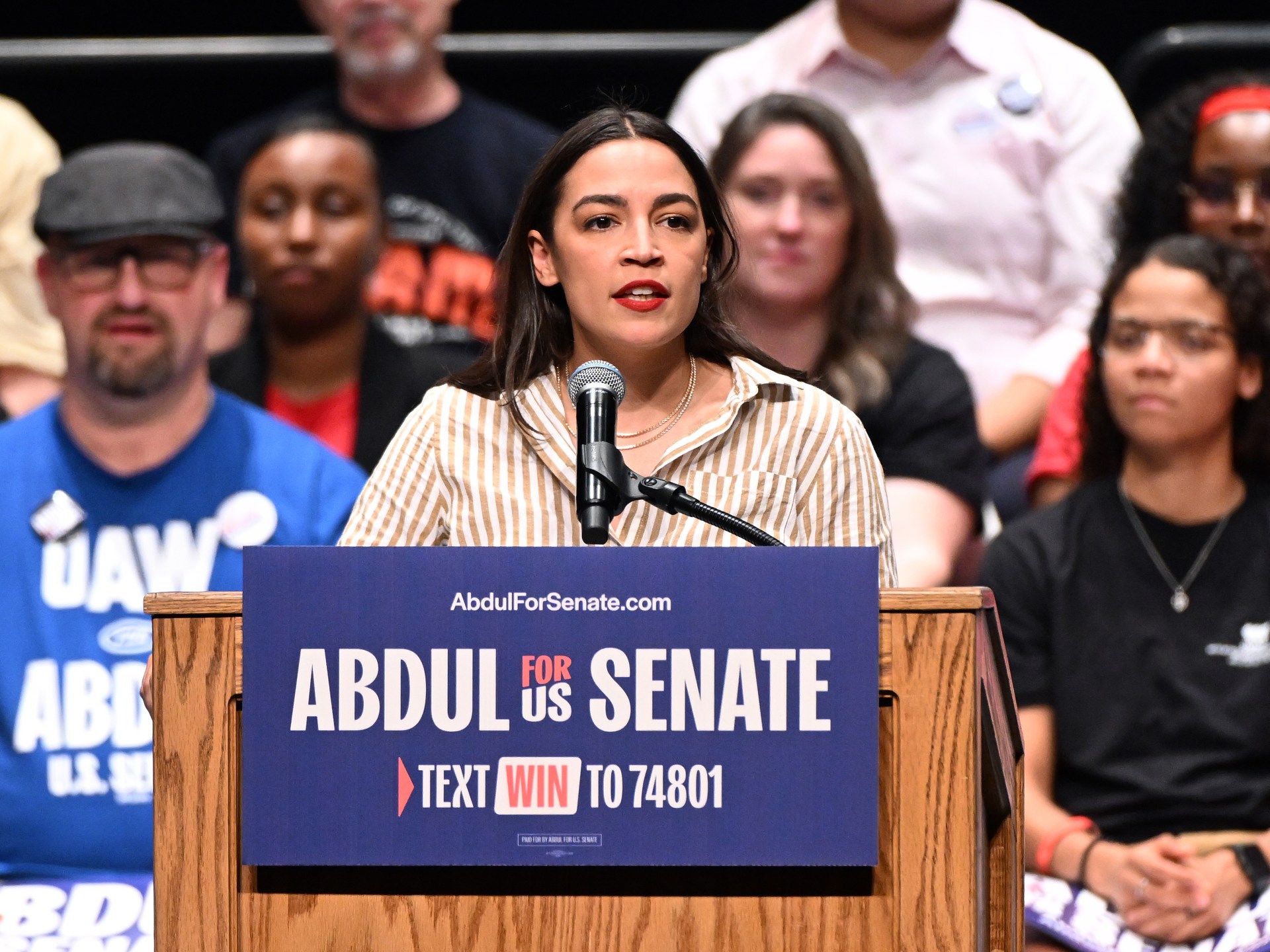
United States domestic politics witnessed a significant reallocation of progressive capital as Representative Alexandria Ocasio-Cortez transferred $1 million from her political action committee to Abdul El-Sayed, a prominent public health specialist running for political office in Michigan. Ocasio-Cortez framed the funding injection as a strategic defense against targeted negative campaigns, positioning the move as an effort to safeguard progressive policy initiatives within key state races. Michigan remains one of the most critical geopolitical and electoral centers in North America, representing an industrial nexus that regularly dictates national legislative agendas, trade compacts, and executive priorities.
This funding reallocation highlights broader shifts occurring within the US political architecture ahead of upcoming electoral cycles. Analysts view Ocasio-Cortez's proactive intervention not merely as a localized endorsement, but as a deliberate attempt to build institutional leverage ahead of the 2028 presidential race. El-Sayed, who previously mounted a gubernatorial campaign centered on progressive economic reform, public healthcare, and environmental equity, provides a vehicle for consolidating power within the American Rust Belt. The move highlights deepening ideological divisions across the domestic political landscape, with progressive factions challenging traditional centrist leadership over industrial reinvestment, foreign policy stances, and socio-economic distribution.
Global Trade & Economic Ripples
The internal recalibration of the Democratic Party in industrial centers carries direct consequences for international trade structures and global commodity markets. Michigan sits at the core of the North American automotive manufacturing corridor and clean energy transition infrastructure. Progressive platforms consistently champion stricter environmental criteria, robust domestic labor protections, and managed trade policies. Consequently, the ascent of progressive leadership in the region elevates pressure on cross-border supply chains, particularly regarding trade compliance under the United States-Mexico-Canada Agreement (USMCA).
Furthermore, progressive domestic policy directly intersects with international procurement frameworks for critical minerals, electric vehicle components, and renewable energy technologies. Increased political influence from progressive blocs often correlates with regulatory requirements prioritizing unionized domestic labor, carbon border adjustment mechanisms, and stringent environmental disclosures. For multinational automotive manufacturers, sovereign energy suppliers, and cross-border transport logistics firms, these dynamics introduce operational considerations regarding tariff predictability, subsidy structures under federal legislation, and the speed of transition toward low-carbon industrialization.
Related Intelligence: Tightening Brazilian Presidential Race Shifts Global Commodity and Trade Calculations
International Reactions & Diplomatic Stances
While state-level campaign financing typically remains a domestic affair, international political observers, sovereign wealth funds, and multilateral trade analysts closely monitor the evolution of the American progressive movement. Foreign trade delegations in Washington assess the growing influence of progressive lawmakers as a bellwether for structural shifts in US foreign policy and international engagement. Progressive coalitions have historically diverged from establishment foreign policy norms, advocating for reduced military spending, conditionality on international defense assistance, and re-evaluated diplomatic alignments in the Middle East and the Indo-Pacific.
European Union trade policymakers and global industrial conglomerates note that progressive economic nationalism often converges with broader bipartisan protectionist trends, complicating multilateral trade liberalization under the World Trade Organization. Market analysts highlight that while centrist leadership frequently prioritizes market continuity and established alliance frameworks, the consolidation of progressive influence introduces alternative foreign economic doctrines emphasizing labor-first trade agreements and rigorous international human rights baselines in commercial pacts.
Strategic Outlook & Future Scenarios
The strategic trajectory following this high-profile financial injection points toward heightened contestation in key legislative and regional primaries. In the near term, corporate and establishment political action committees are expected to counterbalance progressive funding drives in industrial swing states, leading to record-breaking expenditures across key battlegrounds. This competitive financial landscape will force candidates to adopt more defined stances on critical industrial, economic, and foreign affairs issues.
Over the medium to long term, the strengthening of progressive footholds in states like Michigan will shape the broader ideological platform of federal candidates heading into the 2026 midterms and the 2028 general election. If progressive candidates successfully secure key offices, sovereign credit rating agencies, institutional investors, and global manufacturing conglomerates will have to account for increased regulatory scrutiny, more aggressive corporate tax reforms, and a US foreign economic strategy that prioritizes climate resilience and domestic labor standards over conventional free-trade orthodoxies.
Join Our Official WhatsApp Channel
Receive live commodity alerts, policy changes, and commercial intelligence directly on WhatsApp.