
TTAP Halts Government Talks Over Imran Khan Access and Khyber Pakhtunkhwa Turmoil
The Tehreek-i-Tahaffuz Ayeen-i-Pakistan has suspended all dialogue with the federal administration, conditioning future talks on verified health disclosures and prison access to PTI founder Imran Khan amidst escalating political turbulence.
The Core Development
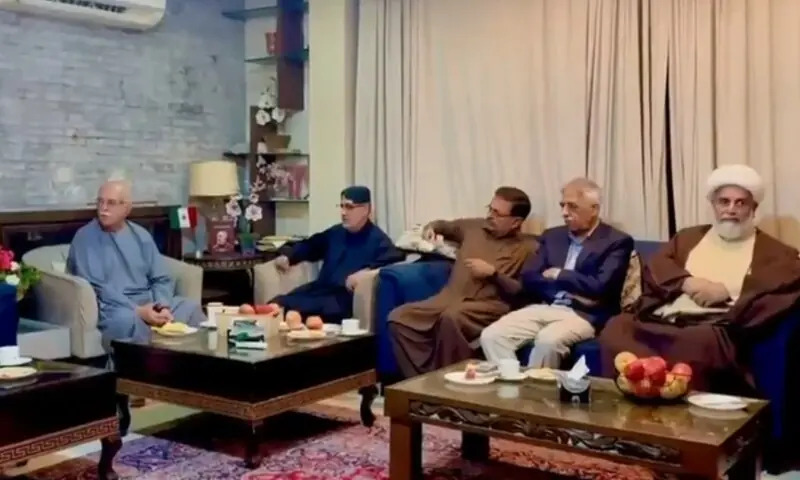
The Tehreek-i-Tahaffuz Ayeen-i-Pakistan (TTAP), a multi-party opposition alliance anchored by the Pakistan Tehreek-e-Insaf (PTI), announced a comprehensive suspension of all official talks with the federal government on Thursday. The alliance affirmed that no diplomatic engagement or legislative compromise will take place until direct, unhindered access to incarcerated former prime minister Imran Khan is facilitated and transparent medical details regarding his health are formally provided.
The high-stakes decision materialized during an emergency leadership conclave convened at the Islamabad residence of TTAP Chairman Mehmood Khan Achakzai. The session centered on the rapidly deteriorating political environment sparked by the imposition of governor's rule and state-of-emergency protocols in Khyber Pakhtunkhwa (KP). In an effort to eliminate fragmentation and conflicting narratives across coalition parties, the TTAP leadership issued an operational decree consolidating all future negotiating authority solely in the hands of Achakzai. The opposition leadership reiterated that any informal outreach by intermediary government figures would be rejected until legal access rights to Khan at Adiala Jail are upheld and administrative emergency orders in the northern province are retracted.
Commercial & Economic Implications
For commercial enterprises, wholesale merchants, and retail supply chains operating across Pakistan, the impasse signals prolonged governance gridlock. Khyber Pakhtunkhwa serves as a vital arterial route for international trade via the Torkham border crossing with Afghanistan, as well as an essential transit link for industrial commodities, timber, cement, and FMCG logistics between northern hubs and central Punjab. Political confrontation resulting in administrative lockdown threatens road transport velocity, raising freight insurance premiums and inducing inventory delays.
The prospect of coordinated strikes, highway closures, and regional public demonstrations adds acute pressure on consumer price indexes. Interrupted distribution networks frequently catalyze artificial price escalations in perishable staples and dry goods across wholesale mandis in Peshawar, Rawalpindi, and Lahore. Simultaneously, macroeconomic stability remains hypersensitive to domestic volatility, as foreign institutional capital and multilateral lenders monitor policy continuity and civil stability, which directly dictate rupee-dollar valuations and sovereign risk spreads.
Stakeholder Perspectives & Market Reactions
Market associations, merchant chambers, and freight logistics bodies across Khyber Pakhtunkhwa and Punjab have voiced mounting unease over the deadlock. Logistics operators note that sporadic blockades and elevated security cordons across inter-provincial highways routinely inflict millions of rupees in demurrage costs and vehicle detention expenses. Business chambers have urged the federal coalition and the opposition to decouple political contestation from core commercial transit corridors.
Legal and constitutional analysts emphasize that invoking emergency mechanisms and governing Khyber Pakhtunkhwa via executive decree sets a fragile precedent, heightening legal disputes at the superior judiciary. On the government side, ministers have defended executive interventions as necessary measures to restore law and order, while alleging that the opposition is intentionally stalling legislative and economic stabilization efforts. Meanwhile, equity traders at the Pakistan Stock Exchange observed muted sentiment, with key sectors remaining range-bound as institutional participants hedge against elevated political friction.
Forward Outlook & Key Watchpoints
The near-term trajectory rests on whether the state concedes to medical transparency and family or counsel access for Imran Khan. Should the interior ministry permit supervised access, conditional dialogue via Mehmood Khan Achakzai could resume under tight parameters. Conversely, outright refusal is expected to trigger broader street mobilization and multi-city protests, compounding disruption risks for logistics networks.
Market participants must closely monitor legal challenges against the KP governor's rule currently pending review, alongside security advisories along key transport arteries like the M-1 and Grand Trunk Road. Sustained political paralysis will severely restrict fiscal reform implementation, leaving wholesale supply chains and industrial trade corridors exposed to continued operational friction through the coming quarters.
Join Our Official WhatsApp Channel
Receive live commodity alerts, policy changes, and commercial intelligence directly on WhatsApp.