
Parliament Approves Governor's Rule in Khyber Pakhtunkhwa Amid Heightened Political Crisis
Pakistan's Parliament has approved the imposition of governor's rule in Khyber Pakhtunkhwa through a joint resolution, shifting administrative authority to the federal executive amid mounting legal and economic uncertainty.
The Core Development
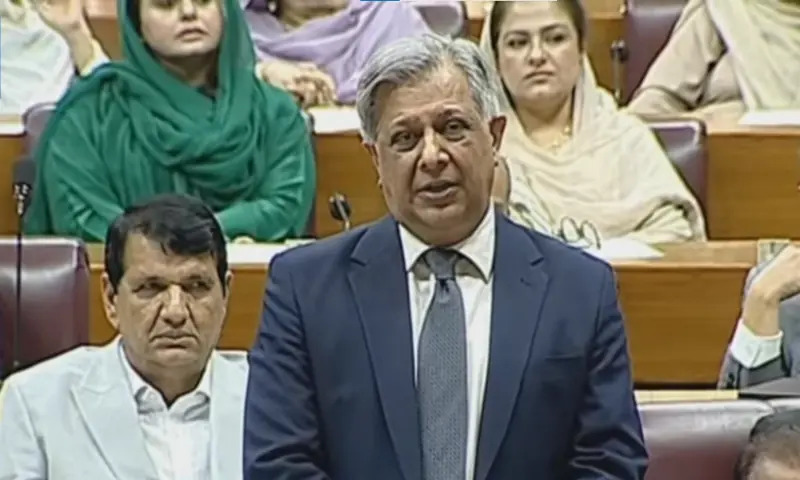
A joint sitting of the National Assembly and the Senate on Thursday adopted a formal resolution endorsing the imposition of governor's rule in Khyber Pakhtunkhwa (KP). The decision marks an unprecedented administrative intervention by the federal government, following separate sessions conducted a day earlier by both legislative houses that sanctioned an emergency proclamation under Article 232 of the Constitution.
Under constitutional frameworks, Article 232 stipulates that unilateral presidential proclamations of emergency must secure bicameral parliamentary validation within ten days. Concurrently, the formal invocation of governor's rule under Article 234 requires joint parliamentary assent to transfer legislative and administrative powers from the provincial assembly to the federation. The parliamentary sanction effectively centralises KP's executive governance under the federally appointed Governor, sidelining the provincial cabinet and pausing ordinary sub-national policymaking.
Commercial & Economic Implications
The centralisation of authority in Khyber Pakhtunkhwa introduces significant volatility for regional commerce, wholesale networks, and national supply corridors. KP operates as the principal terrestrial gateway for Pakistan's bilateral and transit trade with Afghanistan and Central Asian republics. The imposition of federal executive control creates immediate operational friction across transport corridors, particularly the critical transit arteries passing through Peshawar and the Torkham border terminal.
Wholesale distribution channels for basic foodstuffs, industrial inputs, and consumer goods face inventory risks as logistics operators recalibrate their security protocols. Regional supply chains, already constrained by macroeconomic instability and elevated energy tariffs, risk localized inflationary spikes if customs clearance points and internal transit checkpoints encounter administrative friction. Furthermore, provincial developmental allocations under the Public Sector Development Programme (PSDP) face deferral, curtailing public infrastructure spending and stifling commercial procurement.
Related Intelligence: Federal Constitutional Court Disposes of Plea Challenging KP Chief Minister Election
Stakeholder Perspectives & Market Reactions
The business and commercial fraternity has reacted with acute apprehension. Regional chambers of commerce, including the Sarhad Chamber of Commerce and Industry (SCCI), have repeatedly warned that institutional disruption at the provincial tier deters private capital and compounds liquidity constraints. Wholesalers and clearing agents have expressed concern that unresolved jurisdictional friction could disrupt cross-border revenue collection and delay container clearances.
Constitutional scholars and legal analysts remain divided over the procedural legitimacy of the executive manoeuvre, warning of imminent judicial challenges before the superior courts. Conversely, proponents within the federal treasury argue that unified governance is essential to maintain sovereign fiscal discipline, consolidate security imperatives, and stabilize revenue collection across key northern districts.
Forward Outlook & Key Watchpoints
The immediate focus shifts to the Supreme Court of Pakistan, where legal challenges contesting the constitutional validity of Articles 232 and 234 are expected to emerge. Market participants will monitor whether the judiciary grants interim relief to the displaced provincial executive or upholds the parliamentary resolution.
Simultaneously, businesses must monitor the administrative timeline: an Article 234 proclamation remains operational for an initial period of two months unless extended by Parliament for up to six months. Critical indicators for the corporate sector over the coming weeks include freight movement indices along the N-5 highway, customs throughput volume at western land ports, and the potential imposition of specialized security regimes across provincial commercial hubs.
Join Our Official WhatsApp Channel
Receive live commodity alerts, policy changes, and commercial intelligence directly on WhatsApp.