
Tanker Ablaze Off Romanian Coast Following Drone Strike in Black Sea
Eight crew members remain missing after a suspected drone strike ignited a commercial tanker off the Romanian coast, heightening maritime security risks within critical Black Sea shipping corridors.
Geopolitical & Core Developments
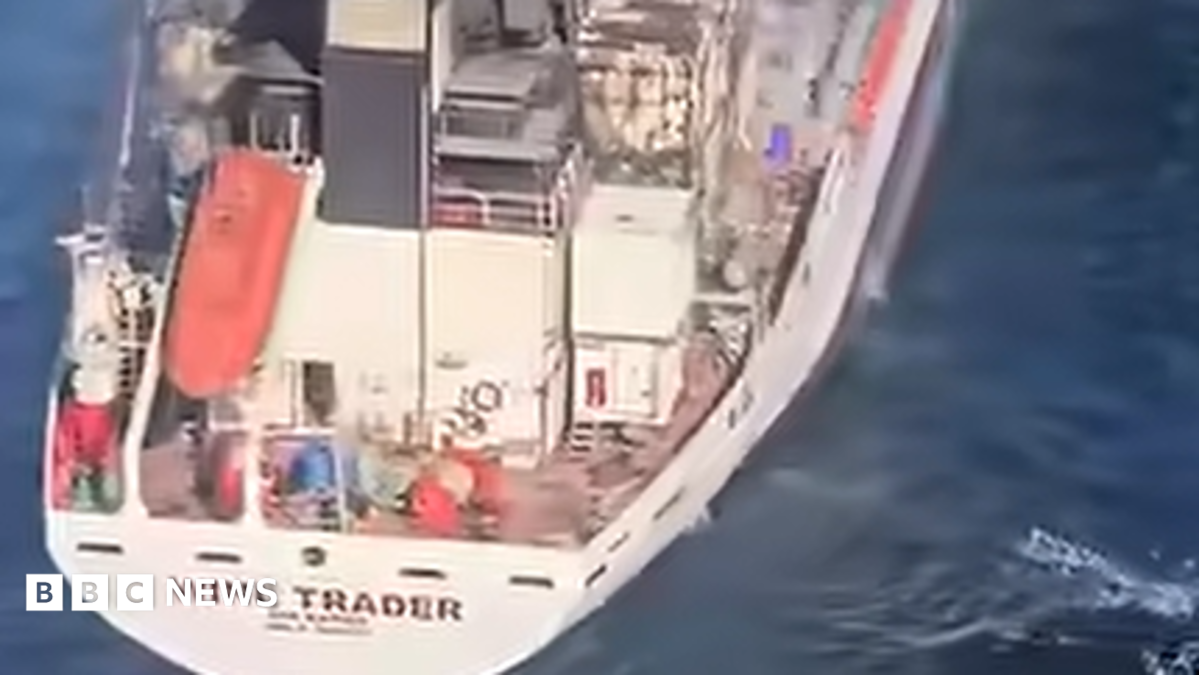
A commercial tanker operating in the western Black Sea caught fire following a suspected unmanned aerial vehicle (UAV) strike off the coast of Romania, triggering an urgent international search and rescue operation. Maritime authorities confirmed that eight crew members remain unaccounted for after the vessel was engulfed in flames within proximity to NATO's eastern territorial waters.
The incident represents a volatile geographic escalation in maritime warfare, moving kinetic hostilities closer to non-belligerent European Union littoral states. While neither regional belligerent has officially claimed responsibility for the strike, the event underscores the compounding militarization of the Black Sea corridor. Over the past eighteen months, electronic warfare, naval mines, and aerial drone sorties have turned neutral maritime trade routes into contested zones. Regional defense analysts observe that naval assets deployed by coastal states have been placed on heightened surveillance readiness, as distress signals from the stricken vessel prompted Romanian and allied naval units to scramble emergency salvage and rescue assets.
Global Trade & Economic Ripples
The attack dealt an immediate psychological shock to global energy and agricultural shipping routes. The western Black Sea serves as an indispensable artery for regional crude transits, petroleum products, and bulk agricultural flows originating from Ukraine, Romania, and Bulgaria. Marine insurance underwriters in London signaled that Joint War Committee listing parameters for Black Sea voyages will undergo immediate risk re-evaluations, pointing toward steep surcharges for vessel hulls and cargo.
Freight rates for Handysize and Supramax vessels operating in the Danube and Constanța corridors are projected to rise significantly to absorb elevated operational risks. Continued weaponization of these lanes threatens the fragile stability of regional supply chains. European agricultural traders warn that if secondary charterers pull tonnage out of Romanian anchorage zones, export capacities for grains will decline, producing upstream price spikes in international soft commodity bourses. Concurrently, regional refined product distribution could experience bottlenecking, placing upward pressure on localized Mediterranean bunker fuels.
Related Intelligence: Black Sea Security Alarm as Cargo Vessel Catches Fire off Romania
International Reactions & Diplomatic Stances
The incident prompted swift diplomatic concern across European capitals and multilateral bodies. Romanian defense officials issued statements affirming their deployment of coast guard and naval aviation assets to coordinate with nearby civilian vessels in search operations, while condemning reckless kinetic actions that endanger non-combatant merchant mariners in shared waters.
Representatives at the International Maritime Organization (IMO) reiterated demands for absolute adherence to international maritime law, underscoring that neutral commercial navigation must remain safeguarded against military targetings. Diplomatic envoys within the European Union emphasized that unprovoked strikes adjacent to NATO sovereign waters heighten the potential for catastrophic miscalculation, urging international restraint and strict accountability under the United Nations Convention on the Law of the Sea (UNCLOS).
Strategic Outlook & Future Scenarios
Moving forward, commercial operators face an increasingly bifurcated operating environment across the Black Sea basin. In the immediate term, vessel traffic within the vicinity of the strike will likely route through coastal waters closer to Bulgaria and Turkey, accepting longer transit durations and port congestion to minimize vulnerability to autonomous strikes.
Should forensic assessments confirm a deliberate targeting of commercial energy transport by state or proxy actors, Western allies could accelerate the deployment of enhanced coastal radar coverage, naval escort frameworks, and electronic countermeasures along Romanian and Bulgarian corridors. In the absence of enforceable international safety corridors, maritime transit through the Black Sea will increasingly depend on specialized risk-tolerant tonnage, structurally elevating transport costs and cementing structural risk premiums into regional commodity trade.
Join Our Official WhatsApp Channel
Receive live commodity alerts, policy changes, and commercial intelligence directly on WhatsApp.