
Tallal Chaudhry Rebukes JUI-F Over Khyber Pakhtunkhwa Governance Demands
State Minister for Interior Tallal Chaudhry has strongly criticized JUI-F chief Maulana Fazlur Rehman for demanding a governance quota in Khyber Pakhtunkhwa amidst ongoing debates over governor rule.
The Core Development
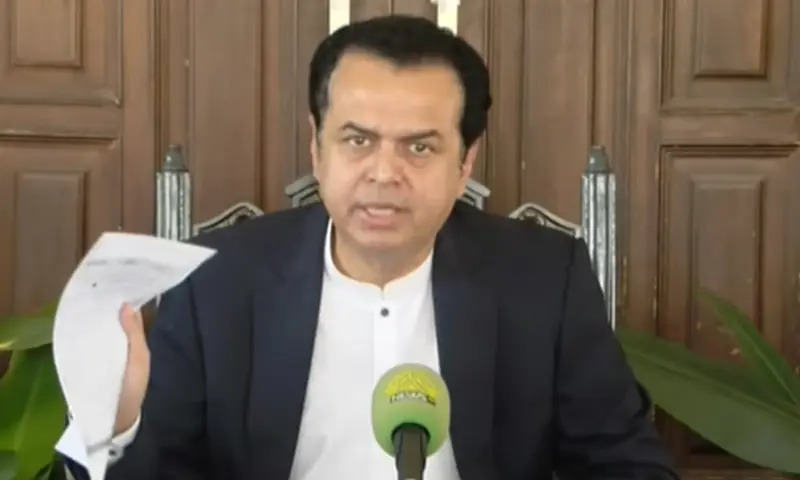
State Minister for Interior Tallal Chaudhry addressed a press conference in Jaranwala on Saturday, delivering a sharp rebuke to Jamiat Ulema-i-Islam-Fazl (JUI-F) chief Maulana Fazlur Rehman. The controversy centers on reports that the JUI-F leadership sought political concessions and an administrative share in Khyber Pakhtunkhwa under the hypothetical framework of governor's rule and emergency declarations.
Chaudhry emphasized that constitutional mechanisms and emergency provisions are intended strictly for state stability and maintaining law and order, rather than serving as leverage for political bargaining. The statements follow intense speculation in Islamabad regarding the federal government's policy options in managing growing friction with the Pakistan Tehreek-e-Insaf (PTI)-led provincial administration in Khyber Pakhtunkhwa. Chaudhry reiterated that governance decisions under exceptional circumstances must prioritize national security, fiscal compliance, and institutional integrity over partisan alliances.
Commercial & Economic Implications
The deepening political impasse in Khyber Pakhtunkhwa introduces fresh operational risks for the regional economy, trade routes, and wholesale distribution channels. Khyber Pakhtunkhwa serves as the primary overland conduit for bilateral commerce with Afghanistan and transit trade into Central Asia. Protracted administrative hostility between the federal center and provincial authorities threatens the smooth clearance of goods at major border terminals, including Torkham and Ghulam Khan.
Wholesale distributors, FMCG logistics operators, and retail merchants in Peshawar and adjoining commercial hubs face mounting uncertainty regarding municipal taxation, transport security, and fuel supplies. Prolonged political turbulence routinely discourages private freight operators, prompting increased haulage premiums and localized price volatility for essential commodities. Furthermore, provincial revenue generation, already constrained by limited fiscal space, risks deteriorating further if public sector development program allocations face administrative freezes amid emergency governance.
Related Intelligence: Bangladesh Measles Crisis Signals Regional Supply Chain and Health Risks
Stakeholder Perspectives & Market Reactions
Business organizations and legal analysts have voiced apprehension regarding the rhetoric surrounding governor's rule. Commercial bodies, including the Sarhad Chamber of Commerce and Industry (SCCI), have historically maintained that structural disruptions in provincial executive authority impair trade facilitation, freeze investment pipelines, and complicate regulatory compliance for manufacturing units in industrial zones.
Legal scholars point out that invoking Article 232 or Article 234 of the Constitution requires stringent parliamentary scrutiny and verifiable breakdown of the constitutional machinery. Political commentators argue that JUI-F's reported manoeuvring reflects an attempt to reassert influence in its traditional northern power base, whereas the federal government's public pushback indicates a desire to avoid appearing complicit in opportunistic power-sharing arrangements.
Forward Outlook & Key Watchpoints
The immediate focus shifts to the federal cabinet's deliberations regarding security and administrative cohesion in Khyber Pakhtunkhwa. Observers will closely monitor whether the ruling coalition formally moves toward emergency measures or seeks negotiated operational protocols with provincial authorities to maintain commercial stability.
Key watchpoints over the coming weeks include parliamentary debates on provincial autonomy, freight volume movements along the western corridor, and formal responses from the JUI-F leadership. Should administrative tensions escalate into widespread street demonstrations or bureaucratic gridlock, commercial operators must prepare for supply chain disruptions, heightened security protocols, and tightened inter-provincial trade oversight.
Join Our Official WhatsApp Channel
Receive live commodity alerts, policy changes, and commercial intelligence directly on WhatsApp.