
Government Rebuffs Opposition Demand for Alternative Dialogue Venue
The federal administration has firmly turned down Mahmood Khan Achakzai's demand to relocate dialogue with Prime Minister Shehbaz Sharif to an alternative venue, compounding institutional deadlock.
The Core Development
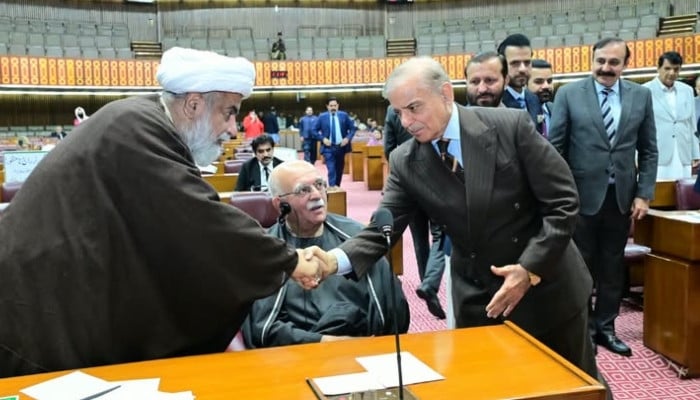
The federal coalition government led by Prime Minister Shehbaz Sharif has formally rejected a demand by Pashtunkhwa Milli Awami Party (PkMAP) chief and Tehreek Tahaffuz-e-Ain-e-Pakistan leader Mahmood Khan Achakzai to alter the venue for proposed political negotiations. Achakzai, who was designated by opposition benches including Pakistan Tehreek-e-Insaf (PTI) to explore inter-party dialogue, had requested that consultations take place outside the formal premises of the Prime Minister's Office, proposing Parliament House or a neutral site instead.
Government interlocutors communicated that official talks chaired by the chief executive traditionally and protocol-wise take place at the Prime Minister's House or designated official state secretariats. The refusal effectively stalls initial engagement between the ruling coalition and opposition factions, who remain at loggerheads over constitutional amendments, electoral mandates, and institutional oversight. The impasse arrives at a sensitive political juncture when the treasury benches require legislative consensus to push forward macroeconomic stabilization packages and statutory reforms.
Commercial & Economic Implications
For Pakistan's commercial ecosystem, continued political brinkmanship presents immediate downside risks. The country is navigating a stringent structural adjustment cycle under a $7 billion International Monetary Fund (IMF) Extended Fund Facility. Achieving fiscal benchmarks requires seamless federal-provincial coordination, tax base widening, and energy sector tariff adjustments, all of which depend on political predictability.
Wholesale distribution networks, import-reliant retail sectors, and broader mercantile operations across key trading hubs—including Karachi, Lahore, and Faisalabad—suffer from persistent policy uncertainty. Whenever high-level institutional talks break down, currency markets experience secondary volatility, hampering import planning for industrial inputs, consumer goods, and raw materials. Corporate planners and institutional investors routinely price in political friction as a primary risk premium, leading to delayed capital expenditures and reduced liquidity in both the debt and equity markets.
Related Intelligence: Anti-Terrorism Court Emphasizes Judicial Independence in High-Profile Activist Hearing
Stakeholder Perspectives & Market Reactions
Legal and constitutional scholars have expressed concern over the rigid stances adopted by both sides. Jurists point out that establishing dialogue within parliamentary committee rooms rather than executive offices has historic precedent and could de-escalate tension. Conversely, treasury strategists argue that lowering executive protocol diminishes state authority at a time when administrative firmness is critical.
Business organizations, including the Federation of Pakistan Chambers of Commerce and Industry (FPCCI) and regional merchant associations, have consistently called for a comprehensive political charter to insulate economic planning from partisan disputes. Market analysts on the Pakistan Stock Exchange observed cautious trading volumes, noting that foreign and domestic institutional investors remain wary of governance risks that could spark renewed street protests or legislative gridlock.
Forward Outlook & Key Watchpoints
The trajectory of inter-party negotiations hinges on whether secondary diplomatic channels can establish a compromise mechanism. Key watchpoints over the coming weeks include whether National Assembly Speaker Ayaz Sadiq intervenes to sponsor a parliamentary committee format that satisfies both the Prime Minister's institutional prerogative and the opposition's procedural objections.
If the stalemate persists, the ruling alliance will likely proceed with targeted legislative measures without broad-based opposition consensus, increasing the likelihood of court challenges and administrative disruption. Stakeholders across Pakistan's business community will closely monitor parliamentary calendars, inflation trajectories, and bilateral financing inflows to assess whether the political impasse threatens medium-term economic stability.
Join Our Official WhatsApp Channel
Receive live commodity alerts, policy changes, and commercial intelligence directly on WhatsApp.