
Sanaullah Urges Ban on Capital Marches Amid PTI Protests
Prime Minister's Adviser Rana Sanaullah has called for an end to political long marches in Islamabad, citing severe economic disruption, even as opposition parties push forward with anti-government demonstrations.
The Core Development
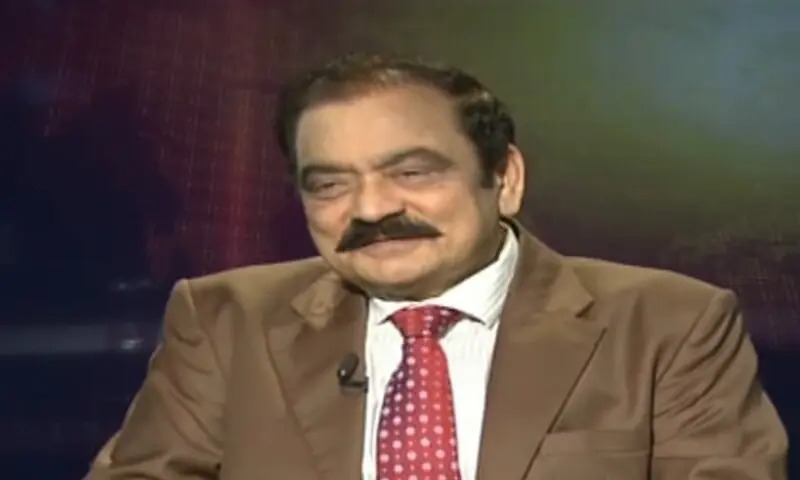
Prime Minister’s Adviser on Political Affairs, Rana Sanaullah, contended on Saturday that while every citizen possesses a fundamental constitutional and legal right to assemble and protest, the federal capital of Islamabad should be strictly off-limits for demonstrations. Sanaullah urged political factions and the general public to permanently end the recurring practice of staging long marches and blockades inside Islamabad, arguing that the seat of federal governance must remain insulated from perpetual political agitation.
The policy stance comes against a backdrop of escalating political friction. The Pakistan Tehreek-e-Insaf (PTI) had been aggressively gearing up for a nationwide mobilization and march toward Islamabad to press for the release of its incarcerated founder, Imran Khan, currently detained in Rawalpindi’s Adiala Jail. Concurrently, other political entities like Jamaat-i-Islami (JI) have launched independent agitation campaigns. However, amid intense administrative crackdowns, preventive detentions under the Maintenance of Public Order (MPO)—such as the detention of key figures like Aleema Khan in Lahore—and heavy security deployments, KP Chief Minister Sohail Afridi announced a tactical postponement of the PTI march to October 4.
Commercial & Economic Implications
The perpetual cycle of political agitation, containerized roadblocks, and capital lockdowns exacts a severe toll on Pakistan's fragile macro-economy. For Kalyar Traders and the wider business community operating across Punjab and the federal capital, highway closures and heightened security cordons instantly paralyze wholesale distribution networks and retail supply chains. Inter-city freight transport between major economic hubs like Lahore, Faisalabad, and Rawalpindi faces immediate bottlenecks, resulting in delayed shipments of perishable goods, rising fuel consumption due to detours, and localized inflationary spikes in essential commodities.
Retail trade within commercial centers adjacent to the capital experiences steep revenue contractions during high-alert days, as consumer footfall plummets amid fears of civil unrest. Furthermore, prolonged political instability depresses investor sentiment, complicates corporate planning, and undermines the hard-fought stabilization targets mandated under ongoing domestic economic reforms and international lending frameworks. The recurring paralysis of urban centers directly harms daily-wage earners, small shopkeepers, and industrial exporters relying on uninterrupted logistical corridors.
Related Intelligence: Rana Sanaullah Demands Ban on Capital Marches Amid Political Tensions
Stakeholder Perspectives & Market Reactions
Business councils, chambers of commerce, and trade associations have voiced profound dismay over the unyielding political polarization. Major merchant bodies in Punjab and Islamabad have repeatedly petitioned provincial and federal administrations to establish designated, out-of-town protest zones, arguing that the economic arteries of the nation should not be held hostage by partisan disputes. Industry leaders emphasize that national economic recovery requires absolute predictability, which is fundamentally undermined by threats of capital seizures and violent street confrontations.
Legal experts and constitutional analysts remain divided on the scope of administrative restrictions. While the government invokes public safety and the maintenance of writ of the state to justify sealing off the capital, opposition legal teams maintain that restricting access to the federal seat of government infringes upon fundamental democratic freedoms of expression and assembly. Public response remains deeply polarized, with urban residents expressing fatigue over recurrent traffic paralysis and commercial disruption.
Forward Outlook & Key Watchpoints
As political actors recalibrate their timelines—highlighted by PTI's rescheduled date of October 4—market watchers and trade analysts are closely monitoring administrative enforcement mechanisms and potential judicial interventions. Key indicators to watch include the deployment scale of law enforcement agencies around major entry points to the capital, the willingness of political leadership to negotiate alternative demonstration venues, and the potential for preemptive legislative or executive measures regulating public assembly spaces.
For Kalyar Traders and commercial enterprises nationwide, mitigating short-term operational risks will necessitate flexible logistics planning and robust inventory buffers. Ultimately, the resolution or escalation of this standoff will heavily influence business confidence and economic stability heading into the final quarter of the fiscal year.
Join Our Official WhatsApp Channel
Receive live commodity alerts, policy changes, and commercial intelligence directly on WhatsApp.