
Spanish Political Tensions Surge Amid Ceuta Migrant Crisis Protests
Tens of thousands of right-wing protesters marched in Madrid to demand early elections, accusing Prime Minister Pedro Sanchez of negligence over the Ceuta migrant crisis and threatening broader political stability.
Geopolitical & Core Developments
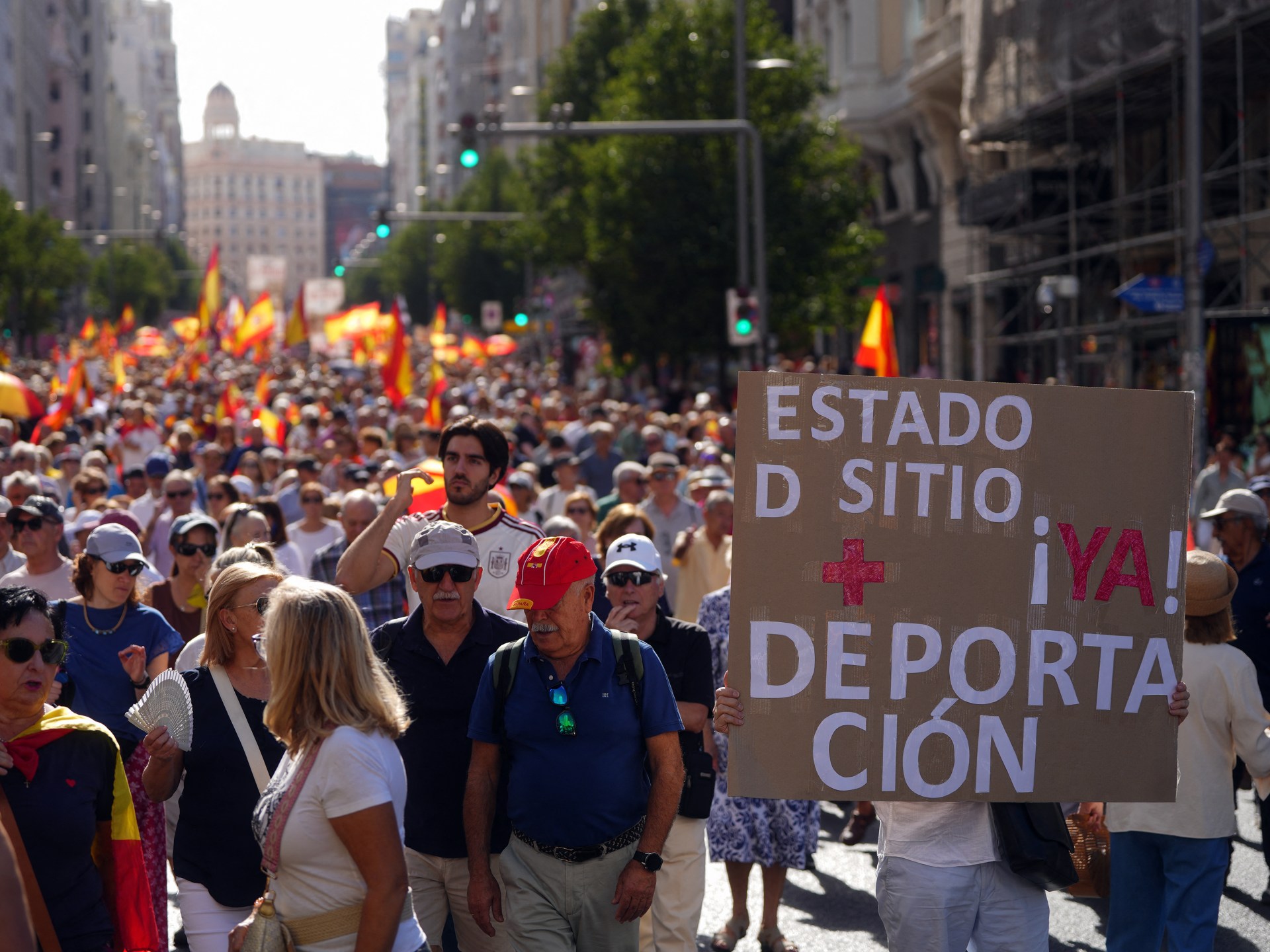
Tens of thousands of right-wing demonstrators converged on the Spanish capital on Sunday, demanding immediate early elections and leveling severe accusations of administrative negligence against Prime Minister Pedro Sanchez's coalition government. The mass mobilization, organized in response to escalating migration pressures in the North African enclave of Ceuta, underscores a deepening political fracture within the Iberian nation. Protesters chanted anti-government slogans and waved national flags, signaling intense public dissatisfaction with how Madrid has managed successive border influxes. The demonstrations reflect a broader European trend where migration management intersects with domestic political vulnerability, testing the resilience of minority governments across the continent. State actors in Brussels and neighboring capitals are closely watching the domestic fallout, as prolonged political instability in Spain could impair the European Union's cohesive approach to southern Mediterranean border security.
The crisis in Ceuta is not merely a localized humanitarian challenge; it represents a complex geopolitical friction point involving diplomatic negotiations between Spain, Morocco, and the wider European Union. Critics of Prime Minister Sanchez argue that concessions made to Rabat have failed to stem irregular crossings, leaving Spanish border authorities overstretched and local infrastructure overwhelmed. The timeline of recent arrivals points to recurring seasonal surges that strain bilateral accords designed to regulate migration and intelligence-sharing. As opposition parties capitalize on public discontent, the legislative viability of Sanchez's government faces unprecedented strain, raising the specter of a parliamentary motion of no confidence or forced snap elections.
Global Trade & Economic Ripples
While the protests are ostensibly centered on migration and domestic governance, prolonged political uncertainty in Spain carries tangible implications for global trade, supply chain stability, and commodity flows across the Western Mediterranean. Spain serves as a vital logistics gateway connecting European markets with North African agricultural and industrial producers. Any domestic disruption or shift in trade policy resulting from a change in government could introduce regulatory friction into critical commercial corridors. Furthermore, bilateral trade agreements governing agricultural exports, automotive components, and energy supplies—particularly natural gas transiting from North Africa via pipeline infrastructure—remain sensitive to diplomatic realignments between Madrid and Rabat.
International shipping lanes passing through the Strait of Gibraltar, immediately adjacent to Ceuta, are vital arteries for global maritime commerce, energy commodities, and containerized freight. While maritime traffic has not been directly disrupted by the onshore protests, heightened political volatility in border regions prompts heightened security postures among commercial operators and naval forces. Financial markets are also factoring in the potential for increased fiscal spending on domestic border fortification, which could influence Spain's sovereign debt issuance and compliance with European Union deficit targets. Currency traders remain vigilant, as prolonged political turbulence frequently exerts downward pressure on the Euro when key member states face internal legislative deadlocks.
Related Intelligence: South Africa Murders Spark National Outcry and Economic Concerns
International Reactions & Diplomatic Stances
International response to the unfolding political crisis in Spain has been measured, reflecting diplomatic sensitivities regarding internal sovereign affairs and bilateral migration pacts. Officials in Brussels have reiterated the European Union's commitment to supporting frontline member states through Frontex and financial assistance, though critics argue current mechanisms remain insufficient. Market analysts and geopolitical risk consultancies have noted that the protests highlight the fragility of coalition governance in Southern Europe, where immigration policies frequently serve as a catalyst for populist mobilization. Human rights organizations have simultaneously urged Madrid to uphold international asylum standards, warning against heavy-handed border enforcement measures designed primarily to appease domestic political critics.
Diplomatic channels between Madrid and Rabat remain under intense scrutiny following the demonstrations. Moroccan officials have maintained a cautious stance, emphasizing their adherence to existing bilateral migration control frameworks while navigating domestic economic priorities. Meanwhile, international financial institutions and trade bodies are assessing whether political instability in Spain could delay the implementation of regional infrastructure projects aimed at enhancing Mediterranean energy connectivity and supply chain resilience.
Strategic Outlook & Future Scenarios
Looking ahead, the trajectory of Spanish politics will depend heavily on Prime Minister Sanchez's ability to maintain parliamentary support and defuse public anger over the Ceuta crisis. Upcoming legislative sessions will serve as a critical test for the ruling coalition, with opposition parties vowing to escalate pressure through parliamentary inquiries and nationwide mobilizations. Should the government fall, an early election cycle could bring conservative or nationalist factions to power, potentially resulting in a more assertive foreign policy regarding North Africa and stricter enforcement of European migration laws.
Geopolitical escalation points in the region remain tied to broader diplomatic negotiations between the European Union and North African states regarding border funding, economic aid, and security cooperation. As climate pressures and economic disparities continue to drive migration flows toward the Mediterranean, Spanish domestic politics will remain an epicenter for broader European debates on sovereignty, security, and international trade stability.
Join Our Official WhatsApp Channel
Receive live commodity alerts, policy changes, and commercial intelligence directly on WhatsApp.