
Rana Sanaullah Demands Ban on Capital Marches Amid Political Tensions
Prime Minister's Adviser Rana Sanaullah has called for an end to political marches targeting Islamabad, citing severe disruptions to national governance and economic stability.
The Core Development
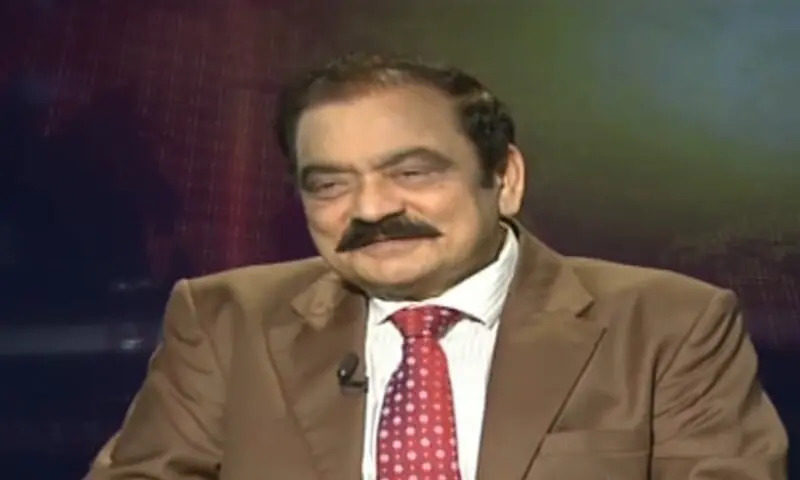
Prime Minister’s Adviser on Political Affairs, Rana Sanaullah, made a definitive policy stance on Saturday, contending that while peaceful protest remains a fundamental constitutional and legal right for every citizen, the federal capital of Islamabad must be strictly off-limits for large-scale demonstrations. Speaking at a press briefing, Sanaullah urged political factions and the public alike to permanently 'end the practice' of staging long marches and sit-ins inside the Red Zone and surrounding metropolitan sectors of Islamabad.
The timing of Sanaullah's remarks coincides with intense political friction. The Pakistan Tehreek-e-Insaf (PTI) had been aggressively gearing up for a nationwide mobilization and march toward Islamabad to pressure the federal government into releasing its incarcerated founder, former prime minister Imran Khan, currently held in Rawalpindi’s Adiala Jail. Amid escalating administrative hurdles, detentions of key party figures under the Maintenance of Public Order (MPO) ordinance, and widespread containerization of the capital, Khyber Pakhtunkhwa Chief Minister Ali Amin Gandapur announced that the planned September 27 long march had been officially postponed to October 4.
Simultaneously, other opposition groups, including Jamaat-i-Islami (JI), have actively mobilized against government policies, compounding the administrative strain on law enforcement agencies. The government's hardened stance signals an uncompromising approach toward future capital disruptions, setting the stage for potential confrontations as rescheduled protest dates approach.
Commercial & Economic Implications
For the broader business community, wholesale distributors, and retail traders across Pakistan, the perpetual threat of capital lockdowns inflicts severe economic collateral damage. Islamabad and its twin city Rawalpindi serve as vital commercial arteries and administrative hubs connecting the northern industrial corridors with southern ports. When political agitation paralyzes traffic flow, commercial transit grinds to a halt.
Supply chains face immediate bottlenecks as containerized roadblocks and strict security checkpoints delay the cross-country movement of perishable goods, raw materials, and manufactured inventory. For daily-wage earners, small shopkeepers, and retail traders in urban centers, transport delays translate directly into depressed sales volumes, inventory holding costs, and inflationary spikes in essential commodities.
Furthermore, investor sentiment remains acutely sensitive to political instability. Prolonged standoffs, security clampdowns, and threats of institutional paralysis undermine ongoing efforts by economic managers to stabilize foreign exchange reserves, control inflation, and attract foreign direct investment. Business councils have repeatedly warned that persistent political uncertainty acts as a structural tax on domestic commerce, eroding profit margins across the manufacturing and retail sectors.
Stakeholder Perspectives & Market Reactions
Reaction from trade associations and industry bodies has been swift, reflecting deep frustration with the economic toll of political confrontations. Representatives from major chambers of commerce and industry have issued joint appeals urging political leadership to transition their disputes from the streets to parliamentary floors. According to business leaders, unannounced road closures and commercial shutdowns cost billions of rupees daily in lost productivity and trade disruption.
Legal and constitutional experts remain divided over the administration's proposed restrictions. While legal defenders of the government argue that the state possesses an inherent duty to maintain public order, protect critical national installations, and ensure uninterrupted governance, civil liberties advocates counter that designating the capital off-limits infringes upon the peaceful assembly guarantees enshrined under Article 16 of the Constitution of Pakistan.
Meanwhile, opposition parties have condemned Sanaullah’s remarks as an authoritarian attempt to curtail democratic dissent and shield the ruling coalition from public accountability. PTI leadership has vowed to press forward with its mobilization strategy, maintaining that peaceful pressure is the only viable recourse against perceived political victimization.
Forward Outlook & Key Watchpoints
As Pakistan navigates this tense political juncture, several critical developments and policy enforcement metrics will dictate the trajectory of national stability. Key watchpoints include the implementation of enhanced administrative protocols around Islamabad's entry points ahead of the rescheduled October 4 protests.
Investors and business analysts will closely monitor whether dialogue can bridge the widening chasm between the ruling coalition and opposition forces, or if the country is headed toward another cycle of intense civil unrest. The government's enforcement of stricter public order legislation, alongside the judicial response to challenges against administrative detentions, will serve as primary indicators of the state's capacity to balance constitutional freedoms with economic continuity.
Join Our Official WhatsApp Channel
Receive live commodity alerts, policy changes, and commercial intelligence directly on WhatsApp.