
KP Chief Minister Warns Federal Government Amid Postponed March
Khyber Pakhtunkhwa Chief Minister Sohail Afridi conditioned political stability on dialogue with Islamabad while warning against state crackdowns as PTI delays its nationwide protest march.
The Core Development
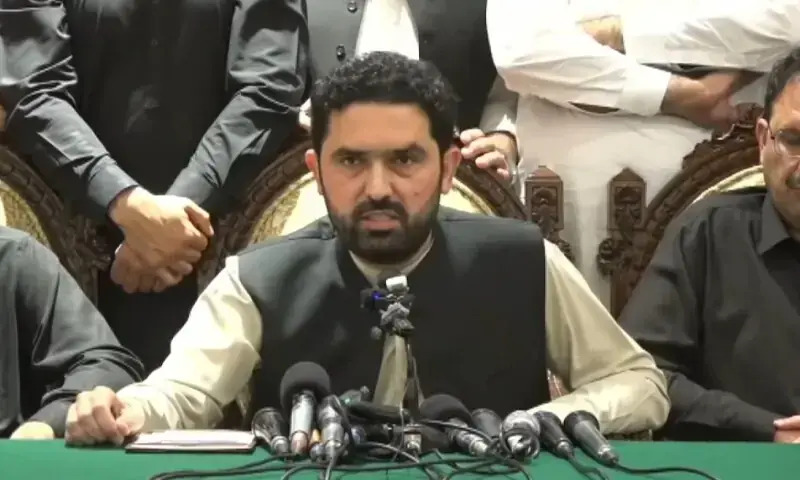
Khyber Pakhtunkhwa Chief Minister Sohail Afridi adopted a dual-tracked political posture on Saturday during an informal media interaction at KP House in Peshawar, signaling a tentative willingness for political engagement with the federal government while issuing a stern caveat against aggressive state maneuvers. The Chief Minister asserted that while his administration and party leadership remain open to resolving deep-seated political grievances through structured negotiations, any state-sponsored "misadventure" or crackdown would push the fragile political environment past a point of no return.
The high-stakes political posturing comes in the immediate wake of the Pakistan Tehreek-e-Insaf (PTI) leadership's decision to defer its aggressively promoted nationwide protest and march toward Islamabad. Originally slated for September 27 to demand the release of incarcerated founder Imran Khan from Rawalpindi's Adiala Jail, the mobilization has been rescheduled for October 4. The postponement followed heightened administrative clampdowns across Punjab, including the detention of key party figures under the Maintenance of Public Order ordinance, forcing a tactical reassessment within the opposition ranks to mitigate potential institutional confrontations.
Commercial & Economic Implications
The protracted political standoff between Islamabad and the Khyber Pakhtunkhwa administration continues to cast a heavy shadow over Pakistan's macroeconomic recovery. Commercial markets, wholesale distribution networks, and retail trade associations across the country report mounting operational anxieties. Frequent road closures, containerized security blockades around major urban centers, and supply chain disruptions severely impair inter-provincial trade corridors, choking the seamless movement of essential commodities from major ports to northern markets.
Inflationary pressures remain acutely sensitive to these supply chain bottlenecks. Business leaders note that speculative hoarding and logistical delays caused by recurring threat perceptions of civil unrest immediately translate into volatile price spikes for perishable goods and consumer staples. For a national economy striving to stabilize under stringent International Monetary Fund fiscal consolidation programs, the recurring threat of political paralysis directly undermines investor confidence, stalls foreign direct investment inflows, and dampens consumer spending power during critical retail cycles.
Related Intelligence: DI Khan Suicide Blast Claims 12 Lives, Threatens Regional Trade Corridors
Stakeholder Perspectives & Market Reactions
Prominent trade bodies, chambers of commerce, and industrial associations have issued urgent appeals to both the federal administration and provincial leadership to prioritize economic continuity over political brinkmanship. Representatives from the Federation of Pakistan Chambers of Commerce and Industry emphasized that commercial activity requires a predictable regulatory and security framework, warning that sustained political uncertainty threatens manufacturing output and employment generation.
Legal experts and constitutional analysts monitoring the situation observe that Chief Minister Afridi's conditional offer for dialogue represents a narrow window for de-escalation. However, skepticism remains pervasive regarding whether both sides possess the political flexibility required to reach a sustainable consensus. Public response has grown increasingly fatigued, with citizens bearing the brunt of security crackdowns, transport suspensions, and persistent economic uncertainty.
Forward Outlook & Key Watchpoints
All eyes are now fixed on the newly announced October 4 deadline for the postponed PTI mobilization. The intervening days will test whether backchannel diplomatic efforts can yield a breakthrough between federal authorities and the opposition. Key indicators to monitor include administrative postures toward public assembly permissions, judicial interventions regarding political detentions, and any formal policy adjustments from the federal cabinet aimed at addressing opposition grievances.
Failure to establish a credible dialogue channel prior to the October 4 march risks triggering severe logistical paralysis in Islamabad and Rawalpindi, with immediate repercussions for national financial markets. Policymakers, business leaders, and foreign investors will closely scrutinize upcoming security protocols and legislative maneuvers to gauge Pakistan's stability trajectory as the critical autumn political season unfolds.
Join Our Official WhatsApp Channel
Receive live commodity alerts, policy changes, and commercial intelligence directly on WhatsApp.