
Rubio Lauds Indian Energy Shift Away From Russian Crude Supplies
US Secretary of State Marco Rubio noted India has made substantial progress in diversifying crude imports away from Russia, signaling major shifts in regional energy flows and trade corridors.
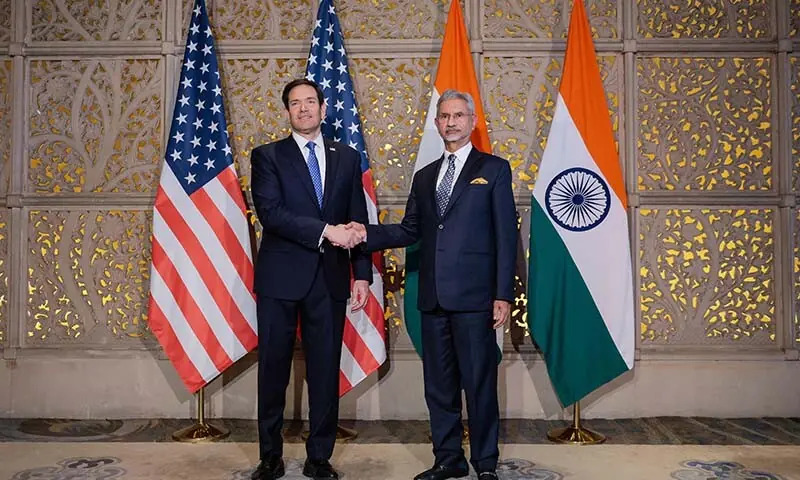
The Core Development
United States Secretary of State Marco Rubio stated during an official visit to Mumbai that India has registered substantial progress in diversifying its strategic energy procurement portfolio, specifically curbing overreliance on Russian crude imports. Addressing financial leaders and diplomats in India's commercial hub, Rubio acknowledged that while immediate complete disengagement from established supply chains is operationally complex, New Delhi's proactive steps toward sourcing alternative barrels align with broader Western policy objectives.
This trip marks Rubio's second high-level engagement in the country this year, forming part of a comprehensive Asian diplomatic mission that included strategic talks in Uzbekistan. Following high-level discussions with Indian External Affairs Minister Subrahmanyam Jaishankar, Rubio emphasized that Washington views India's portfolio diversification as a pragmatic economic and diplomatic hedge. India had emerged as one of the largest buyers of discounted Russian seaborne crude following European Union embargoes and Group of Seven price caps, but intensifying secondary scrutiny and compliance tightening from the Trump administration have begun altering procurement calculus across major Indian state-run and private refiners.
Commercial & Economic Implications
India's recalibration of crude purchases carries far-reaching ramifications across regional commodity markets, particularly affecting South Asian freight lanes, product crack spreads, and fuel import economics for neighboring economies like Pakistan. When Indian mega-refineries absorb lower volumes of discounted Urals or Sokol grades, surplus Russian barrels seek alternate clearing hubs, altering freight dynamics across the Indian Ocean and Arabian Sea.
For Pakistan's commercial landscape, regional crude reallocations directly impact wholesale petroleum pricing and landed fuel costs. As Indian refiners turn back toward Middle Eastern producers including Saudi Aramco, Iraq's SOMO, and Gulf suppliers, regional crude premiums can firm up due to elevated Asian spot demand. Higher crude premiums translate into steeper import bills for state distributors like Pakistan State Oil (PSO) and private refiners, intensifying domestic inflation pressures on retail fuel, transport logistics, and wholesale commodity distribution. Furthermore, any friction in global tanker deployment alters insurance rates and demurrage costs across regional sea lines of communication, directly squeezing margins for industrial manufacturers and transport fleets in Pakistan.
Related Intelligence: United States Recalibrates Middle East Strategy Beyond Oil-for-Security Paradigm
Stakeholder Perspectives & Market Reactions
Energy commodity desks and maritime intelligence firms report that Indian private refiners have increasingly sought long-term term-contracts from traditional Middle Eastern and American suppliers to shield against sanction risks. Industry bodies in New Delhi maintain that import strategies remain governed by price competitiveness and energy security imperatives, rejecting suggestions of unilateral external coercion. However, financial institutions and international banks handling energy transactions have substantially tightened documentary verification, complicating payment settlement mechanisms in dirhams, yuan, and rupees.
In Pakistan, business federations, petroleum dealers, and macro analysts view the US-India energy engagement as an indicator of tightening geopolitical compliance across regional energy trades. Local energy economists note that while India possesses the sovereign balance sheet and strategic crude reserves to manage transition volatility, import-dependent economies like Pakistan must closely monitor shifts in Gulf spot allocations to avoid sudden procurement crunches.
Forward Outlook & Key Watchpoints
The trajectory of regional crude sourcing depends heavily on US sanctions enforcement, shipping insurance verification protocols, and Middle Eastern output adjustments. Moving forward, market participants will track the volume share of non-Russian barrels entering Indian coastal terminals through upcoming quarterly customs releases.
Key watchpoints include the upcoming OPEC+ production quota adjustments, the availability of specialized tanker tonnage in the Indian Ocean, and Washington's stance on secondary sanctions affecting clearing banks. For the broader South Asian downstream sector, sustained discipline among traditional Gulf exporters could keep spot premiums elevated, compelling commercial energy buyers across Pakistan to optimize procurement timing and hedge exposure against rising refined product benchmarks.
Join Our Official WhatsApp Channel
Receive live commodity alerts, policy changes, and commercial intelligence directly on WhatsApp.