
United States Recalibrates Middle East Strategy Beyond Oil-for-Security Paradigm
Washington is recalibrating its Middle East engagement by abandoning classic oil-for-security frameworks while maintaining regional partnerships and admitting historical interventionist failures.
Geopolitical & Core Developments
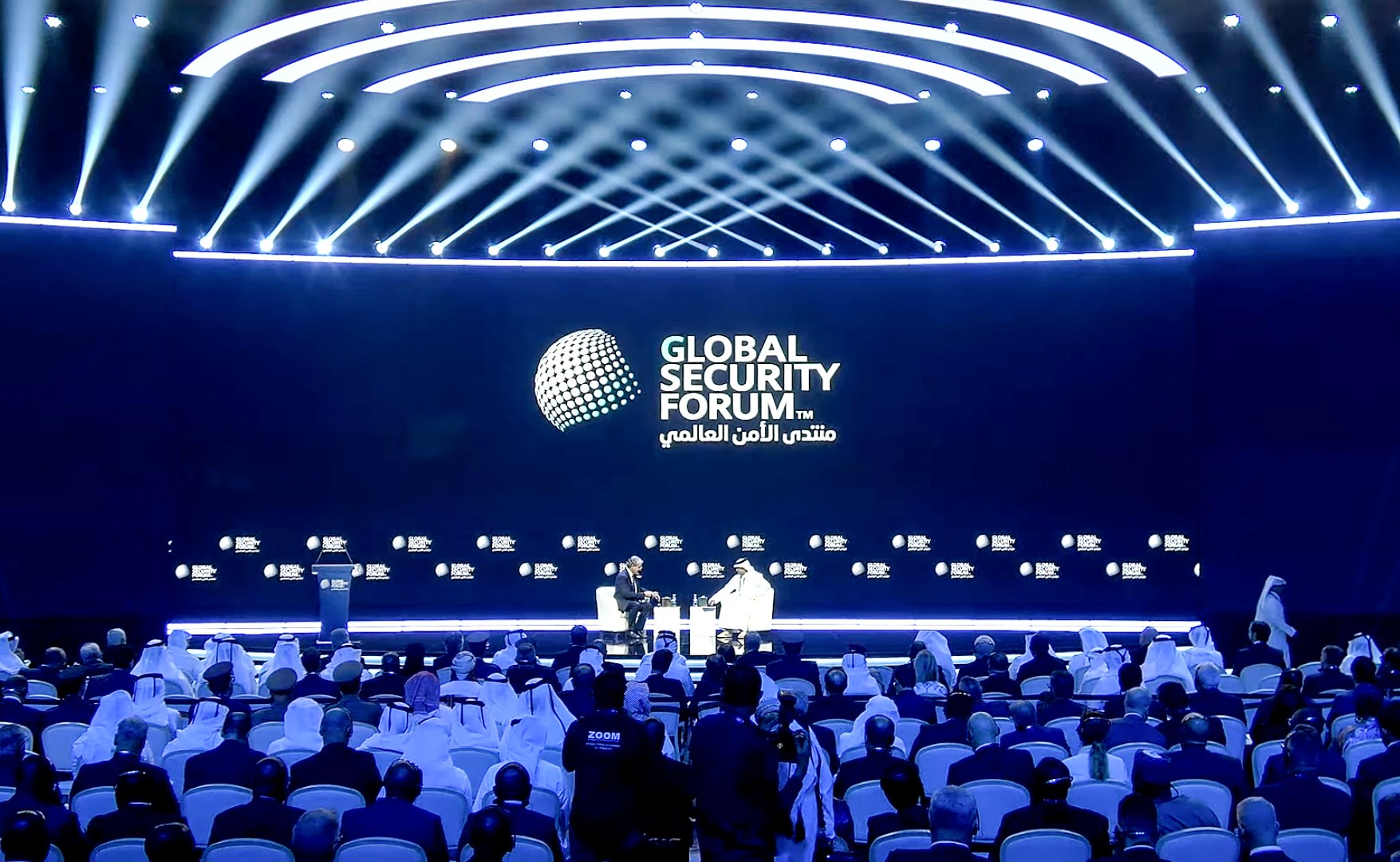
The enduring framework governing relations between the United States and the Middle East has entered a decisive phase of structural recalibration. For over seven decades, the foundational consensus rested upon an implicit compact: guaranteed American military protection across critical corridors in exchange for unhindered flows of hydrocarbons and petroleum price stability. Speaking at high-level diplomatic venues, senior US representative Tom Barrack articulated a formal shift in Washington's strategic posture, affirming that the United States is moving away from the conventional oil-for-security doctrine without disengaging from the broader Middle East.
Crucially, Barrack acknowledged the strategic limits of sustained military interventionism, conceding that past US-led regime change initiatives across the region frequently represented severe strategic miscalculations. This candid reappraisal reflects an operational transition toward realistic statecraft. Washington's focus is pivoting from direct kinetic interventions to localized deterrence architectures, counterterrorism coordination, and multilateral containment. The reassessment comes amid evolving security calculations in the Persian Gulf, where sovereign states are recalibrating defense partnerships to counter asymmetric regional threats while asserting autonomous foreign policy tracks.
[Global Trade](/news/european-energy-crisis-fuel-inflation-trade-impact) & Economic Ripples
The strategic evolution in Washington directly impacts energy commodity flows, maritime logistics, and bilateral trade mechanisms. Historically, the US security umbrella acted as an unwritten subsidy for global oil markets, securing vital transit bottlenecks including the Strait of Hormuz and the Bab el-Mandeb strait. As Washington redefines its commitments, Gulf producers are increasingly evaluating self-reliant security systems to safeguard critical infrastructure.
Simultaneously, the global energy transition and altered trade balances have weakened the direct economic rationale underpinning the original pact. With the United States establishing itself as a premier producer and net exporter of liquefied natural gas and crude, the primary destination for Middle Eastern hydrocarbons has relocated decisively toward Asian markets, notably China, India, and Japan. This trade realignment has spurred bilateral discussions regarding non-dollar denominated oil transactions, such as the petroyuan. However, global benchmark crude pricing continues to navigate heightened risk premiums, as market participants price in the prospect of more volatile maritime corridors in the absence of absolute unilateral guarantees.
Related Intelligence: European Energy Crisis Drives Populist Surge as Global Trade Braces for Disruption
International Reactions & Diplomatic Stances
Regional chancelleries across Riyadh, Abu Dhabi, and Doha have responded to this strategic transition by deepening multi-vector diplomacy. Middle Eastern policymakers increasingly view Washington's doctrine not as an unexpected abandonment, but as the formalization of a trajectory observed across multiple successive administrations. Consequently, the Gulf Cooperation Council (GCC) has actively expanded diplomatic, technological, and defense ties with alternative global powers, including the facilitation of Chinese-brokered diplomatic normalizations.
In Washington, strategic analysts and congressional defense panels remain divided over the execution of this posture. Proponents argue that curbing overseas adventurism and regime-change doctrines preserves fiscal and defense assets vital for maintaining stability in the Indo-Pacific theater. Conversely, national security hawks caution that an explicit retraction of absolute security guarantees creates power vacuums, enabling rival state actors to entrench strategic military and telecommunication assets within traditional Western spheres of influence.
Strategic Outlook & Future Scenarios
The intermediate trajectory of regional geopolitics will be defined by pragmatic transactional alliances rather than rigid multilateral security pacts. Moving forward, Washington is anticipated to prioritize selective arms sales, artificial intelligence integration, and maritime monitoring coalitions rather than expansive troop deployments. The sustainability of this model will face rigorous stress tests, particularly concerning regional maritime deterrence and unresolved nuclear negotiations.
Future international summits and ministerial defense dialogues will likely emphasize regional defense integration, including interoperable air and missile defense networks among Arab states. If Washington succeeds in establishing a durable, self-sufficient regional security framework, it may achieve an equilibrium that limits US military exposure. However, if regional security architecture fails to contain asymmetric disruptions, energy markets will inevitably face intensified structural volatility.
Join Our Official WhatsApp Channel
Receive live commodity alerts, policy changes, and commercial intelligence directly on WhatsApp.