
Marseille Escalation Signals Deepening Domestic Crisis with Broader Eurozone Economic Repercussions
Intense urban unrest across Marseille and major French hubs poses systemic risks to domestic commerce, regional transport nodes, and investor confidence across the broader European market.
Geopolitical & Core Developments
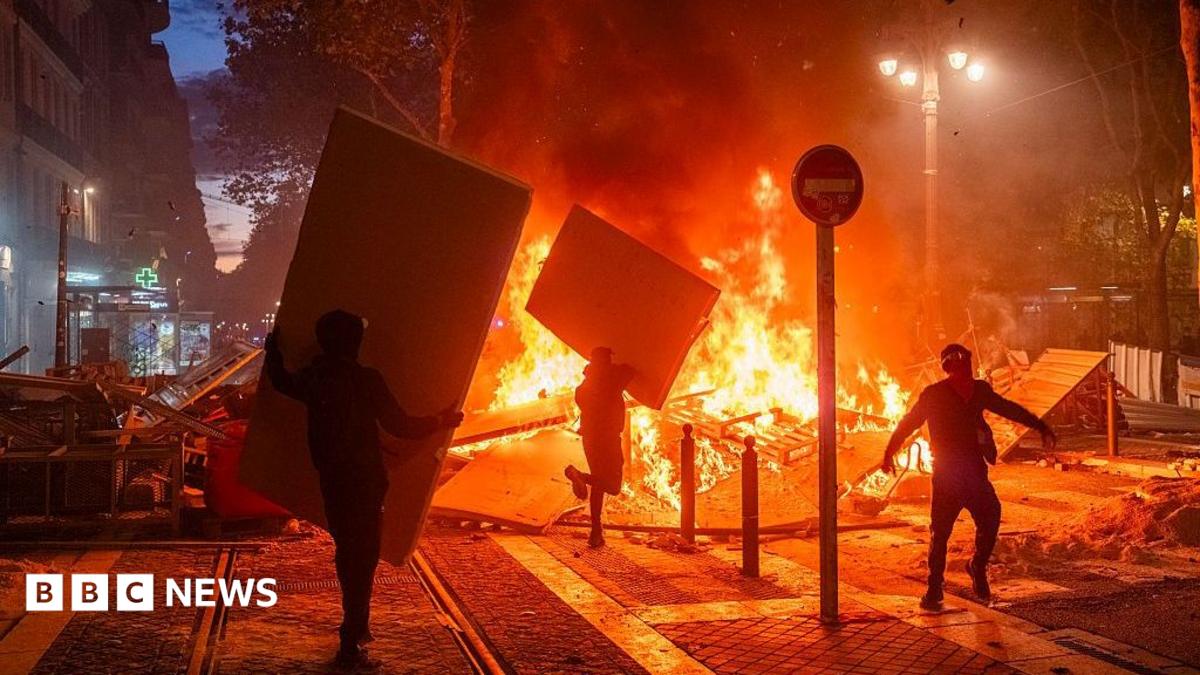
France's second-largest metropolitan center, Marseille, became the focal point of acute domestic upheaval this weekend as widespread civil unrest escalated into intense urban disorder. Demonstrations originating from the police shooting of a teenager in Nanterre broadened into asymmetric confrontations across major French cities, with Marseille bearing a disproportionate share of infrastructure damage, commercial looting, and clashes with law enforcement personnel. The interior ministry deployed elite tactical units, armored vehicles, and thousands of additional police officers to stabilize the Mediterranean port city, yet volatile conditions persisted.
President Emmanuel Macron's administration faces a compound governance dilemma. The unrest has forced the cancellation of significant diplomatic engagements, including a long-planned state visit to Germany, underscoring the severity of the internal crisis. For the French state, the loss of civic control in Marseille represents not merely a municipal policing failure, but a structural vulnerability in maintaining public order across critical peripheral urban zones. The timeline of rapid escalation demonstrates how localized grievances can bypass institutional intermediaries, paralyzing state apparatuses and damaging national governance credibility on the international stage.
Global Trade & Economic Ripples
Marseille occupies a vital geostrategic position as a premier maritime hub connecting Southern Europe, North Africa, and the Levant. The Marseille-Fos port complex, essential for container shipping, crude hydrocarbons, and chemical transit, operates in close proximity to the destabilized metropolitan core. While offshore maritime terminal operations maintained baseline functionality, land-side intermodal transport, freight forwarding, and urban delivery corridors experienced substantial friction, threatening cargo dwell times and inland supply chains.
The commercial implications across France's private sector are substantial. Insurers face aggregate claims projected in the hundreds of millions of euros following structural destruction to hundreds of bank branches, retail stores, and public transit assets. France's critical tourism and hospitality sectors, representing roughly eight percent of gross domestic product, face immediate headwinds at the onset of peak summer travel. International institutional investors are closely monitoring sovereign risk spreads; prolonged domestic instability could exert downward pressure on consumer sentiment, softening domestic demand and contributing to marginal volatility in the euro currency against major trade-weighted baskets.
Related Intelligence: United States Recalibrates Middle East Strategy Beyond Oil-for-Security Paradigm
International Reactions & Diplomatic Stances
Multilateral institutions and sovereign governments have monitored the deterioration of public safety in France with acute concern. The United Nations Office of the High Commissioner for Human Rights issued an official statement urging French authorities to ensure law enforcement operations adhere to principles of non-discrimination and proportionate force. In response, the French Ministry of Foreign Affairs strongly contested any characterization of systemic institutional bias within its security apparatus.
Neighboring European governments, including the United Kingdom, the United States, and several Gulf states, updated consular travel advisories, warning citizens to avoid urban centers and public demonstrations. Analysts at major credit rating agencies noted that while the unrest does not immediately threaten France's sovereign credit profile, persistent sociopolitical friction compounds fiscal consolidation efforts and complicates the government's broader economic reform agenda, which was already strained by contentious pension adjustments earlier this year.
Strategic Outlook & Future Scenarios
The immediate trajectory of the crisis hinges on the state's capacity to restore sustained public order without resorting to emergency measures such as a nationwide state of emergency. Should urban volatility persist, the Macron administration risks enduring political paralysis, further eroding legislative leverage in the National Assembly and empowering populist political blocs ahead of future European and domestic electoral cycles.
Over the medium term, sustained civil instability risks dampening foreign direct investment in key industrial hubs. If structural urban grievances remain unaddressed, periodic bouts of acute disorder could become a recurrent operational risk for multinational enterprises operating in France. Strategic focus will now shift toward upcoming European Union summits and domestic fiscal planning, where policymakers must reconcile internal stabilization imperatives with the maintenance of competitive, functioning international trade corridors.
Join Our Official WhatsApp Channel
Receive live commodity alerts, policy changes, and commercial intelligence directly on WhatsApp.