
UK Deploys RAF Typhoons to Saudi Arabia Amid Red Sea Tensions
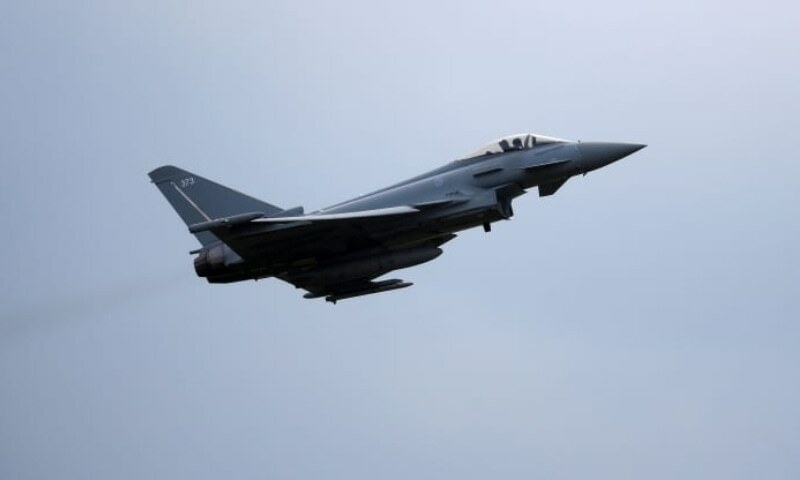
The United Kingdom has deployed Royal Air Force Typhoon fighter jets to Saudi Arabia on defensive counter-air missions, aiming to protect critical infrastructure from Houthi strikes amid escalating Middle Eastern maritime instability.
The Core Development
The British Ministry of Defence (MoD) has officially confirmed the deployment of Royal Air Force (RAF) Typhoon fighter jets alongside military transport assets to Saudi Arabia. This strategic deployment constitutes part of an enhanced bilateral defense package negotiated between London and Riyadh, aimed at intercepting airborne threats launched by Yemen's Houthi movement. According to official Whitehall communiqués, the deployment will conduct defensive counter-air operations dedicated solely to protecting Saudi population centers and critical national energy infrastructure against incoming unmanned aerial systems (UAS) and ballistic projectiles.
The MoD stressed that these operational assets will operate in a strictly defensive capacity and will not participate in offensive air sorties inside Yemeni sovereign territory. To complement the air-defense umbrella, the British government is stationing specialized military transport aircraft to facilitate internal logistical movements of defense material, backed by tactical advisers deployed to advise Saudi staff officers on integrated airspace deconfliction. This move formalizes heightened Western military engagement across the Arabian Peninsula, reflecting persistent vulnerabilities within the regional security architecture following expanded cross-border missile and drone trajectories.
Commercial & Economic Implications
For regional commercial corridors, including trading hubs in Pakistan, the escalation of security measures along the Arabian Peninsula reinforces critical disruptions within maritime logistics and wholesale supply chains. As air and naval forces expand defensive perimeters across the Red Sea and Gulf of Aden, maritime risk assessment firms have maintained inflated war-risk insurance premiums for commercial vessels. This persistent security premium directly affects retail and industrial importers reliant on bulk commodities, industrial chemicals, and equipment transiting the Suez-Red Sea axis.
In Pakistan, where manufacturing supply chains are sensitive to freight volatility, sustained tensions risk higher landed costs for imported components, packaging materials, and heavy industrial inputs. Although defensive measures aim to stabilize hydrocarbon extraction and refining hubs in Saudi Arabia's Eastern Province, the implicit volatility maintains a risk premium on crude benchmarks. Any upward trajectory in global crude prices impacts Pakistan's domestic petroleum pricing formulas, intensifying inflationary pressure across transport networks and increasing input costs for downstream wholesale distributors and local retail businesses.
Related Intelligence: UK Deploys Typhoon Jets to Bolster Saudi Air Defenses
Stakeholder Perspectives & Market Reactions
International energy analysts and financial markets viewed the UK deployment as an essential stabilization mechanism designed to insulate strategic energy installations from disruptive asymmetric strikes. Gulf energy consortiums have privately welcomed the defensive umbrella, noting that sustained integrity of processing nodes remains vital for global crude stability. However, regional shipping associations remain cautious, pointing out that militarized defensive postures, while necessary, confirm that operational hazards remain acute across surrounding waterways.
Within South Asian trade circles, including import-export federations, the focus remains trained on freight and container rates. Logistics operators note that shipping liners continue to assess Gulf access routes on a week-to-week basis. Industry bodies have urged trade ministries to pursue long-term logistical contingencies, citing that ongoing regional defense commitments demonstrate that normal commercial transit through the Red Sea and adjacent zones will not normalize in the near term, keeping inventory financing costs elevated for commercial enterprises.
Forward Outlook & Key Watchpoints
The immediate trajectory hinges on the operational effectiveness of the joint RAF and Royal Saudi Air Force surveillance and interception missions. Key watchpoints include whether the defensive umbrella can successfully neutralize complex drone swarms without triggering broader regional retaliation. International observers are also monitoring whether additional NATO-aligned partners will introduce supplementary air or naval assets to secure logistical routes.
Over the coming quarters, corporate procurement teams and trade bodies will track spot charter rates, container line routing policies, and international marine insurance surcharges. If the defensive deployment prevents interruptions to Saudi commercial operations and refinery throughput, regional energy markets may absorb the geopolitical premium. Conversely, if cross-border engagements escalate, commercial supply chains across the Indian Ocean and Arabian Sea will face prolonged friction, necessitating structural adjustments in bilateral trade terms and inventory management.
Join Our Official WhatsApp Channel
Receive live commodity alerts, policy changes, and commercial intelligence directly on WhatsApp.