
UK Deploys Typhoon Jets to Bolster Saudi Air Defenses
The United Kingdom has ordered the deployment of RAF Typhoon fighter jets to Saudi Arabia, establishing a defensive air shield against escalating missile and drone threats from Yemen's Houthi movement.
Geopolitical & Core Developments
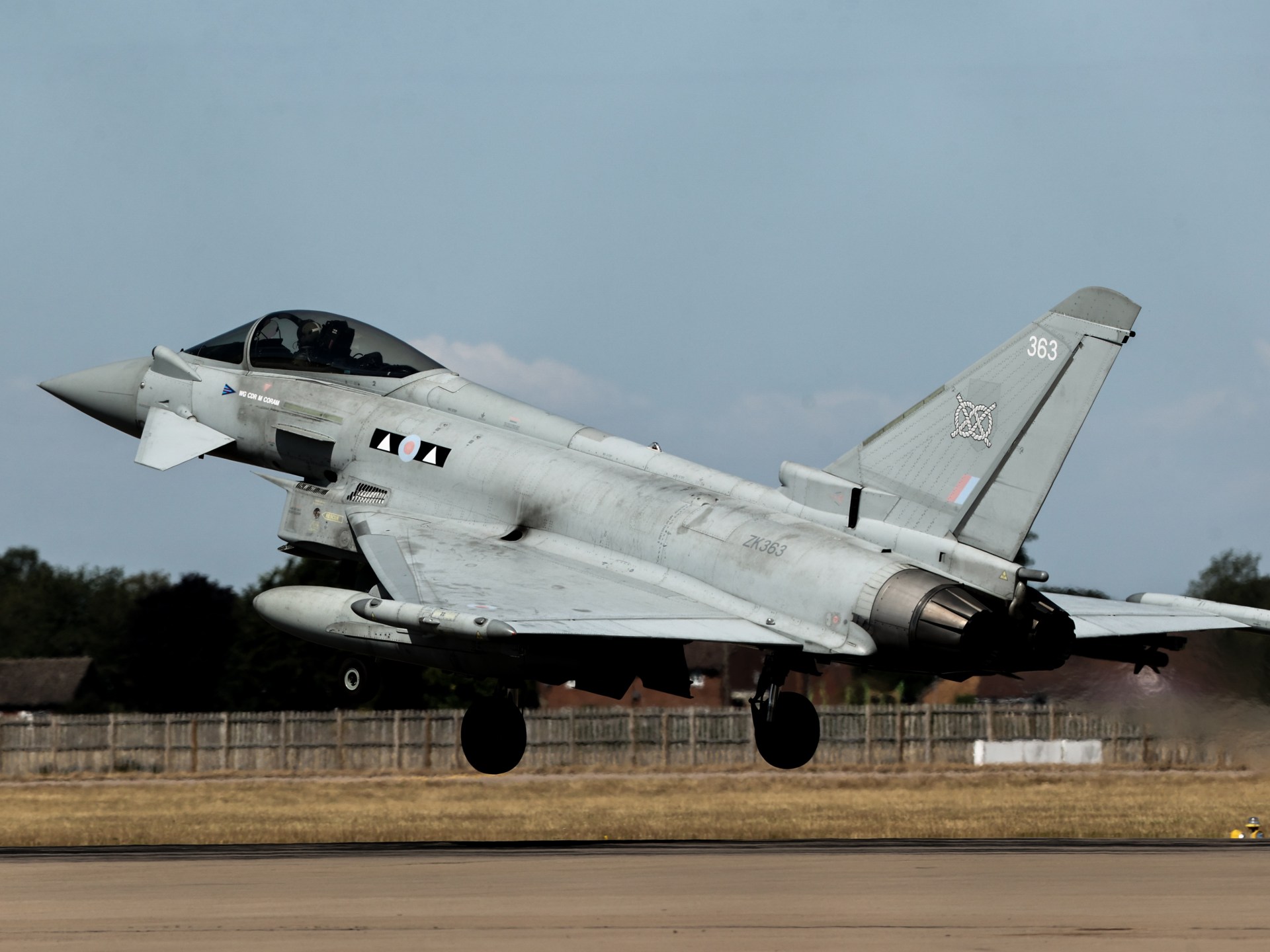
The United Kingdom has confirmed the operational deployment of Royal Air Force (RAF) Typhoon multi-role combat aircraft to the Kingdom of Saudi Arabia. According to statements released by the UK Ministry of Defence (MoD), the advanced fighter aircraft are deployed strictly in a defensive capacity. Their designated mandate centers on reinforcing Saudi integrated air and missile defense networks against persistent aerial incursions, including one-way attack drones and cruise missiles launched by Yemen's Ansar Allah movement, commonly known as the Houthis.
This deployment marks a significant reinforcement of Western security architecture in the Arabian Peninsula. Tensions across the region have escalated significantly, fueled by the broader conflict in the Levant and sustained maritime disruptions across the southern Red Sea and Bab al-Mandeb Strait. While London has participated alongside Washington in offensive strikes against Houthi military targets within Yemen under Operation Poseidon Archer, officials emphasized that these deployed Typhoons will operate within Saudi sovereign airspace to safeguard civilian population centers and strategic industrial facilities rather than conducting cross-border strikes.
[Global Trade](/news/european-energy-crisis-fuel-inflation-trade-impact) & Economic Ripples
The strategic posture taken by the UK underscores the systemic vulnerability of global commerce centered around the Arabian Gulf. Saudi Arabia remains the de facto leader of the OPEC+ alliance and a critical crude supplier to international energy markets. Any recurring threat to state-owned Saudi Aramco refining hubs, processing terminals, or water desalination plants directly injects a geopolitical risk premium into Brent crude benchmarks.
Simultaneously, the disruption of commercial maritime routes has compelled international container carriers and bulk chemical shippers to divert vessels around the Cape of Good Hope. This navigational detour adds roughly 10 to 14 transit days, inflating marine insurance premiums, bunker fuel consumption, and broader supply chain operating expenses. By deploying defensive air assets, the UK seeks to insulate key energy supply nodes, thereby mitigating further inflationary pressures on global hydrocarbon pricing and international cargo freight rates.
Related Intelligence: United States Recalibrates Middle East Strategy Beyond Oil-for-Security Paradigm
International Reactions & Diplomatic Stances
The announcement has elicited calculated diplomatic responses across the Middle East and Western capitals. Riyadh welcomed the deployment, framing it as a reaffirmation of the longstanding bilateral strategic partnership between the UK and Saudi Arabia. Saudi defense officials noted that safeguarding critical infrastructure remains essential for regional economic stability.
In London, the Ministry of Defence reiterated that the deployment aligns strictly with international law and collective self-defense principles. However, domestic political observers and humanitarian organizations have called for stringent parliamentary oversight to ensure British assets remain untangled from direct offensive engagements in Yemen. Multilateral monitoring bodies, including representatives from the United Nations, continue to caution that escalating military postures must not undermine fragile bilateral peace talks previously established between Saudi negotiators and Houthi representatives in Sana'a.
Strategic Outlook & Future Scenarios
Moving forward, the regional security equilibrium hinges on whether defensive air shields can effectively deter asymmetric drone saturation tactics. The deployment of high-cost interceptor jets against low-cost unmanned aerial systems highlights an asymmetric cost-exchange ratio that allied forces must continually manage.
Should Houthi elements persist in launching multi-vector missile salvos toward commercial or industrial assets, the pressure on Western and regional coalitions to transition from defensive interception to expanded preemptive interdiction will intensify. In the medium term, sustained regional instability will likely maintain elevated tanker charter rates and incentivize regional sovereigns to expedite indigenous air defense integration, reshaping procurement cycles and defense alliances across the Middle East.
Join Our Official WhatsApp Channel
Receive live commodity alerts, policy changes, and commercial intelligence directly on WhatsApp.