
Punjab Enforces 30-Day Ban on Smart Glasses and Concealed Recording Devices
The Punjab government has imposed an immediate 30-day provincial ban under Section 144 on the sale and use of camera-enabled smart glasses and covert recording devices disguised as everyday articles.
The Core Development
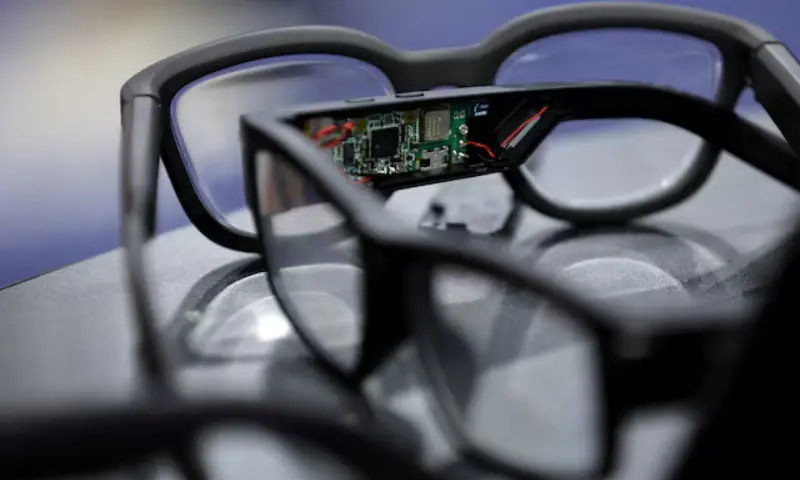
The Punjab government has instituted an immediate provincial prohibition on the utilization, retail, and wholesale distribution of camera-equipped smart glasses and concealed surveillance hardware. Enacted via an official notification issued by the Punjab Home Department, the restriction exercises emergency powers conferred under Section 144 of the Code of Criminal Procedure (CrPC), 1898, remaining effective across the province for a duration of 30 days.
According to the official directive, individuals are barred from operating or wearing camera-enabled smart glasses featuring hidden recording capabilities, as well as miniature cameras disguised within everyday objects such as pens, keychains, buttons, and decorative accessories. Simultaneously, commercial entities—including wholesale suppliers, importers, consumer electronics dealers, and retail shopfronts—are legally prohibited from displaying, marketing, selling, or distributing such hardware. The government confirmed that conventional consumer technology, specifically laptops, handheld tablets, standard smartphones, and digital terminal equipment formally homologated by the Pakistan Telecommunication Authority (PTA), remains strictly exempt from the order.
Commercial & Economic Implications
The regulatory intervention delivers an immediate shock to specialized tech corridors across major trade hubs in Punjab, notably Hall Road and Hafeez Centre in Lahore, as well as equivalent consumer technology markets in Rawalpindi, Multan, and Faisalabad. Commercial vendors dealing in grey-channel electronics and specialized surveillance components face localized inventory freezes. While miniature recording devices represent a niche fraction of aggregate electronics trade, stock liquidations have abruptly halted, trapping capital for small-to-medium distributors.
On a broader economic scale, the ban shines a light on Pakistan's fragmented regulatory pipeline regarding wearable consumer electronics. Mainstream global manufacturers are increasingly integrating optical sensors and artificial intelligence into everyday eyewear. By restricting hardware based on concealed form-factor definitions, local authorities risk establishing regulatory friction for lawful wearable technology channels. Retailers must now closely audit procurement pipelines to avoid non-compliance penalties, raising immediate operational compliance burdens across specialized electronics supply chains.
Related Intelligence: Punjab Enforces Sweeping Ban on Smart Glasses and Covert Recording Devices
Stakeholder Perspectives & Market Reactions
Legal and privacy practitioners have largely characterized the Home Department's intervention as a necessary countermeasure against unregulated covert surveillance, non-consensual public recording, and examination malpractices. The unchecked dissemination of low-cost, pen-based and keychain-integrated recording modules had sparked growing apprehension concerning corporate espionage, personal privacy breaches, and academic fraud in public examinations.
Conversely, merchant associations have voiced concern over the operational breadth of the directive. Traders emphasize that arbitrary crackdowns under Section 144 routinely complicate routine merchandising, urging law enforcement to distinguish between illicit covert espionage tools and legitimate wearable optical accessories. Hardware importers note that in the absence of clearly defined, harmonized technical criteria from federal bodies such as the PTA or the Ministry of Information Technology, localized provincial police mandates create regulatory uncertainty for authorized gadget distributors.
Forward Outlook & Key Watchpoints
The enforcement phase will heavily depend on provincial administrative inspections across tech markets and monitoring at logistics clearing nodes. Retailers and distributor networks must monitor whether the Home Department expands this temporary 30-day embargo into a permanent regulatory framework via legislative amendment or prolonged Section 144 extensions.
Key watchpoints over the coming weeks include whether other provincial administrations—most notably Sindh and Khyber Pakhtunkhwa—adopt corresponding containment measures to curb inter-provincial arbitrage of covert equipment. Market participants must also watch for detailed technical guidance from regulatory bodies specifying operational parameters for commercial AI glasses, ensuring legitimate next-generation enterprise hardware is not inadvertently choked alongside clandestine spy gadgets.
Join Our Official WhatsApp Channel
Receive live commodity alerts, policy changes, and commercial intelligence directly on WhatsApp.