
US Restores Ukraine Intelligence Sharing After Diplomatic Talks in Oslo
President Volodymyr Zelensky stated that operational intelligence sharing with the United States has stabilized following strategic consultations with envoys in Oslo, easing acute tensions over front-line situational awareness.
Geopolitical & Core Developments
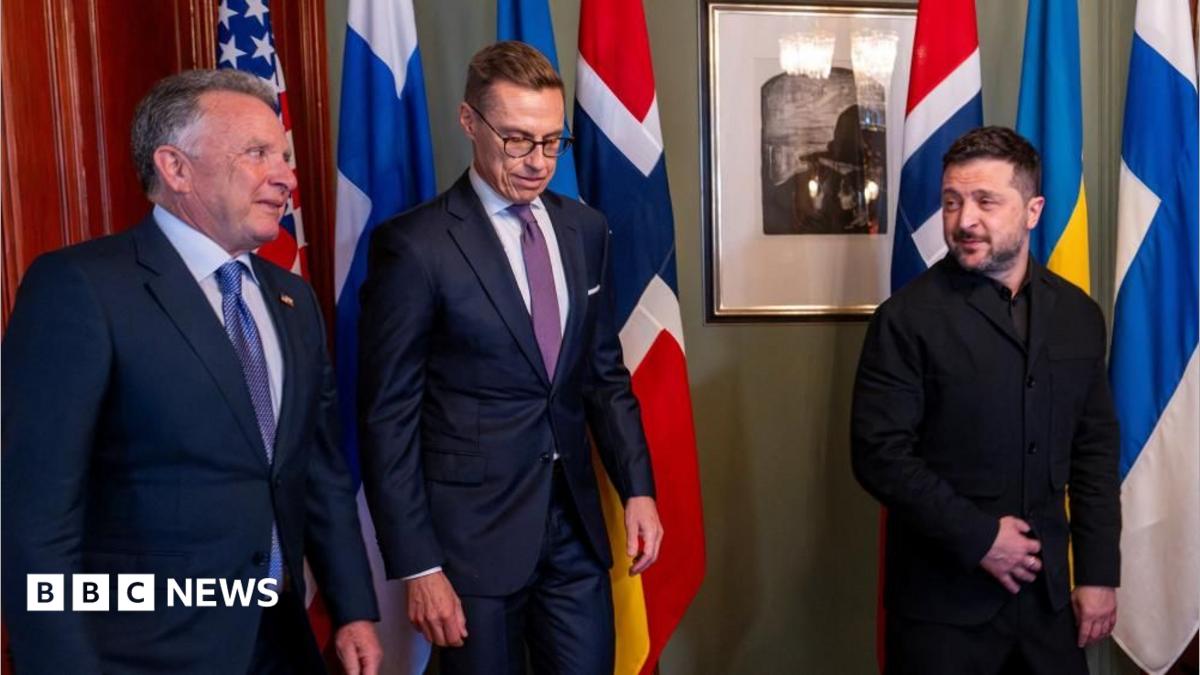
Tensions between Kyiv and Washington over operational military coordination have shown decisive signs of de-escalation after Ukrainian President Volodymyr Zelensky confirmed that bilateral intelligence sharing 'works now.' The remarks followed high-stakes discussions conducted in Oslo involving envoys tied to the incoming Donald Trump administration. The diplomatic encounter aimed to repair immediate rifts sparked by public allegations from Ukrainian leadership asserting that Washington had restricted the flow of high-value tactical and strategic intelligence needed to anticipate Russian battlefield movements.
The White House and Pentagon had vigorously rejected Ukraine's assertions, labeling claims of withheld intelligence as unfounded and counterproductive to coalition objectives. The dispute represented one of the most visible points of friction in the transatlantic security pact since the onset of the conflict. In Oslo, direct talks mediated diplomatic channels to reset parameters for data dissemination, targeting coordination, and reconnaissance flows. The stabilization of this intelligence pipeline is critical for Ukrainian defensive formations along the eastern front, where precision-guided strikes and early warning systems heavily rely on American orbital surveillance and electronic signals architecture.
Global Trade & Economic Ripples
The recalibration of Western intelligence commitments carries profound implications for global commodity circuits and trade routes. Market confidence in the security of the Black Sea export corridor—a pivotal artery for agricultural goods, particularly wheat, corn, and sunflower oil—remains inextricably linked to Ukraine's ability to monitor maritime threats. Disruption in tactical surveillance had amplified concerns of escalated naval strikes, which typically induce immediate spikes in maritime war-risk insurance premiums for commercial dry bulk carriers.
Energy markets have responded with guarded equilibrium. The prospect of sustained military deterrence reduces the probability of sudden, asymmetric disruptions to residual Russian oil and gas transit infrastructure across Eastern European territory. European benchmark natural gas prices at the Title Transfer Facility (TTF) have reflected muted volatility as supply-side panic subsided following reports of restored bilateral coordination. Concurrently, regional freight rates and fertilizer distribution channels across Central and Southeastern Europe remain exposed to broader geopolitical shifts, maintaining upward pressure on baseline operational expenses for European industrial sectors.
Related Intelligence: French Cost-of-Living Crisis Overshadows Major European Sporting Fixtures
International Reactions & Diplomatic Stances
European capitals observed the Oslo developments with cautious relief. North Atlantic Treaty Organization (NATO) partners, while publicly maintaining an official posture of non-interference in direct bilateral intelligence conduits, had privately voiced apprehension that a persistent breach between Kyiv and Washington could compromise collective deterrence on the alliance's eastern flank. European diplomats in Brussels emphasized the non-negotiable necessity of operational cohesion to prevent unilateral battlefield advances by Russian forces.
Moscow, conversely, characterized the public discord over intelligence flows as evidence of structural fractures in Western alignment. Russian state commentary continued to frame external surveillance support as direct operational participation by NATO powers. Meanwhile, independent defense analysts in London and Washington noted that while intelligence flows appear restored, the transactional nature of future cooperation will be heavily tested by shifts in United States executive branch foreign policy priorities.
Strategic Outlook & Future Scenarios
The short-term operational continuity established in Oslo averts an imminent intelligence deficit, but structural uncertainties persist regarding long-term Western military assistance frameworks. A key trajectory to monitor will be the formalized integration of intelligence mechanisms under the incoming US administration, which has signaled a propensity to leverage technical and financial aid to accelerate diplomatic negotiations.
Upcoming multilateral defense summits and bilateral security pact discussions will serve as immediate stress tests for this renewed cooperation. Should front-line surveillance channels remain unobstructed, Kyiv maintains baseline parity in detecting mechanized maneuvers. However, any future conditioning of intelligence deliverables could drastically shift the negotiation leverage in prospective armistice talks, fundamentally reshaping the security architecture of continental Europe.
Join Our Official WhatsApp Channel
Receive live commodity alerts, policy changes, and commercial intelligence directly on WhatsApp.