
Police Officer Killed in Miranshah Attack Amid Rising Khyber Pakhtunkhwa Instability
An on-duty additional station house officer was martyred in a targeted ambush in North Waziristan, highlighting persistent security risks across Khyber Pakhtunkhwa trade arteries.
The Core Development
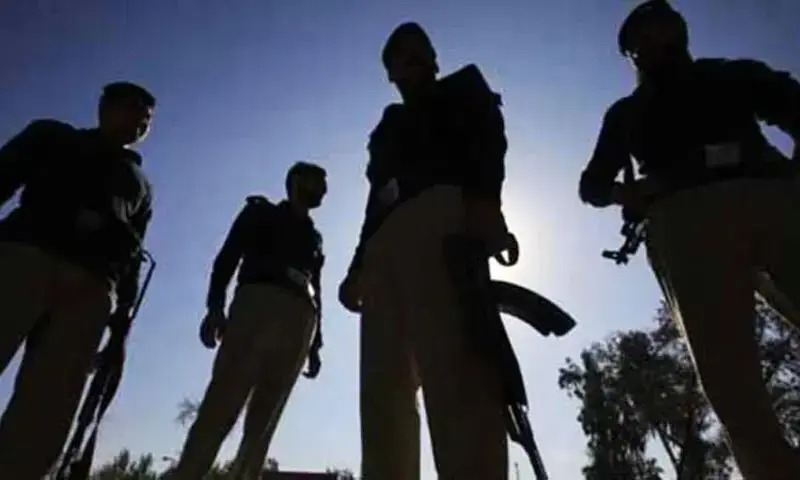
A senior police official was martyred on Tuesday following a targeted assault by unidentified assailants near the Miranshah Bypass Road in Khyber Pakhtunkhwa's North Waziristan district. The fallen officer was identified as Additional Station House Officer (SHO) Meera Khan, serving at the Miranshah police station. District Police Officer (DPO) Sajjad Hussain confirmed that Khan was on active duty when armed individuals ambushed him, inflicting multiple fatal bullet wounds. The officer succumbed to his injuries prior to emergency medical evacuation.
Immediately following the ambush, law enforcement contingents cordoned off the bypass and launched a comprehensive search operation across neighboring sectors to identify and apprehend the perpetrators. A formal investigation has been launched to establish the tactical profiles of the assailants and assess potential operational vulnerabilities. DPO Hussain reiterated that police resolve remains undeterred and reiterated commitments to dismantle operational networks perpetrating violence against frontline civil law enforcement.
Commercial & Economic Implications
The resurgence of targeted assaults against law enforcement personnel in North Waziristan introduces renewed volatility to regional logistics, freight transport, and cross-border commercial movement. Miranshah serves as a critical transit junction connecting domestic wholesale distribution centers in mainland Pakistan with regional markets and the Ghulam Khan border crossing into Afghanistan. Heightened insecurity directly influences logistical supply chains, prompting freight operators to demand higher hazard surcharges, which elevates transportation costs for essential commodities, construction materials, and consumer goods.
Moreover, the introduction of emergency security protocols, expanded checkpoints, and snap inspections inevitably dampens commercial turnaround times. Local retail trade in tribal districts operates on tight cash flows; prolonged supply disruptions create localized price spikes and exacerbate food inflation. Continued instability undermines state initiatives aimed at formalizing market structures in newly merged districts, discouraging capital deployment from national corporate distributors and private investment in local warehousing infrastructure.
Related Intelligence: Kim Jong Un Reappears as Succession Questions Weigh on Regional Security
Stakeholder Perspectives & Market Reactions
Regional business associations and logistics syndicates operating along western transit routes have expressed heightened concern regarding the safety of transport corridors. Wholesale merchant bodies in Khyber Pakhtunkhwa noted that driver reluctance increases sharply following attacks on law enforcement, directly constraining cargo capacity and inflating transit insurance premiums. Local chambers have called for coordinated security protocols that safeguard primary logistical lifelines without introducing friction that paralyzes border-adjacent trading hubs.
Within official circles, security administrators reiterated that provincial police units are undergoing technical and operational enhancements to counter asymmetric threats. Civilian administrative representatives emphasized that maintaining baseline law and order is foundational to protecting regional revenue collection and fostering sustainable local retail ecosystems. Legal and defense analysts continue to underscore the need for institutionalized intelligence-sharing frameworks to preempt targeted operations against civil administration assets.
Forward Outlook & Key Watchpoints
The trajectory of regional security over the coming quarters will hinge on the efficacy of counter-insurgency sweep operations and intelligence containment in the southern districts of Khyber Pakhtunkhwa. Observers will closely monitor the operational stability of key arterial routes, specifically the Miranshah-Bannu corridor and routes servicing the Ghulam Khan trade gate. Any deterioration in perimeter security will trigger administrative curfews, constricting freight transit schedules and weighing heavily on bilateral border trade volume.
Policy watchpoints include federal budgetary disbursements for counter-terrorism policing equipment, infrastructure hardening for rural police checkpoints, and potential adjustments to cargo transit rules along the western border. Restoring structural stability to North Waziristan remains an indispensable prerequisite for maintaining predictable supply chains, curbing transport-driven cost escalations, and restoring investor confidence across Pakistan's frontier markets.
Join Our Official WhatsApp Channel
Receive live commodity alerts, policy changes, and commercial intelligence directly on WhatsApp.