
Prime Minister Visits Peshawar Following Emergency Declaration and Governor Rule
Prime Minister Shehbaz Sharif visited Peshawar to convene the provincial Apex Committee following the imposition of federal emergency and governor's rule, addressing pressing security challenges and economic stabilization across Khyber Pakhtunkhwa.
The Core Development
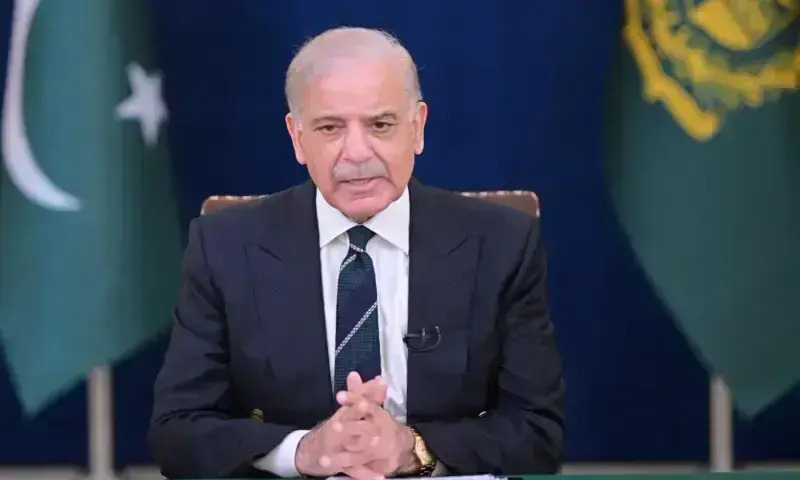
Prime Minister Shehbaz Sharif arrived in Peshawar on Thursday, marking his inaugural official visit to Khyber Pakhtunkhwa since the federal administration invoked constitutional emergency provisions and established governor's rule in the province on October 11. The visit follows formal endorsement by a joint sitting of Parliament, which validated the federal cabinet's intervention citing institutional disengagement in counter-terrorism operations by the outgoing provincial administration.
Accompanied by senior cabinet members and security chiefs, the Prime Minister convened a high-stakes session of the provincial Apex Committee. The executive meeting brought together civilian intelligence leadership, military commanders, and administrative secretaries to review operational protocols under direct federal supervision. Deliberations centered on restoring law and order, securing strategic transport arteries, and revitalizing counter-insurgency apparatuses that had suffered administrative paralysis during months of escalating political friction between Islamabad and Peshawar.
Commercial & Economic Implications
Khyber Pakhtunkhwa functions as a vital conduit for Pakistan's domestic wholesale markets and regional trade networks with Afghanistan and Central Asian republics. The imposition of federal authority introduces both regulatory adjustments and short-term operational hurdles for retail and distribution sectors. Extended security cordons and enhanced surveillance checkpoints along the Indus Highway and Grand Trunk Road initially slow transit turnaround times for heavy logistics vehicles, elevating freight costs for regional distributors.
For wholesale merchants, cross-border clearance at Torkham and Ghulam Khan borders remains intimately tied to regional stability. Enhanced federal oversight aims to curb undocumented trade, illicit currency flows, and smuggling corridors, which often destabilize domestic commodity prices. However, prolonged security mobilizations invariably increase retail inventory carrying costs in urban hubs like Peshawar, Mardan, and Swat, compounding headline inflation pressures on staple commodities, construction raw materials, and consumer durables.
Stakeholder Perspectives & Market Reactions
The domestic business community has expressed a calculated reaction to the administrative transition. Regional trade chambers and wholesale merchant bodies, including representatives from the Sarhad Chamber of Commerce and Industry, have consistently urged authorities to insulate trade transit corridors from political fallout. Industry stakeholders emphasize that business continuity, timely clearance of bonded transit containers, and reliable inter-provincial supply lines must take precedence over political brinkmanship.
Conversely, legal analysts and civil society representatives continue to debate the constitutional thresholds of Article 232 and Article 234. While market operators welcome the prospect of decisive security governance to eliminate extortion and restore business confidence, municipal retailers express apprehension regarding stringent curfew-like inspections and documentation crackdowns. Currency dealers and commercial bankers note cautious liquidity movement in provincial financial centers, with institutional lenders demanding strict compliance guarantees on commercial credit facilities.
Forward Outlook & Key Watchpoints
The immediate trajectory of Khyber Pakhtunkhwa's economic stabilization depends on the operational efficacy of the Apex Committee's directives. Federal managers face the dual challenge of executing targeted intelligence-driven operations while preserving the cadence of commercial activity across major urban centers. In the coming weeks, market participants will monitor security sector resource allocations, municipal administrative realignments, and border management protocols.
Key watchpoints include the duration of governor's rule, potential legal challenges filed before the superior judiciary, and the operational status of bilateral freight routes connecting Punjab's industrial belts with Khyber Pakhtunkhwa. If federal oversight successfully suppresses security threats without strangling trade logistics, commercial sentiment across northwestern Pakistan could see a gradual, structured recovery before the close of the fiscal quarter.
Join Our Official WhatsApp Channel
Receive live commodity alerts, policy changes, and commercial intelligence directly on WhatsApp.